
Parliament scrutinises roadmap for LC elections as government defends rules, registration and security plans
For millions of Ugandans, LC I leaders remain the closest elected public officials, handling everyday governance issues that directly affect communities.
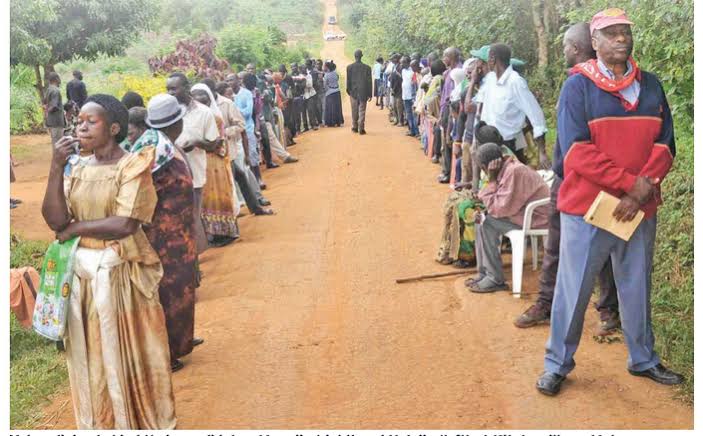
With Uganda’s long-awaited Local Council elections drawing closer, Parliament has turned into a battleground of competing concerns over voter registration, security, representation and participation, as government unveiled the roadmap for the election of village leaders and Women Council committees.
Making his maiden statement in Parliament on Thursday, Deputy Attorney General Jackson Karugaba Kafuuzi presented the government’s programme for elections of administrative units and councils, including LC I, LC II and Women Council Committees. His presentation offered the clearest picture yet of how the Electoral Commission intends to conduct the grassroots elections that will shape local governance across the country.
The elections are expected to determine leadership at the lowest levels of government, where Local Councils serve as the first point of contact between citizens and the state on issues ranging from community security and land disputes to local development and conflict resolution.
Registration Requirements Outlined
Kafuuzi told Parliament that every person seeking to register for the administrative unit elections will be required to provide basic identification details, including their name, National Identification Number (NIN) or National ID number, age, gender and village of residence.
The registration exercise is intended to establish village-based voters’ registers, reflecting the principle that citizens vote where they ordinarily reside.
The requirement, however, immediately sparked debate among legislators, who questioned how the process would accommodate Ugandans without national identity cards or those living away from their ancestral villages.
Mukono Municipality MP Betty Nambooze asked government to clarify how it intends to treat citizens who originate from one village but currently live and work elsewhere.
She also questioned the fate of eligible voters who have not yet obtained national IDs or whose applications remain pending.
The concerns highlight one of the recurring challenges in grassroots elections—balancing residency requirements with increasing internal migration, urbanisation and incomplete national identification coverage.
No Academic Qualifications Required
Kafuuzi explained that aspiring candidates for village Women Committees must be female Ugandan citizens, aged at least 18 years, ordinarily resident in the village where they seek election and registered on the village Women Council register.
Importantly, he noted that no academic qualifications are required for the positions.
The same eligibility standards apply to candidates contesting for LC I chairperson positions, except that the office is open to all qualified Ugandan citizens regardless of gender.
Candidates must be registered on the respective village council register and ordinarily reside within the village they seek to lead.
Government also announced that no nomination fees will be charged, a move aimed at encouraging wider participation in grassroots leadership.
Multiparty Politics Returns to the Village
One of the most significant announcements was confirmation that LC I chairperson elections will once again be conducted under Uganda’s multiparty political system.
Kafuuzi urged political parties and organisations to prepare their candidates ahead of nominations scheduled between July 15 and July 19, 2026.
Nomination exercises will take place at sub-county, town council and municipal division headquarters between 9:00 a.m. and 5:00 p.m. on each of the designated days.
The return of competitive party politics to village elections is expected to intensify campaigns in communities where Local Council positions often influence broader political mobilisation.
Calls for Greater Participation
Members of Parliament used the debate to press government on how to maximise voter participation.
Wakiso District Woman MP Betty Ethel Naluyima urged government to dedicate July 23, 2026, the day of Women Council elections, as a public holiday to allow women to participate fully in the democratic process.
Her proposal echoed earlier calls by State Minister for Local Government Justine Nameere, who also appealed for an election-day holiday to boost turnout.
Supporters argue that many women may struggle to participate if elections fall on normal working days, particularly those employed in the informal sector or domestic work.
Security Concerns Raised
Beyond voter participation, legislators also questioned whether security agencies are adequately prepared to prevent violence during the elections.
Katikamu County South MP Hassan Kirumira warned that LC elections have historically been among Uganda’s most contentious because of their close community dynamics.
He cited previous incidents where polling stations were disrupted, candidates assaulted and voting failed to take place in some villages.
Kirumira asked government to explain the security strategy that will be deployed to guarantee peaceful polling across the country.
The concerns come amid reports of active campaigning already underway in several villages despite the formal nomination period yet to begin.
Representation Debate
Nambooze also challenged government to consider expanding workers’ representation within Uganda’s local governance structures.
She noted that workers currently have representation in Parliament and at district, city and municipal councils but remain excluded from LC III, LC II and LC I structures.
Her proposal raises broader questions about whether Uganda’s decentralised governance framework should evolve to accommodate organised interest groups at the grassroots.
Boundary Disputes Threaten Polls
Another major issue dominating the debate was unresolved local government boundary disputes, which have complicated elections in several parts of the country.
Minister of State for Local Government Justine Nameere acknowledged that boundary conflicts remain widespread across multiple sub-regions.
She explained that resolving such disputes requires collaboration between the Ministry of Local Government and the Ministry of Lands, Housing and Urban Development.
According to Nameere, the Lands ministry is responsible for scientific surveys and boundary demarcation, while the Local Government ministry handles community engagement, conflict resolution and public consultations.
She announced plans to write formally to all Members of Parliament requesting them to identify unresolved boundary disputes and issues affecting Parish Development Model committees in their constituencies.
The ministry, she said, wants disputes resolved on the ground before they escalate into electoral conflicts.
She revealed that officials are already scheduled to meet leaders from the Bugisu sub-region, where boundary disputes will feature prominently on the agenda.
Government Warns Against Voter Intimidation
As political activity intensifies ahead of nominations, Nameere cautioned against attempts to intimidate voters or influence their electoral choices.
She said the government’s civic education campaign is intended only to encourage citizens to participate in the elections and not to support particular candidates or political parties.
“I am running radio announcements for people to go out and vote, but I am not asking them to vote for any particular candidate of any party. It is criminal to intimidate anybody,” Nameere said.
Her remarks underscore government’s attempt to reassure Ugandans that the elections should be conducted freely and peacefully despite heightened political competition.
Grassroots Democracy Under the Spotlight
The parliamentary debate demonstrated that while preparations for the Local Council elections are progressing, significant questions remain about voter registration, inclusiveness, security and electoral administration.
For millions of Ugandans, LC I leaders remain the closest elected public officials, handling everyday governance issues that directly affect communities. As nomination dates approach, Parliament’s scrutiny reflects the importance attached to ensuring the elections are credible, inclusive and peaceful.
How government addresses the concerns raised by legislators could shape not only voter confidence but also the legitimacy of Uganda’s grassroots democratic institutions.