Parliament pushes for sweeping road safety reforms after deadly Kampala–Gulu highway crash
Responding to the concerns, State Minister for Works Fred Byamukama acknowledged Parliament's recommendations and said the Ministry of Works and Transport would review proposals regarding speed governors and other road safety measures before agreeing on an implementation strategy.
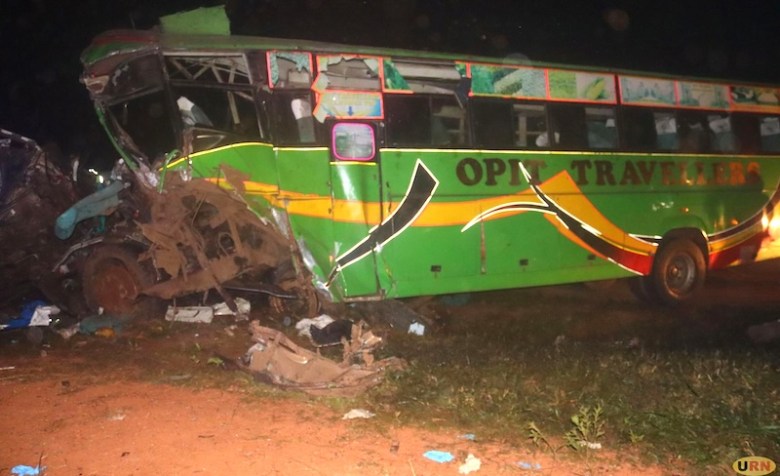
A deadly road crash that claimed 15 lives on the Kampala–Gulu highway has reignited calls for urgent reforms to Uganda’s road safety system, with Members of Parliament demanding immediate action to address deteriorating road infrastructure, reckless driving, poor vehicle management and weak enforcement.
The debate followed a fatal collision involving an Opit Travellers bus and a trailer at Bobi Trading Centre on the northern highway, which, according to police reports, left 15 people dead and 24 others injured.
Before Parliament commenced business, Deputy Speaker Thomas Tayebwa led legislators in observing a moment of silence for the victims, describing road safety as one of the country’s most pressing public policy challenges.
“Road safety is a very, very big issue,” Tayebwa told Parliament.
The discussion that followed painted a worrying picture of Uganda’s highways, where MPs from across the country argued that preventable factors—including potholes, poor lighting, speeding, broken-down vehicles and inadequate road markings—continue to cost hundreds of lives every year.
Potholes blamed for deadly crashes
Padyere County MP Isaac Ismail Otimgiw singled out deteriorating road conditions along the northern corridor, saying potholes have become a major contributor to fatal accidents.
According to Otimgiw, the Kampala–Gulu route has experienced increased night bus traffic, yet road conditions have failed to improve.
He said drivers frequently make dangerous manoeuvres to avoid deep potholes, sometimes swerving into oncoming traffic.
“Can we have those potholes filled to make sure that the road is safe?” he asked.
Otimgiw also questioned the continued delay in commencing construction of the 16-kilometre Nebbi–Goli road despite Parliament having approved financing for the project.
He urged the Ministry of Works and Transport to explain why no visible work has begun on the ground.
Broken-down vehicles remain a silent danger
Pakwach District Woman MP Jane Pacuto argued that parked and broken-down vehicles are becoming deadly obstacles on Uganda’s highways.
She proposed the establishment of designated parking and recovery yards along major roads where disabled vehicles could be towed instead of being left on carriageways.
Her proposal seeks to reduce the growing number of crashes involving vehicles that are abandoned without adequate warning signs, particularly at night.
MPs demand safer roads by design
Kalungu West MP Joseph Gonzaga Ssewungu broadened the debate by highlighting what he described as widespread neglect of basic road safety infrastructure.
He said many highways lack essential road markings, reflective signs and safety features that guide motorists, especially during the night.
Ssewungu also expressed concern about speeding buses, heavy Sino trucks and poor visibility after dark.
“Boda bodas have stronger lights than vehicles at night,” he remarked, urging authorities to strengthen both road engineering standards and traffic law enforcement.
His comments underscored the view that improving road safety requires more than policing—it also demands investment in safer road design.
Calls for mandatory medical tests for drivers
Kibanda North County MP Linos Ngompek shifted attention to the health of drivers, arguing that some crashes could be linked to motorists who are medically unfit to operate public service vehicles.
He proposed introducing mandatory medical examinations before driving permits are renewed, particularly for bus and long-distance commercial drivers.
Ngompek said screening for eyesight, chronic illnesses and other health conditions would help identify drivers who may pose a danger to themselves and other road users.
Parliament urges implementation of existing resolutions
Hoima City Woman MP Asinansi Nyakato reminded Parliament that many road safety recommendations had already been adopted during the 11th Parliament but remain largely unimplemented.
She cited resolutions requiring stricter enforcement of speed governors and mandatory towing of vehicles that develop mechanical faults on highways, with the costs borne by vehicle owners.
According to Nyakato, leaving broken-down vehicles on roads has continued to expose motorists to unnecessary risks.
She urged the government to move beyond policy discussions and implement the measures Parliament has already approved.
Government promises action
Responding to the concerns, State Minister for Works Fred Byamukama acknowledged Parliament’s recommendations and said the Ministry of Works and Transport would review proposals regarding speed governors and other road safety measures before agreeing on an implementation strategy.
Addressing concerns about the delayed Nebbi–Goli road, Byamukama said the government was working with the Ministry of Finance to conclude the necessary processes with the contractor so construction could begin.
Prime Minister Robinah Nabbanja also welcomed proposals for mandatory health checks for drivers, noting that national and regional referral hospitals already have the capacity to conduct medical examinations before licence renewals.
She said hospitals can test drivers for non-communicable diseases such as hypertension and diabetes while also assessing eyesight, an important factor in preventing night-time crashes.
“Some drivers may not see well at night, increasing the risk of accidents,” Nabbanja observed.
On the recent Kampala–Gulu highway tragedy, the Prime Minister asked MPs to compile a comprehensive list of the deceased, including their next of kin, contact details, districts, villages and burial information.
She said the information would be forwarded to President Yoweri Museveni for further consideration regarding government support to the affected families.
A national challenge
The parliamentary debate reflects growing concern over Uganda’s road safety record, with legislators warning that many crashes are avoidable if infrastructure is improved, vehicle standards strengthened and existing traffic regulations consistently enforced.
As government considers the proposals, MPs maintain that reducing road deaths will require a coordinated approach involving better roads, stricter enforcement, regular vehicle inspections, medically fit drivers and faster removal of hazards from highways.
For families affected by the latest Kampala–Gulu highway tragedy, however, the debate is also a reminder that every delay in implementing road safety reforms carries a human cost measured not only in statistics, but in lives lost and communities left grieving.