Government releases Shs23 trillion to kick-start financial year 2026/27 budget – who is getting how much?
Government projects 10.2% GDP growth as Shs23 trillion first-quarter budget targets infrastructure, oil, agriculture and innovation
Government projects 10.2% GDP growth as Shs23 trillion first-quarter budget targets infrastructure, oil, agriculture and innovation
Uganda is positioning itself for what officials describe as a transformative economic year, banking on the start of commercial oil production, tighter fiscal discipline and record public investment to propel the economy into double-digit growth for the first time in years.
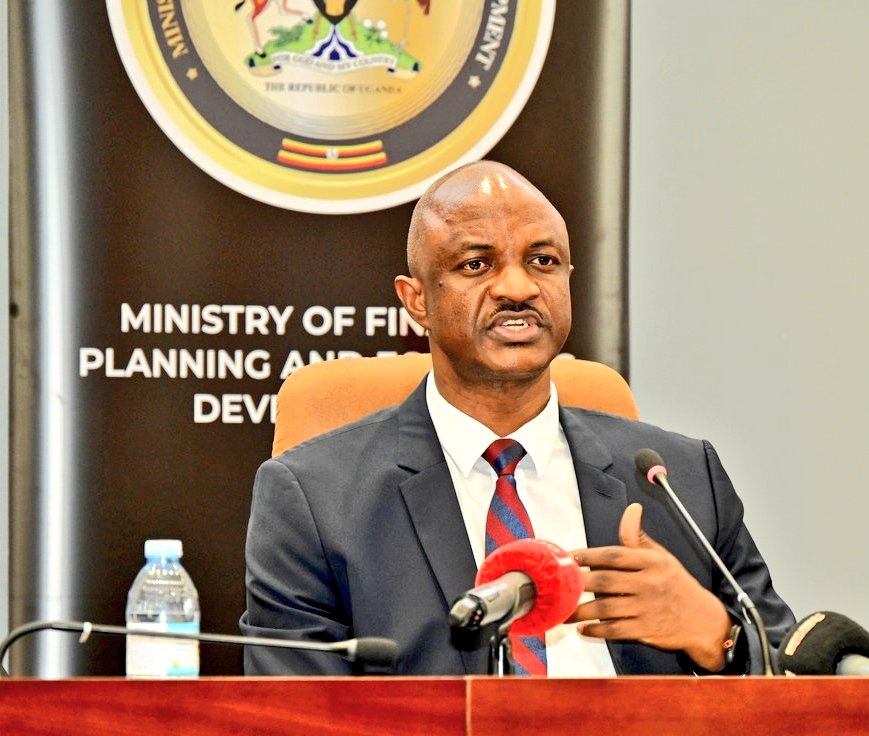
The ambitious outlook was unveiled on Friday by the Permanent Secretary and Secretary to the Treasury (PSST), Dr Ramathan Ggoobi, during the announcement of the first quarter expenditure releases for the 2026/27 financial year and the launch of the Open Budget Survey 2025 results in Kampala.
The event, held under the government’s Budget Transparency Initiative, outlined how Shs23.03 trillion, representing 27 percent of the approved national budget, will be deployed in the first three months of the financial year while introducing sweeping reforms intended to improve public spending efficiency and restore fiscal discipline.
Economy Shows Resilience Ahead of First Oil
Despite global economic uncertainties, Uganda’s economy continued to post resilient growth in the financial year ending June 2026.
According to Dr Ggoobi, the economy expanded by 6.4 percent in real terms during FY2025/26, up slightly from 6.3 percent the previous year.
He attributed the performance to stronger domestic demand and continued implementation of government wealth creation programmes, particularly the Parish Development Model (PDM) and the Uganda Development Bank, which expanded access to affordable credit and seed capital for businesses and households.
“The economy sustained steady momentum in FY2025/26, growing at 6.4 percent in real terms,” Ggoobi said.
The Treasury now expects growth to accelerate dramatically to 10.2 percent during FY2026/27.
The projected surge will largely be driven by Uganda’s anticipated first commercial oil production, continued investment in the government’s Agro-industrialisation, Tourism, Mineral Development, and Science, Technology and Innovation (ATMS) strategy, stronger exports, macroeconomic stability and more efficient public expenditure.
If achieved, the projected growth rate would place Uganda among Africa’s fastest-growing economies.
Inflation Remains Under Control
Uganda’s macroeconomic stability continues to provide a favourable environment for investment.
Headline inflation averaged just 3.3 percent during FY2025/26, down from 3.5 percent recorded the previous financial year.
Ggoobi credited the performance to effective coordination between fiscal and monetary authorities, enabling government to contain inflation while sustaining economic growth.
Low inflation has helped preserve household purchasing power and reduced pressure on businesses facing rising production costs experienced elsewhere in the region.
Shs23 Trillion Released to Kick-start Budget
The Treasury released Shs23.03 trillion for the first quarter of FY2026/27, with allocations designed to match government implementation schedules, projected domestic revenues and expected external financing.
A substantial share of the release will finance statutory obligations before supporting priority sectors intended to accelerate economic transformation.
Debt servicing and treasury operations received the largest allocation of Shs10.83 trillion.
Government also released Shs2.46 trillion for public sector wages and salaries, Shs566.44 billion for pensions and gratuity, Shs355.27 billion for Parliament, Shs51.12 billion for the Judiciary and Shs15.2 billion for the Office of the Auditor General.
These allocations ensure continuity of government operations while maintaining constitutional institutions.
ATMS Strategy Takes Centre Stage
The government’s economic transformation agenda remains anchored on the ATMS strategy, which targets four productive sectors expected to generate jobs, exports and industrialisation.
Agro-industrialisation received Shs289.6 billion to support agricultural research, innovation and programme implementation aimed at increasing value addition and productivity.
Tourism development was allocated Shs65.6 billion to finance destination marketing and the ongoing “Explore Uganda” campaign as government seeks to increase tourism earnings.
The mineral development sector, including oil and gas, received Shs50 billion for the Uganda National Oil Company (UNOC) and the Petroleum Authority of Uganda (PAU) to fast-track activities ahead of first oil production.
Meanwhile, science, technology and innovation secured Shs377.9 billion to expand internet connectivity, accelerate digital transformation and support innovation across the economy.
The allocations signal government’s intention to diversify economic growth beyond traditional agriculture while leveraging emerging sectors such as digital technology and petroleum.
Infrastructure Continues to Dominate Spending
Infrastructure remains one of government’s largest investment priorities.
The Ministry of Works and Transport received Shs1.53 trillion, including external financing, to support Uganda Airlines, Uganda Railways, Kalangala Infrastructure Services and construction of the Standard Gauge Railway.
The Ministry of Energy and Mineral Development secured Shs609.4 billion for electricity generation, transmission expansion and rural electrification projects.
Kampala Capital City Authority received Shs169.7 billion to improve roads, drainage, education and health services within the capital.
An additional Shs67.4 billion was allocated to the Ministry of Kampala Capital City and Metropolitan Affairs for urban roads, sanitation and drainage improvements under the Greater Kampala Metropolitan Area Urban Development Project.
These investments are expected to reduce business costs, improve logistics and strengthen Uganda’s competitiveness.
Investing in Human Capital
Government also maintained significant investment in health and education.
The Ministry of Health received Shs325.11 billion, while the National Medical Stores secured Shs284.7 billion to procure essential medicines.
Specialised healthcare institutions—the Uganda Cancer Institute and Uganda Heart Institute—received a combined Shs191.5 billion to expand oncology and cardiovascular services.
Referral hospitals received Shs124.68 billion, while the Ministry of Education and Sports secured Shs234.83 billion, including funding for instructional materials.
Public universities received Shs271.71 billion to support higher education.
Meanwhile, the National Council of Sports was allocated Shs103.83 billion as Uganda continues preparations linked to hosting AFCON 2027.
Local governments received Shs428.7 billion, including Shs88.3 billion for capital development projects, many connected to AFCON infrastructure.
Revenue Collection Agencies Get Operational Support
Recognising the importance of domestic resource mobilisation, government also allocated operational funding to revenue-generating institutions.
The Uganda Revenue Authority received Shs130.6 billion to strengthen tax collection.
Other allocations include Shs50.7 billion for National Citizenship and Immigration Control, Shs19.6 billion for the Uganda National Bureau of Standards, Shs9.6 billion for the Uganda Registration Services Bureau and Shs2.4 billion for the National Lotteries and Gaming Regulatory Board.
Fiscal Discipline Takes Centre Stage
Beyond spending, Ggoobi announced a series of reforms intended to improve public financial management and eliminate wasteful expenditure.
The reforms introduce stricter enforcement of the Budget Discipline and Accountability Charter, under which accounting officers who violate budget rules will face severe sanctions.
To strengthen budget discipline and improve the efficiency of public spending, the government has introduced five fiscal rules that will guide implementation throughout the 2026/27 financial year. The rules require that no expenditure commitments be made without an approved budget (“No Budget, No Commitment”), supplementary budgets be approved only in exceptional circumstances, and no new domestic arrears be accumulated under a strict “Zero Tolerance for Domestic Arrears” policy.
Government will also ensure that only projects that are fully prepared and ready for implementation receive funding under the “No Ready Project, No Budget” rule, while public institutions will be prohibited from recruiting staff unless funds for their wages have already been provided in the budget under the “No Wage Provision, No Recruitment” principle. Officials say the measures are intended to restore budget credibility, improve accountability and ensure prudent management of public resources.
According to Ggoobi, these measures will improve budget credibility, eliminate accumulation of arrears, enhance payroll accuracy and ensure supplementary budgets are reserved only for genuine emergencies.
Cutting Waste, Strengthening Accountability
Government also announced several structural reforms aimed at improving public finance management.
Counterpart funding for externally financed projects will now be centralised under the Treasury to guarantee timely financing of priority investments.
A contributory public service pension scheme will also be introduced to improve long-term fiscal sustainability.
In another cost-saving measure, state-funded celebrations during public holidays will be abolished, except for religious holidays, following presidential guidance.
Government also plans to strengthen anti-corruption efforts by expanding electronic government procurement systems, reviewing procurement laws and tightening oversight of state-owned enterprises.
Outlook
The first-quarter budget releases and accompanying fiscal reforms indicate that government is entering FY2026/27 with a dual strategy: accelerating economic growth while tightening control over public finances.
With first oil expected to come on stream, infrastructure investments continuing at scale and fiscal discipline becoming more stringent, the coming financial year will test whether Uganda can translate ambitious spending plans into sustained economic transformation.
For investors, businesses and development partners, the message from the Treasury is clear: the next phase of Uganda’s growth strategy will depend not only on increased investment, but also on how efficiently every public shilling is spent.