
Execution Over Expansion: What the second budget call means for Uganda’s economy in next financial year
While the headline figure, a revised resource envelope of Shs78.249 trillion, signals expansion, the deeper message of the circular is consolidation, discipline and strategic alignment. The document reflects a government intent on tightening execution while channeling resources toward productivity-enhancing sectors.
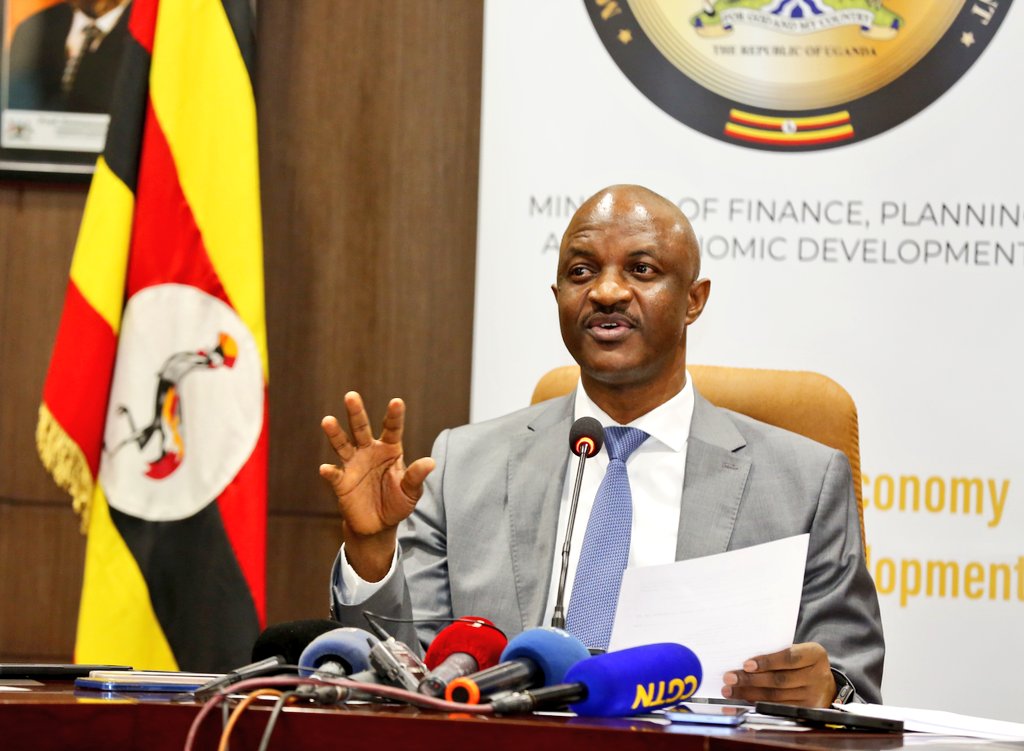
Uganda’s fiscal strategy for Financial Year 2026/27 is taking clearer shape following the release of the Second Budget Call Circular (BCC), issued by the Permanent Secretary and Secretary to the Treasury (PSST), Dr. Ramathan Ggoobi.
While the headline figure, a revised resource envelope of Shs78.249 trillion, signals expansion, the deeper message of the circular is consolidation, discipline, and strategic alignment. The document reflects a government intent on tightening execution while channeling resources toward productivity-enhancing sectors.
A Bigger Budget, But Not Business as Usual
The revised Shs78.249 trillion envelope represents an increase of Shs8.85 trillion from the Shs69.399 trillion initially communicated in the First Budget Call Circular.
However, the tone of the circular makes it clear: additional fiscal space does not translate into relaxed spending controls. Instead, Accounting Officers are directed to revise their budget estimates in line with updated indicative planning figures and adhere strictly to the Public Finance Management Act, Cap 171.
For markets and investors, this dual approach, expansion paired with enforcement, signals an attempt to balance growth ambitions with macroeconomic stability.
Execution Discipline
A recurring emphasis in the circular is “cleaning up and enforcing execution discipline.”
Historically, Uganda’s fiscal challenges have not been limited to resource mobilization but also budget execution inefficiencies, including delays, fragmentation of allocations and underperformance in project implementation.
By reinforcing performance accountability and reducing fragmentation of budget allocations, the Ministry of Finance appears to be targeting leakages that weaken the impact of public spending.
For the private sector, improved execution discipline could mean faster payment cycles, reduced accumulation of arrears, more predictable contract implementation, and improved investment confidence.
If implemented effectively, this shift may strengthen Uganda’s public financial management credibility in both domestic and international markets.
Procurement Reform
One of the most consequential policy moves outlined in the circular is the introduction of collaborative procurement for common user items across Ministries, Departments, Agencies and Local Governments effective 1st July 2026.
By aggregating procurement under framework arrangements, the government aims to standardize prices, ensure consistent quality, achieve economies of scale, improve time efficiency, and deliver better value for money.
For suppliers, this signals consolidation of procurement opportunities into larger, standardized contracts. While this may raise compliance and capacity requirements for bidders, it also promises greater transparency and reduced duplication across government entities.
Governance Controls Tightened
The circular also introduces a significant governance directive: Accounting Officers are instructed not to enter into agreements or Memoranda of Understanding with Development Partners on governance issues without prior Cabinet clearance.
This move centralizes oversight of externally funded governance initiatives, ensuring policy coherence and alignment with national priorities.
From a macro perspective, this reflects a government keen to strengthen sovereign control over reform frameworks while maintaining structured engagement with development partners.
Investing in Planning Capacity
Recognizing that fiscal efficiency begins at the planning stage, the Ministry of Finance is developing a Planning Strategy to strengthen government planning functions.
To operationalize this reform, government has allocated Shs200 million to each Ministry Planning Unit and Shs100 million to each Agency and Local Government Planning Unit
The funds are ring-fenced for research-based planning, equipping planning units, staff training and facilitating programme-based budgeting.
This indicates a structural shift toward evidence-based budgeting, a critical ingredient for improving public sector productivity and reducing misallocation.
Prioritizing ATMS and Growth Enablers
The circular states that the FY2026/27 budget will prioritize Agro-Industrialization, Tourism Development, Mineral-based Industrial Development, and Science, Technology, and Innovation (including ICT) (ATMS) and enablers, a reference to strategic growth drivers within Uganda’s development framework.
Though not elaborated in the brief highlights, this suggests alignment of expenditure toward sectors that generate multiplier effects, including infrastructure, value addition, industrialization, and export competitiveness.
In business terms, this implies continued public investment in areas that support private sector expansion.
A Transition Phase
The Second Budget Call Circular reads less like a routine administrative update and more like a fiscal reset document.
Key signals include a larger but tightly managed budget envelope, stricter compliance with financial management laws, centralized governance oversight, procurement aggregation reforms, direct investment in planning capacity, and emphasis on execution discipline.
If implemented consistently, these reforms could improve public expenditure efficiency and strengthen Uganda’s fiscal credibility.
The critical question now is not whether the Shs78.249 trillion budget is large enough, but whether it will be executed with the discipline envisioned in the circular.
For Uganda’s business community, the FY2026/27 cycle may therefore represent a defining test: can expanded fiscal space translate into measurable productivity gains, stronger institutions, and sustained economic growth?