Finance Ministry reports merchandise trade surplus, robust revenue collection
Highlighting the economy’s performance, Musasizi said GDP expanded by 8.5% in the second quarter of FY2025/26, up from 5.4% in the corresponding period the previous year.
The Ugandan economy continues to demonstrate resilience, posting broad-based growth driven by investments in key productive sectors, according to the Minister of State for General Duties, Henry Musasizi.
Musasizi appeared before the Finance Committee of Parliament alongside the Under Secretary and Accounting Officer, Dr Sengonzi Damulira, and the technical team to present the Ministerial Policy Statement for the Ministry of Finance, Planning and Economic Development (MoFPED) – Vote 008.
Highlighting the economy’s performance, Musasizi said GDP expanded by 8.5% in the second quarter of FY2025/26, up from 5.4% in the corresponding period the previous year.
“This performance reflects effective economic management, supported by strong aggregate demand and sustained investments in productive sectors, particularly ICT, construction, and machinery, which are critical for long-term growth and structural transformation,” he said.
He further noted that inflation continued to decline, falling to 2.9% in February 2026 from 3.2% in January 2026, attributing the reduction to prudent fiscal and monetary coordination alongside improved food supply conditions.
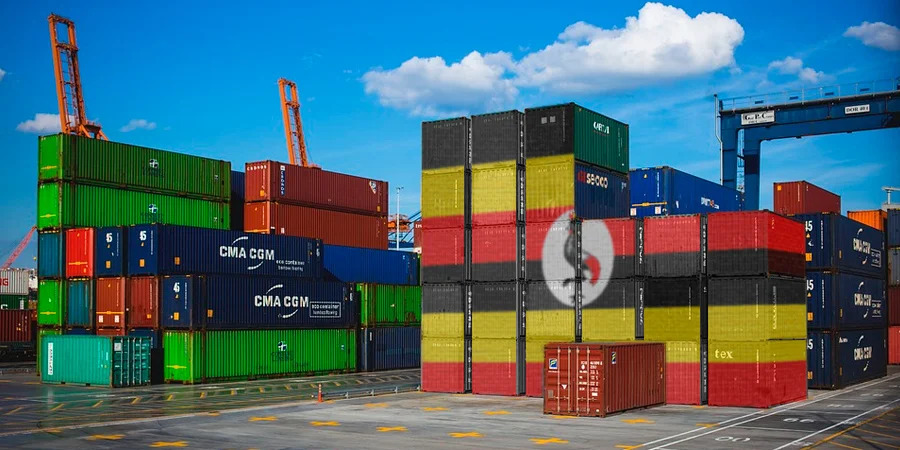
The Minister also reported a merchandise trade surplus of USD 147.26 million in January 2026, marking a significant turnaround from previous trade deficits.
On domestic revenue mobilization, Musasizi said the government collected Shs16,476.07 billion in the second quarter against a target of Shs17,511.59 billion, achieving 94.09% of the target and recording an 8.05% growth compared to the same period in FY2024/25.
Turning to preparations for Uganda’s first oil, the Minister highlighted that development of the East African Crude Oil Pipeline is 80% complete, while engineering studies for the oil refinery project are ongoing.
“The Government expects about Shs2.2 trillion from oil revenues next fiscal year 2026/27, of which Shs1.4 trillion is programmed to finance the budget,” Musasizi said.
The presentation underscored Uganda’s improving macroeconomic indicators, fiscal discipline, and readiness to leverage oil revenues to support national development priorities.
With growth momentum strong, inflation low, and first oil on the horizon, analysts say Uganda is poised to strengthen its economic position and mobilize new resources for investment and public service delivery.