Museveni calls for strategic infrastructure investment to drive Africa’s industrial transformation
Museveni emphasized that infrastructure should not be treated in isolation but as part of a broader development framework linking roads, railways, ports, electricity, and digital systems to productive sectors such as agriculture, tourism, and small businesses.
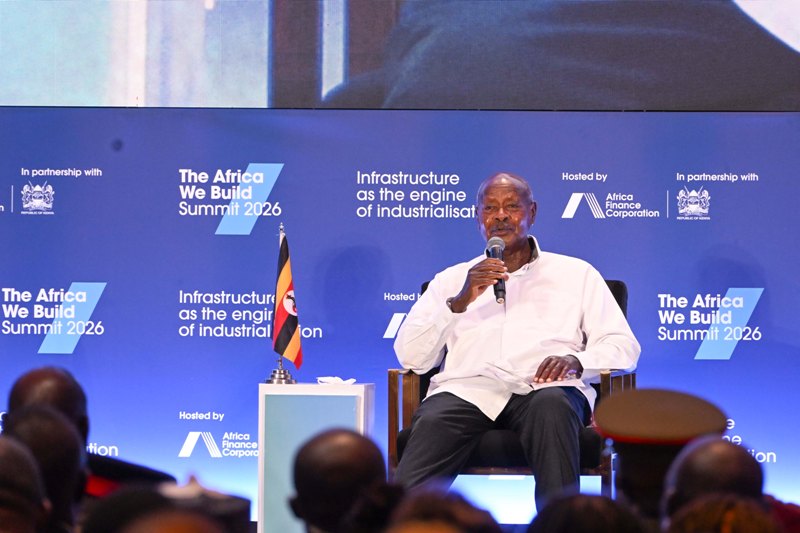
Uganda’s President Yoweri Museveni joined regional and global leaders for the opening of the Africa We Build Summit 2026 in Nairobi, calling for a coordinated approach to infrastructure development as a driver of industrialisation across the continent.
The two-day summit, held at the JW Marriott Hotel Nairobi, is hosted by the Africa Finance Corporation in partnership with the Government of Kenya. It has drawn Heads of State, policymakers, and private sector leaders to explore practical ways of unlocking Africa’s economic potential through large-scale projects.
President Museveni commended his host, William Ruto, and the organisers for convening the summit.
“I thank H.E. President William Ruto and Africa Finance Corporation for organising the Africa We Build Summit,” Museveni said.
He urged African leaders to adopt a strategic and integrated approach to infrastructure development, stressing that investments in transport, energy, industrial capacity, and regional markets are key to unlocking growth.
Museveni emphasized that infrastructure should not be treated in isolation but as part of a broader development framework linking roads, railways, ports, electricity, and digital systems to productive sectors such as agriculture, tourism, and small businesses.
“The transformation of Africa requires moving priority infrastructure projects from conception to implementation through coordinated planning and regional cooperation,” he said.
He observed that Africa’s economic growth has not yet matched its vast natural resources and demographic potential, attributing this gap to structural bottlenecks, including political instability and weak institutions.
Museveni called for ideological clarity, national unity, and strong security systems, warning that sectarian politics undermines both infrastructure development and economic transformation.
He also highlighted the need for value addition, urging African countries to move away from exporting raw materials and instead focus on producing finished goods.
“Value addition in commodities such as cotton, coffee, minerals, and petroleum will significantly increase revenues and create jobs,” he said.
The President further advised governments to channel borrowed funds into productive sectors such as electricity generation, railways, pipelines, and industrial manufacturing, rather than recurrent expenditure.
“Infrastructure must strengthen what I call the bone marrow of the economy—the core systems that support industrialisation and long-term growth,” he added.
Museveni reaffirmed Uganda’s commitment to regional integration through investments in infrastructure connectivity, industrial production, vaccine manufacturing, steel development, and petroleum refining.
He also stressed the importance of expanding intra-African trade under the African Continental Free Trade Area, describing market integration as critical for attracting investment and supporting large-scale production.
In his keynote address, President Ruto underscored the urgency of boosting manufacturing and value addition across Africa.
“We must acknowledge that other regions have faced similar challenges and overcome them. Africa’s share in global trade requires urgency—manufacturing has remained stagnant at 10 percent,” Ruto said.
He called for stronger political commitment to infrastructure connectivity, including roads and supply chains for raw materials and intermediate goods.
Ruto also pledged continued leadership from Kenya in advancing regional infrastructure, noting that the government is strengthening its equity position to support development.
He thanked Museveni for Uganda’s role in regional projects, particularly the oil pipeline, saying: “The same way you invested in the pipeline is the same way we are always ready to work together.”
Meanwhile, Nigerian industrialist Aliko Dangote praised Museveni’s policy stance on banning the export of unprocessed minerals and pledged further investment in the region.
“With the support of our leaders, we will build a refinery in East Africa similar to the one in Nigeria,” Dangote said.
The summit continues with discussions focused on financing infrastructure, accelerating industrialisation, and positioning Africa for greater economic independence.