Museveni meets IMF’s Selassie to map out economic expansion strategy
A consistent theme in the discussions was the role of the private sector as the primary engine of wealth creation. Museveni reiterated Uganda’s long-standing policy stance: economic leadership belongs to private enterprise, not state-owned corporations.
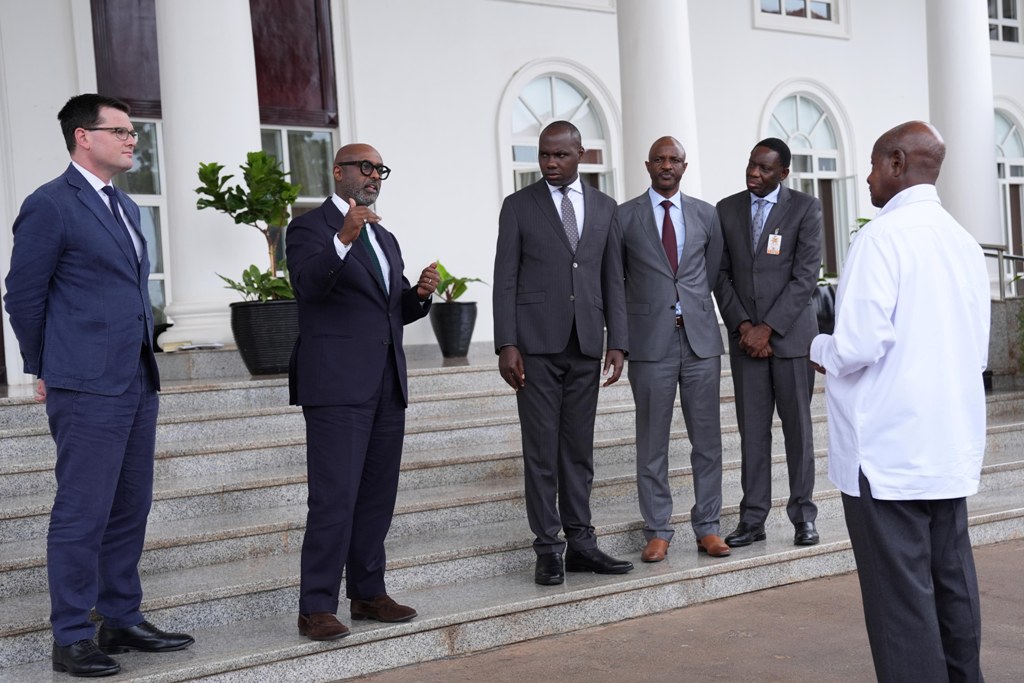
In a high-level engagement underscoring Uganda’s evolving economic agenda, President Yoweri Museveni on 17th February 2026 hosted Abebe Aemro Selassie, Director of the African Department at the International Monetary Fund, at State House, Entebbe.
The meeting focused on Uganda’s macroeconomic trajectory, domestic revenue mobilisation, and structural reforms aimed at accelerating growth while broadening the tax base.
Growth Momentum — and the Next Frontier
President Museveni struck an optimistic tone, describing Uganda’s economy as firmly on a growth path, expanding at roughly seven percent annually.
“The economy is doing well and will do even better,” he said, framing the next phase of expansion around value addition. For Uganda, the strategy is clear: move beyond exporting raw commodities toward higher-value processed goods, particularly in agriculture and manufacturing.
The President argued that sustained economic transformation must rest on firm foundations — beginning with security. In his view, stable defence structures are not peripheral to growth but central to it. Without security, he noted, development ambitions cannot take root.
Private Sector at the Helm
A consistent theme in the discussions was the role of the private sector as the primary engine of wealth creation. Museveni reiterated Uganda’s long-standing policy stance: economic leadership belongs to private enterprise, not state-owned corporations.
“We rejected the idea that parastatals should lead the economy,” he emphasised. “The main economy should be in the hands of the private sector.”
To that end, he pointed to the importance of lowering production costs — electricity, internet connectivity, fuel (including jet fuel), railway transport, and pipeline infrastructure — as decisive factors in improving competitiveness. Reducing the cost of doing business, he argued, is critical to unlocking industrial growth and attracting investment.
Financing Growth and Expanding Markets
Affordable, patient capital remains another pillar of the strategy. The President highlighted the role of the Uganda Development Bank in providing long-term financing tailored to manufacturers and farmers; sectors seen as central to value addition and job creation.
On markets, Museveni acknowledged that while Uganda’s domestic demand is steadily expanding, access to regional and global markets is indispensable. As the economy grows at seven percent, he maintained, deeper industrialisation and export diversification could push growth even higher.
IMF Perspective: Reform and Revenue
Selassie commended Uganda for maintaining relative macroeconomic stability and consistent growth, a distinction not easily sustained in volatile global conditions. He encouraged continued structural reforms, particularly those aimed at strengthening domestic revenue mobilisation through widening the tax base.
For the IMF, expanding revenue collection without stifling growth is essential to financing infrastructure, social services, and long-term development.
A Partnership Anchored in Stability
The State House engagement reaffirmed the enduring partnership between Uganda and the IMF, centred on macroeconomic stability, fiscal discipline, and sustainable development.
As Uganda positions itself for its next growth cycle, the message from Entebbe was clear: deepen value addition, empower the private sector, widen the tax base, and keep the fundamentals of stability firmly intact.