Museveni urges peaceful dialogue at IPOD summit, rejects violence ahead of 2026 polls
President Museveni said Uganda’s progress depends on leaders diagnosing societal challenges correctly and applying peaceful solutions rather than resorting to subversion, violence, and divisive politics.
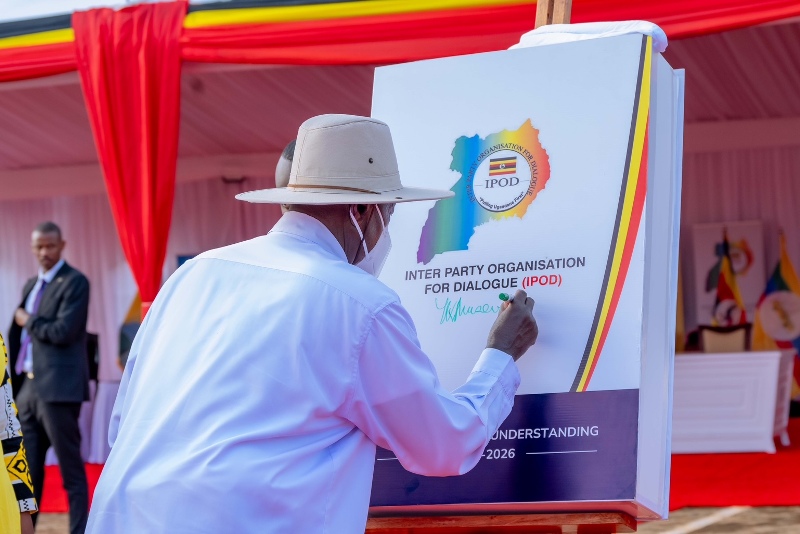
President Yoweri Kaguta Museveni on Thursday 18th September 2025 renewed his call for peaceful dialogue and a rejection of violence among Uganda’s political actors, emphasizing that correct diagnosis of societal challenges and peaceful solutions are crucial for national progress ahead of the 2026 general elections.
Addressing leaders of six political parties at the Inter-Party Organisation for Dialogue (IPOD) Summit at Kololo Ceremonial Grounds, President Museveni underscored the imperative of stability for Uganda’s continued development.
The summit, held under the theme “Together for a Peaceful and Sustainable Uganda,” brought together key figures from the National Resistance Movement (NRM), Democratic Party (DP), Uganda People’s Congress (UPC), Forum for Democratic Change (FDC), Justice Forum (JEEMA), and the People’s Progressive Party (PPP).
Speaking in his dual capacity as NRM National Chairman and IPOD Summit Chair, President Museveni urged opposition leaders to adopt peaceful methods of engagement. He stressed that even if mistakes are made in governance, they can be corrected over time if the country remains stable.
“As we have seen in the last 40 years, the NRM has revived Uganda’s economy. Although we still face challenges, we are much stronger than ever before. Even if one has a wrong understanding, as long as they are not violent, the country will remain stable, and in the future, mistakes can be corrected,” Museveni stated.
Reflecting on his extensive political career spanning 65 years, which began as a Democratic Party youth leader in 1960, President Museveni likened politics to medicine.
“A political leader should be like a doctor—able to correctly diagnose the problems of society. If the diagnosis and prescription are wrong, the patient dies. If leaders misdiagnose societal issues, their countries collapse,” he explained.
At the close of the summit, President Museveni formally handed over the IPOD Chairmanship to the Democratic Party’s Chairman, Norbert Mao.
NRM Secretary General, Richard Todwong, who also chairs the IPOD Council of Secretaries General, lauded President Museveni for sustaining the IPOD platform even after international donors withdrew funding.
He called upon all political parties to continue promoting unity, dialogue, and democratic values, asserting, “Together, we can build a stronger, more inclusive, and accountable political system that serves all.”
Other party leaders echoed the sentiment for dialogue. UPC President Jimmy Akena reaffirmed his party’s commitment, describing it as essential for building unity during the upcoming election season.
“As Ugandans, we may not agree on every policy, but we must focus on the greater good. UPC will always choose dialogue to overcome difficulties,” Akena said, adding that the goal is to emerge stronger and more united from the election season.
FDC President Patrick Oboi Amuriat reiterated his party’s long-standing support for IPOD but cautioned that dialogue must be meaningful and lead to tangible results.
JEEMA President Asuman Basalirwa concurred, emphasizing that Uganda’s problems can only be addressed through dialogue and consensus. Saddam Gayira, President of the People’s Progressive Party (PPP), highlighted the effectiveness of non-confrontational politics, sharing his personal experience of 30 years in politics without police summons.
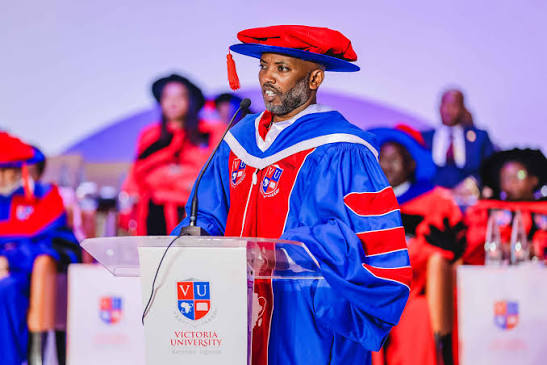
Dr. Lawrence Sserwambala, IPOD’s Executive Director, acknowledged the platform’s milestones but warned against persistent challenges such as electoral violence, weak enforcement of the code of conduct, and youth vulnerability. Dr. Sserwambala urged that the 2026 elections provide a critical opportunity to strengthen consensus, fairness, and inclusivity.
“Uganda is watching us. History will judge us by the choices we make. Let us choose peace, let us dialogue, let us put Uganda first,” he concluded.