Rwenzori Marathon joins global elite runners with World Athletics label
The marathon’s certification strengthens that narrative, positioning Uganda not just as a wildlife destination, but as a credible host of globally benchmarked sporting events.
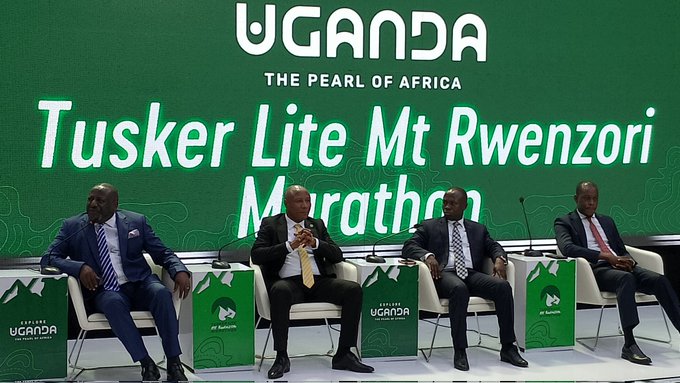
Uganda’s distance running story has entered a new chapter. The Tusker Lite Mt. Rwenzori Marathon has been awarded World Athletics Label Road Race status, becoming the country’s first internationally certified marathon and one of only seven such events on the African continent.
The announcement was made at a high-profile launch of the race’s fifth edition at the Sheraton Kampala Hotel, attended by government ministers, tourism leaders and sports stakeholders, a signal that this is no longer just a race, but a national brand asset.
From Scenic Run to Global Qualifier
The World Athletics Label, granted by World Athletics, confirms that the August 22 race in Kasese meets strict international standards for course measurement, timing systems, safety protocols and organisational excellence.
The designation also elevates the marathon into the global qualification ecosystem. Performances in Kasese can now serve as qualifying times for premier endurance races such as the Comrades Marathon and the Two Oceans Marathon in South Africa.
For serious runners, that transforms the Rwenzori event from a bucket-list scenic race into a competitive pathway.
Running on the Equator
Few marathons anywhere in the world can claim a course that crosses the Equator. Fewer still combine certified tarmac with dramatic elevation shifts and panoramic views of the snow-capped Rwenzori Mountains.
The route’s terrain tests both endurance and strategy, weaving through Kasese town against a backdrop often described as cinematic. It is this blend of athletic challenge and natural spectacle that has helped the marathon carve out a distinctive identity within Africa’s crowded running calendar.
Uganda now joins regional heavyweights such as Nairobi, long associated with elite distance running, in hosting internationally recognised road races. While Kenya remains dominant in global athletics, the Rwenzori certification signals Uganda’s ambition to compete not only in talent production but in event hosting standards.
Big Ambitions, Bigger Numbers
Deputy Speaker of Parliament Thomas Tayebwa used the launch to set an audacious long-term participation target of 100,000 runners.
“Our ambition is bold. We are looking at attracting up to 100,000 participants over time. Every runner represents revenue for local businesses, income for families and taxes for government,” he said.
The economic case is already compelling. A 2023 impact study by the Tourism Research and Development Centre estimated that the marathon generated UGX 3.5 billion in direct expenditure in Kasese, with average visitor spending at approximately UGX 300,000 per person. Hotel occupancy during race periods rose from below 40 per cent to more than 60 per cent.
For a town traditionally known as a gateway to national parks, the marathon has created a fresh revenue stream that extends beyond peak safari seasons.
Tourism Beyond Wildlife
Ron Kazooba Kawamara, Vice Chairperson of the Uganda Tourism Board, framed the marathon as a case study in tourism diversification.
“The run alone is now generating more revenue in Kasese than all our previous combined efforts,” he said. “It does not have to revolve around traditional nature offerings alone. It can be a beach concept, cycling routes, or any number of creative experiences.”
Indeed, many participants extend their stay beyond race day. Guided treks in Rwenzori Mountains National Park, chimpanzee tracking in Kibale National Park, and wildlife safaris in Queen Elizabeth National Park have become natural add-ons to the marathon weekend.
The model blends sport tourism with experiential travel, a high-value segment that global destinations increasingly court.
From 800 to 5,000 and Rising
When the marathon launched on September 3, 2022, it attracted just over 800 runners, backed by Tusker Lite as title sponsor. Participation doubled to more than 2,000 by the second edition in 2023 and surpassed 5,000 runners by 2025, drawing athletes from dozens of countries.
The growth curve mirrors Uganda’s broader tourism momentum. In 2024, the country recorded 1,371,895 international tourist arrivals, generating $1.28 billion in revenue. Tourism accounted for 16 per cent of total exports, contributed 6.6 per cent to GDP, and supported over 803,000 jobs.
The marathon’s certification strengthens that narrative, positioning Uganda not just as a wildlife destination, but as a credible host of globally benchmarked sporting events.
More Than a Finish Line
Organiser Amos Wekesa of Equator Heights described the World Athletics Label as a milestone that puts “Kasese and Uganda on the global map.” Beyond branding, he pointed to benefits including athlete talent scouting, public health awareness and conservation advocacy.
The race offers four distances, a full 42.2 km marathon, a 21.1 km half-marathon, a 10 km run and a 5 km fun run; broadening participation from elite competitors to community runners and families.
In many ways, that inclusivity may prove just as important as elite certification. Because while the World Athletics Label signals international credibility, the heartbeat of the Rwenzori Marathon remains local — small businesses filling rooms, vendors selling meals, guides booking treks, and a town transforming into a festival of endurance and enterprise.
Uganda has long been known for producing great runners. With the Rwenzori Marathon’s new status, it is now building a platform worthy of them.