Uganda and Saudi Arabia brew a $850 million coffee ambition
For Kampala and Riyadh alike, the message is clear: the next phase of cooperation will be measured not just in goodwill, but in factories built, products branded, and markets won.
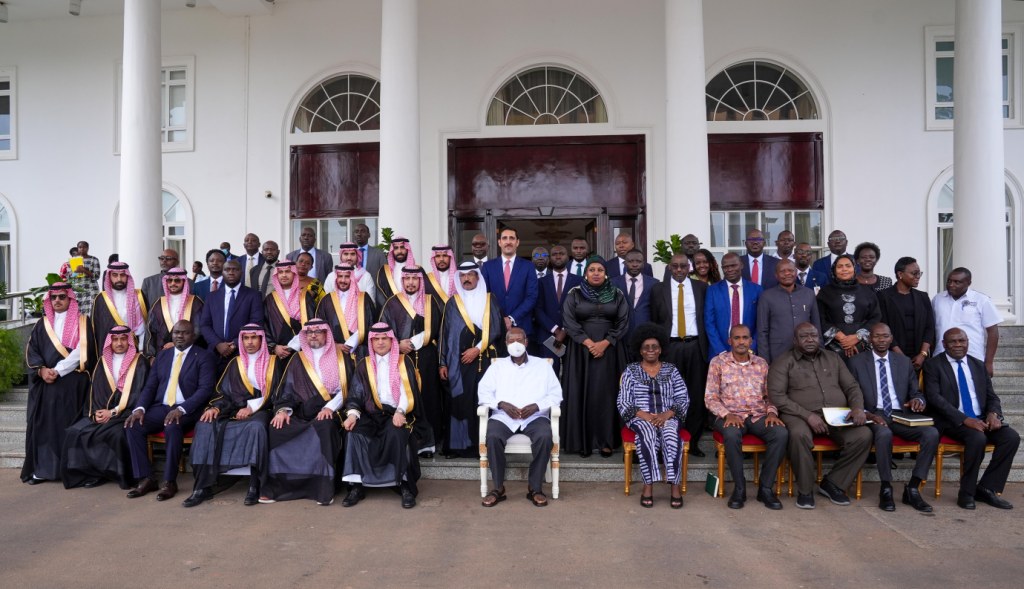
In a move that signals deepening economic diplomacy between Kampala and Riyadh, President Yoweri Museveni on Tuesday, February 17, 2026, hosted a high-level investment delegation from the Saudi Arabia at State House, Entebbe.
The engagement was not ceremonial. It was commercial.
Led by Ali O Alswayeh, the Saudi delegation reaffirmed the Kingdom’s appetite for expanded investment in Uganda, identifying agriculture, particularly coffee value addition, as a priority sector. For Uganda, Africa’s leading coffee exporter by volume, the discussions pointed to a long-sought shift: from commodity exporter to branded product powerhouse.
From Raw Beans to Branded Value
At the heart of the talks was the Value at Source Coffee Project (VASP), an agro-industrial initiative spearheaded by Nonda Coffee. The project is designed to move Uganda up the value chain; exporting finished, branded coffee rather than raw green beans.
Central to that ambition is the proposed Luwero Coffee Park, an integrated industrial complex in Luwero District projected to process 42,000 metric tons of coffee annually and generate up to USD 850 million in annual revenue.
The facility is envisioned as a full-spectrum operation: cleaning, grading, roasting, grinding, production of soluble and specialty coffee, packaging, branding, and direct export of finished products. In essence, it would anchor Uganda’s transition into a vertically integrated coffee economy.
The projected impact is significant. An estimated 1,500 direct jobs and roughly 3,000 indirect opportunities in logistics, retail, and auxiliary services are expected to emerge from the project. More strategically, over 100,000 coffee farming households would be integrated into a structured supply chain, linking smallholder production to global retail markets.
A Gateway to the Middle East
For Saudi Arabia, the opportunity is equally compelling. The Kingdom represents a strategic gateway into the broader Middle East, one of the fastest-growing coffee consumption regions globally. Rising demand for premium blends and specialty coffee positions Uganda as a potential long-term supplier of high-quality, branded products.
By anchoring partnerships within value-added production, both countries stand to benefit; Uganda through enhanced export earnings and industrialisation, and Saudi Arabia through supply security and participation in upstream agro-processing ventures.
Investment Diplomacy and Industrial Strategy
President Museveni welcomed the delegation, noting that while Uganda and Saudi Arabia have maintained cordial diplomatic ties for years, economic engagement has yet to fully match political goodwill.
“We have been working together for a long time, but we have not fully engaged to maximise our investment opportunities,” he observed.
The meeting reflected a broader theme in Uganda’s development strategy: investment-led growth anchored in private sector participation and industrial expansion. Value addition remains central to this agenda. The logic is straightforward; exporting finished goods generates higher margins, creates skilled jobs, strengthens tax revenues, and accelerates structural transformation.
Beyond Coffee
While coffee dominated discussions, the engagement signals wider prospects in agro-processing, industrial development, and market expansion. For Uganda, attracting strategic partners capable of injecting capital, technology, and market access is key to achieving its industrialisation targets.
For Saudi investors, Uganda offers fertile agricultural land, improving infrastructure, regional market access, and policy alignment around private sector–driven growth.
A Strategic Inflection Point
The Entebbe meeting marked more than a diplomatic courtesy call. It underscored a shared commitment to reposition bilateral relations toward commercially viable, mutually beneficial partnerships.
If realised, the Luwero Coffee Park and associated investments could serve as a template for Uganda’s broader push toward value-based exports — transforming not only coffee, but the structure of the economy itself.
For Kampala and Riyadh alike, the message is clear: the next phase of cooperation will be measured not just in goodwill, but in factories built, products branded, and markets won.