Uganda unveils Shs69.4 trillion FY 2026/27 budget in first Budget Call Circular
A significant detail revealed in the circular is the preliminary resource envelope for FY 2026/27, projected at Shs 69.399 trillion. This represents a slight decrease from the Shs 72.376 trillion allocated for FY 2025/26.
The Ministry of Finance, Planning and Economic Development (MoFPED) has officially signaled the commencement of the budget preparation process for the Financial Year 2026/27.
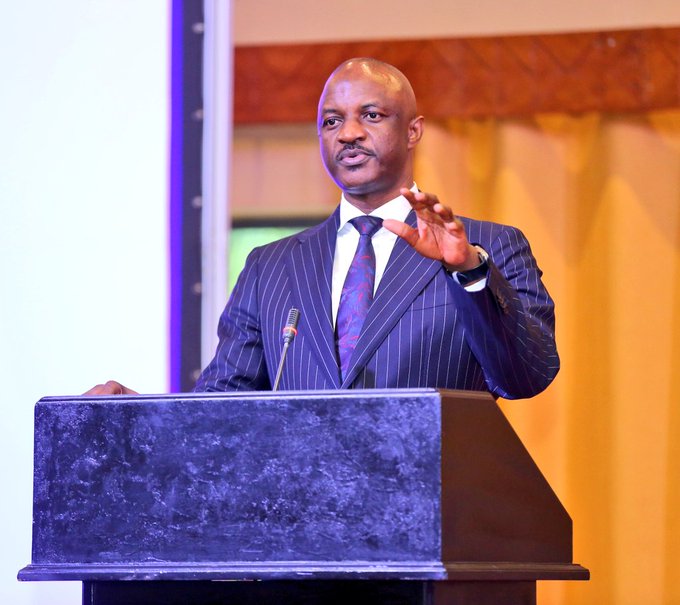
This crucial first step was marked by the issuance of the inaugural Budget Call Circular (BCC) by Permanent Secretary and Secretary to the Treasury (PSST), Ramathan Ggoobi.
The circular outlines the government’s strategic vision, resource allocation parameters, and expenditure limits, underscoring a firm commitment to realizing the ambitious goals of the National Development Plan IV (NDP IV) and the transformative Tenfold Growth Strategy.
The Budget Call Circular serves as a vital communication tool, guiding various government entities in their budget submissions. It prominently highlights the overarching themes of NDP IV and the Tenfold Growth Strategy, with a specific emphasis on the “Accelerator” sectors: Agriculture, Tourism, Manufacturing, and Services (ATMS), and their supporting Enablers.
A preliminary assessment of the resource envelope for FY 2026/27 indicates a projected figure of Shs 69.399 trillion. While this represents a slight decrease from the Shs 72.376 trillion allocated for FY 2025/26, the government anticipates a significant increase in domestic revenues, expected to reach Shs 40.090 trillion, up from Shs 36.806 trillion in the current fiscal year. This upward projection in domestic resource mobilization reflects the ongoing efforts to enhance the country’s fiscal self-reliance.
Budgeting for Future Needs
Ggoobi stressed the importance of a forward-thinking approach to budget preparation. “Budget preparation should not be limited to current problems,” Ggoobi stated.
“Accounting Officers must anticipate future needs, integrate long-term priorities, and align plans with the Tenfold Growth Strategy and NDP IV.” This directive underscores the government’s dedication to achieving sustainable development and driving long-term economic transformation.
Beyond strategic alignment, the BCC introduces several key policy and administrative directives aimed at bolstering the efficiency and effectiveness of the budget process.
Ggoobi urged for:
Deepening Public Participation: Encouraging broader engagement from citizens and stakeholders in the budget formulation process to foster greater transparency and accountability.
Building Consensus and Eliminating Budget Games: Promoting a collaborative environment among government entities to minimize inefficiencies and unproductive “budget games” that can impede national progress.
Tax Inclusive Budgeting: Adopting a budget framework that comprehensively accounts for all revenue streams, including taxes, to present a realistic picture of available financial resources.
Prioritization of Core Mandates: Directing ministries and departments to concentrate on their essential functions and strategic objectives when developing their budget proposals.
The issuance of this BCC marks the initial phase in a comprehensive process encompassing consultations, detailed planning, and resource allocation across all sectors of the Ugandan economy. The focus on NDP IV and the Tenfold Growth Strategy signals a concerted effort to drive substantial economic expansion and improve the livelihoods of Ugandans in the coming years.
The budget’s overarching theme – “Full Monetisation of Uganda’s Economy through Commercial Agriculture, Industrialisation, Expanding and Broadening Services, Digital Transformation and Market Access” – signifies a strategic shift away from traditional reliance on primary commodity exports towards a more diversified, value-added economic model.
“This budget is not just about numbers. It is about transforming Uganda into a productive, inclusive, and globally competitive economy,” declared Ramathan Ggoobi during the launch ceremony at the Ministry’s headquarters.
MoFPED explains that the modest contraction in the overall envelope is a result of re-prioritization of spending and a more disciplined approach to debt management. The projected rise in domestically generated revenue points to the successful rollout of the second Domestic Revenue Mobilisation Strategy (2025/26-2029/30).
Four “Accelerator” Sectors to Drive Growth
The budget identifies four key priority sectors, dubbed “accelerators,” poised to drive economic progress:
Agro-Industrialisation: Focuses on commercializing smallholder farms, expanding irrigation, mechanization, improving post-harvest facilities, and introducing a new agricultural insurance scheme.
Tourism Development: Aims to upgrade infrastructure at key tourist attractions like Mt. Rwenzori, Bwindi, and Murchison Falls, pilot health-tourism initiatives, launch a national branding campaign, and construct highway refreshment centers.
Mineral-Based Industrialisation (Oil & Gas): Includes the completion of the East African Crude Oil Pipeline (EACOP), the anticipated first oil lift in 2026, the development of local content frameworks, and the creation of a national mineral market.
Science, Technology & Innovation: Advocates for the commercialization of indigenous firms like Kira Motors, Dei Bio Pharma, and banana-based products, alongside expanding broadband access to 95% of households and growing the Hi-Tech City and BPO sector.
Human Capital and Infrastructure Thrusts
In addition to sectoral accelerators, the budget earmarks Shs 15.2 trillion for social services, encompassing:
Education: Continuation of free Universal Primary (UPE) and Secondary (USE) education, establishment of new seed schools, curriculum updates, and an accelerated teacher recruitment drive aiming for 30% more qualified staff by 2030.
Health: Functionalization of 200 Health Centre IVs, deployment of 12,000 Community Health Extension Workers, and construction of specialized cancer and cardiovascular units in major referral hospitals.
Water & Environment: Installation of 1,500 km of new piped water schemes, wetland restoration projects, and a climate-resilient land-use plan linked to the National Adaptation Programme of Action.
Further investments are planned for Transport & Energy, including the completion of the Standard Gauge Railway (SGR) to Gulu, the expansion of Kabalega International Airport, the Kampala-Jinja Expressway Public-Private Partnership (PPP), and new power generation capacity from solar, a pilot nuclear-grade facility, and thermal plants to support industrial parks.
Financing the Ambitious Agenda
The government plans to finance this agenda through a mix of conventional and innovative mechanisms, including:
Domestic Revenue Mobilisation: Strengthening tax administration, implementing digital VAT collection, and broadening the fiscal base.
Islamic Finance: Issuing Sukuk bonds to attract regional Sharia-compliant investors.
Chinese Market Access: Issuing Panda Bonds to tap into the growing pool of Chinese institutional investors.
Green and Diaspora Bonds: Earmarked for climate-smart infrastructure and projects attracting Ugandans abroad.
Public-Private Partnerships (PPPs): Particularly for transport corridors, power transmission, and the Hi-Tech City.
Risk Mitigation Strategies
MoFPED’s risk assessment identifies global trade tensions, climate change, corruption, and regional insecurity as primary challenges. Mitigation strategies include reinforcing economic and commercial diplomacy to diversify export markets, expanding climate adaptation programs, tightening anti-corruption mechanisms by granting the Office of the Auditor General a broader mandate to audit PPP contracts, and enhancing digital governance with a new e-procurement portal and real-time budget tracking system.
What Lies Ahead?
All ministries and local governments are mandated to submit their Budget Framework Papers (BFPs) by Friday, November 14, 2025. These submissions must align with NDP IV, the Tenfold Growth Strategy, and the Programme-Based Budgeting (PBB) framework. The final budget is slated for presentation to Parliament in early February 2026 for debate and approval.
If the outlined revenue mobilization and financing mechanisms are successfully implemented, Uganda could witness a significant rise in its GDP per capita, from the current approximately US$800 to around US$8,000 by 2035. This transformation holds the promise of lifting millions out of poverty and solidifying the East African nation’s position as a regional economic powerhouse.