
Museveni signs law to strengthen Uganda’s control over foreign agents
Government further indicated that the new law is expected to improve coordination among state institutions, strengthen accountability mechanisms, and support efforts aimed at maintaining peace, stability, and orderly governance.
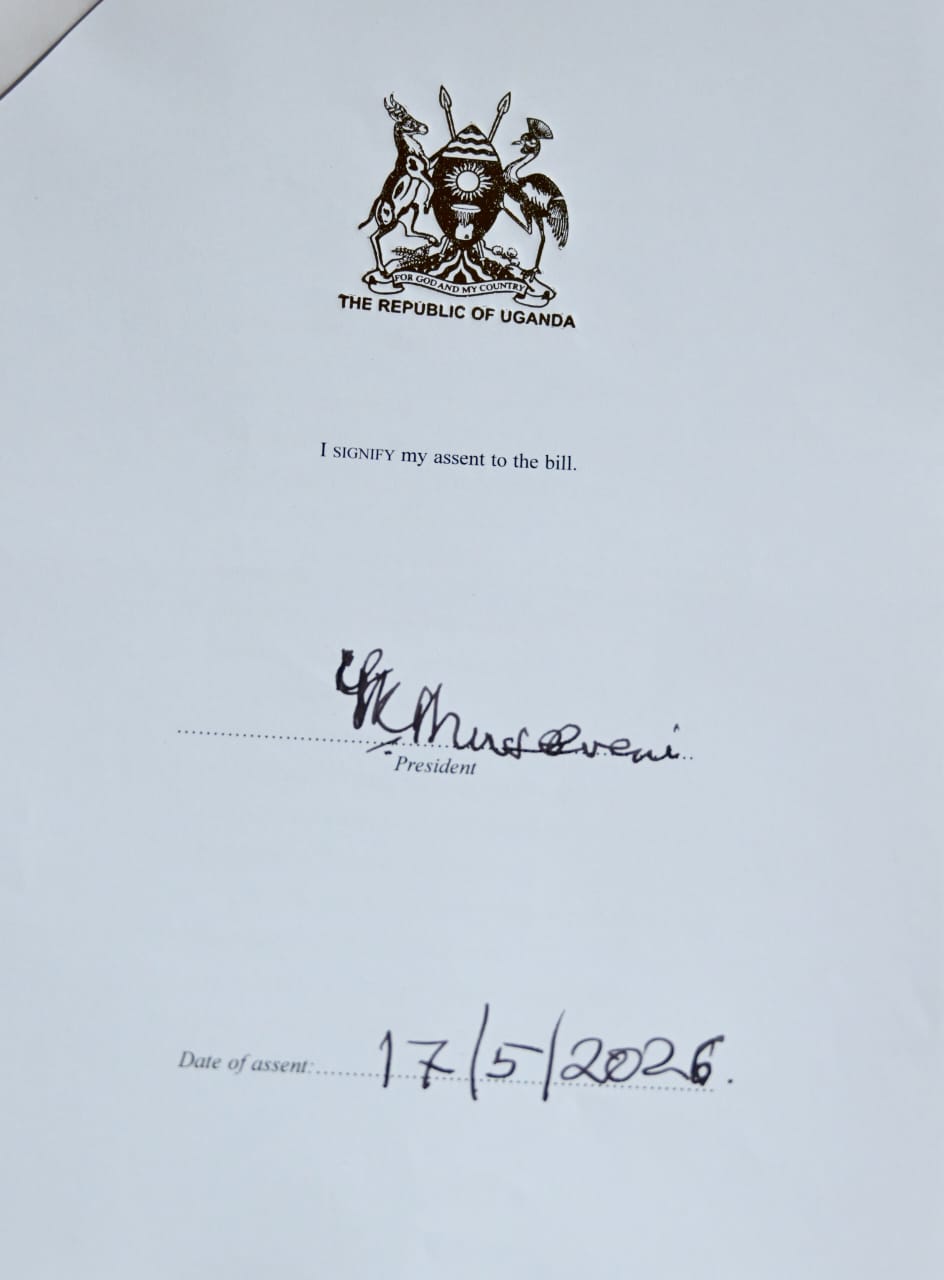
Yoweri Kaguta Museveni has assented to the Protection of Sovereignty Act, 2026, officially bringing the legislation into force as part of efforts to strengthen Uganda’s national independence and governance framework.
The law, signed on May 17, 2026, provides for the protection of Uganda’s sovereignty and designates the department responsible for peace and security under the Ministry of Internal Affairs as the implementing authority.
According to the government, the Act will regulate the registration and operations of agents of foreign entities, including oversight of funding and other forms of assistance extended to such agents.
Officials say the legislation is intended to safeguard Uganda’s national decision-making processes and reinforce the constitutional principle that governance and development priorities should remain anchored in national interests.
“With the presidential assent, the Bill now becomes law and will guide implementation by the relevant state institutions in line with existing legal and policy frameworks,” the statement issued after the signing noted.
Government further indicated that the new law is expected to improve coordination among state institutions, strengthen accountability mechanisms, and support efforts aimed at maintaining peace, stability, and orderly governance.
The Protection of Sovereignty Act is also seen as part of Uganda’s broader strategy to protect its policy space while engaging with regional and international partners on development and economic cooperation.
Officials say the legislation could complement ongoing national development initiatives by supporting economic transformation, enhancing public sector efficiency, and ensuring stronger management of state authority.
The enactment of the law comes amid growing debates globally over foreign influence, national sovereignty, and the regulation of external actors operating within sovereign states.