Balaam and Nameere are shaking the table – but who has been watching the spills?
Ugandans have been asking for leaders who do not only make speeches from offices but physically go where the problems are, interact with communities and ask difficult questions about how public resources are being utilised.
By Ingrid Mpanga
Public uproar and interest grow as Ugandans welcome leaders moving beyond speeches to demand answers on public projects and accountability.
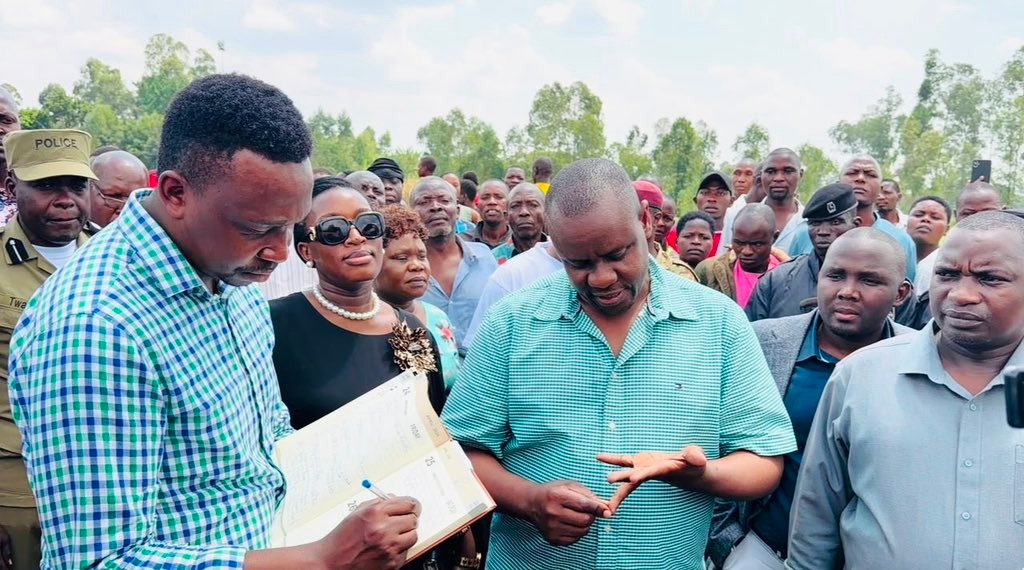
Everyone is paying attention to what the Minister of Local Government, Balaam Barugahara Ateenyi, and the Minister of State for Local Government, Justine Nameere Nsubuga, are doing as they move across the country inspecting government projects, questioning stalled works and demanding answers from those responsible for delivering services to citizens.
Their highly publicised on the ground engagements have captured public imagination because they represent something many Ugandans have been asking for.
Ugandans have been asking for leaders who do not only make speeches from offices but physically go where the problems are, interact with communities and ask difficult questions about how public resources are being utilised.
For years, Ugandans have watched billions of shillings allocated for roads, markets, health centres, schools and other public infrastructure, only to see some projects delayed, abandoned or delivered below expectations.
The frustration is not simply about unfinished buildings or damaged roads. It is about a deeper feeling that taxpayers continue to carry the burden while accountability often moves slowly.
As the ministers continue their inspections, public reactions have been mixed, but one response that has particularly stood out is that of the Uganda Institution of Professional Engineers.
The UIPE has raised concern about what it describes as arbitrary arrests of engineers and emphasised the importance of due process.
That position raises an important principle.
Every Ugandan deserves protection under the law. No professional, regardless of their role, should be condemned without proper investigation and a fair hearing. Accountability must always operate within the boundaries of justice.
However, this moment also demands a broader conversation. Professional bodies exist not only to defend the rights of their members but also to safeguard the integrity of their professions.
When concerns about poor workmanship, abandoned projects or substandard infrastructure arise, the public naturally expects the voice of the profession to be heard long before arrests become the subject of national debate.
Defending members when they face legal challenges is a legitimate responsibility. But so too is promoting ethical practice, strengthening professional standards and asking difficult questions within the profession when things go wrong.
Many Ugandans are left wondering whether society has sometimes fallen into a culture of “see no evil, hear no evil” until a crisis becomes impossible to ignore.
When roads fail prematurely, when public buildings develop defects, when projects remain incomplete and when communities continue raising complaints, where does responsibility begin?
Should accountability only become urgent when someone is arrested, or should it begin much earlier through stronger professional oversight, ethical leadership and institutions that are willing to confront problems before they become scandals?
This question does not place responsibility on engineers alone. Public projects are built through a complex chain involving politicians, technical officers, procurement officials, contractors, consultants and regulators.
A failed project is rarely the result of one decision or one person. It is often a reflection of weaknesses across an entire system. That is why Uganda needs accountability at every level.
The public official who approves funding must be accountable.
The person who supervises implementation must be accountable.
The contractor who delivers the work must be accountable.
The professional who certifies quality must be accountable.
The institution responsible for oversight must be accountable.
Public funds belong to citizens, and those entrusted with managing them carry a responsibility that goes beyond signing documents. They carry a responsibility to ensure that communities receive the services they were promised.
This is why many Ugandans have welcomed the visibility of the current inspections. After years of hearing about projects through reports and paperwork, citizens are seeing leaders physically confront the realities on the ground.
Whether every action taken during these engagements meets legal standards is a matter for the relevant institutions to determine, but the demand for answers from the public is understandable.
The bigger question is whether this moment can become a turning point.
Can it inspire stronger ethics within professions? Can it encourage government systems to detect failures before taxpayers lose money? Can it strengthen institutions so that accountability is not driven by public pressure but becomes part of everyday governance?