
BoU Governor Assures Banks: ‘Be Still, All Will Be Fine’ as Shilling Slides
Atingi-Ego used previous episodes of currency pressure to demonstrate that Uganda’s foreign-exchange market has experienced significant external shocks before and subsequently stabilised.
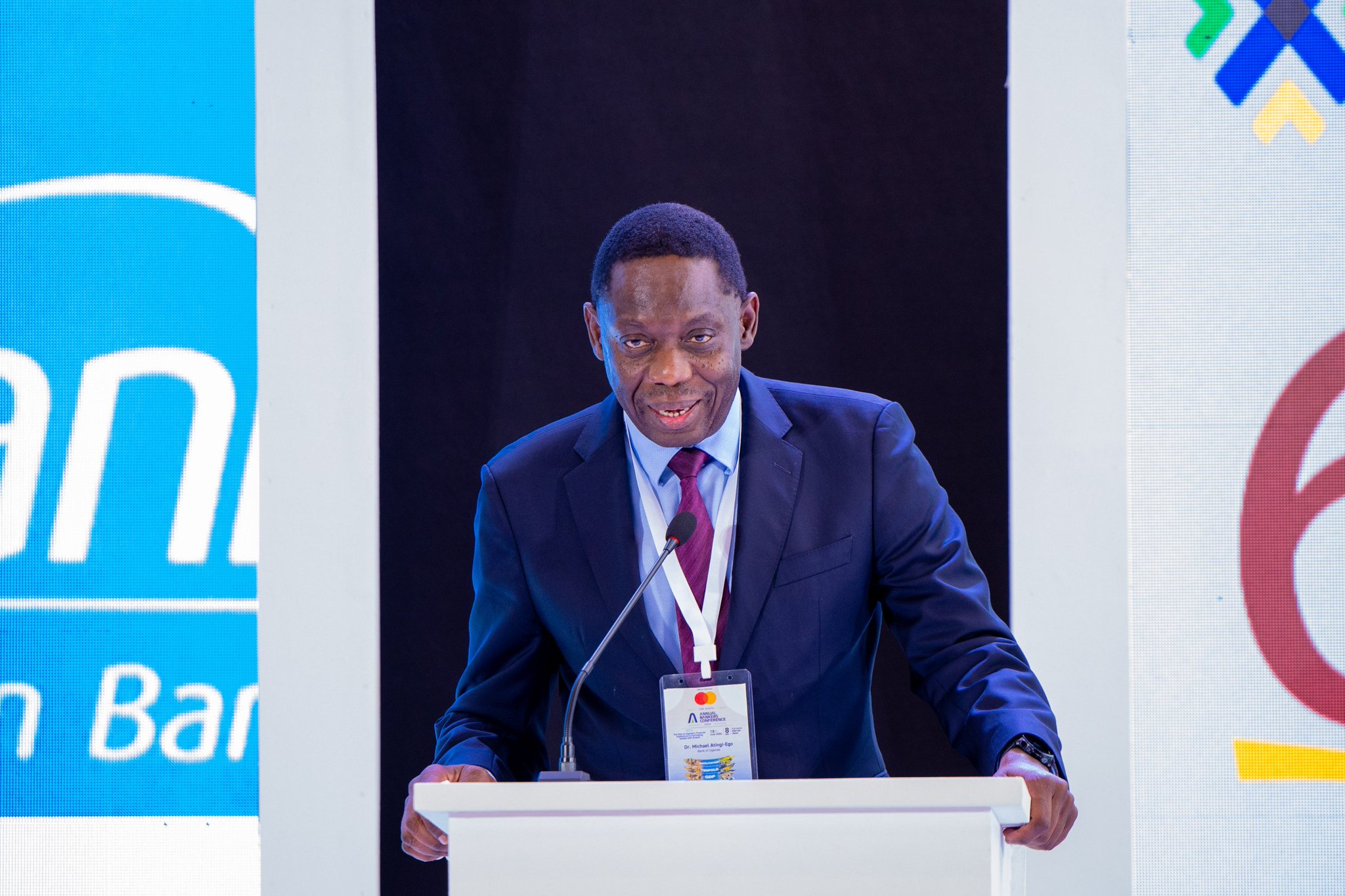
Bank of Uganda (BoU) Governor Michael Atingi-Ego has sought to reassure players in Uganda’s financial sector that the central bank has the tools needed to stabilise the shilling following renewed depreciation pressure.
Speaking Friday at the annual Bankers Conference 2026, organised by the Uganda Bankers’ Association, Atingi-Ego attributed the latest pressure partly to developments in global oil markets, while reminding bankers that Uganda operates a market-determined exchange-rate regime.
“Bank of Uganda has what it takes to stabilize this exchange rate. So, be still. All will be fine,” Atingi-Ego told the financial sector.
The shilling was trading at around Sh3,930 to the US dollar at the time of his remarks, according to the Governor.
Atingi-Ego used previous episodes of currency pressure to demonstrate that Uganda’s foreign-exchange market has experienced significant external shocks before and subsequently stabilised.
He recalled that between July and August 2022, central banks in advanced economies began raising interest rates, triggering capital outflows from emerging and frontier markets. The shilling weakened from about Sh3,650 to close to Sh3,900 per dollar in February 2022 before stabilising.
He also pointed to August 2023, when the World Bank announced that it would not approve new financing for Uganda, saying the shilling traded close to Sh4,000 per dollar but subsequently weathered the pressure.
Another episode came in February 2024, when a neighbouring country issued bonds to facilitate a Eurobond buyback and subsequently issued infrastructure bonds. Atingi-Ego said the shilling again came under pressure, reaching about Sh4,000 per dollar.
The Governor said the latest depreciation should similarly be viewed within the context of external developments rather than as an unprecedented event.
Oil prices add pressure
The latest movement has coincided with developments in global oil markets.
For an oil-importing economy such as Uganda, higher international oil prices can increase demand for US dollars as importers require more foreign currency to settle petroleum bills. This can put pressure on the domestic currency when dollar demand rises faster than supply.
Atingi-Ego acknowledged the connection but stressed that Uganda’s exchange rate is determined by market forces.
The Governor’s message to commercial banks and other financial-sector players was that BoU remains capable of responding to excessive volatility while allowing the exchange rate to reflect underlying market conditions.
His comments are likely to be closely watched by businesses because movements in the shilling have implications for import costs, fuel prices, inflation, foreign-currency debt servicing and the cost of imported machinery and raw materials.
Why the exchange rate matters to businesses
A weaker shilling increases the local-currency cost of goods and services purchased in dollars.
Import-dependent businesses may therefore face higher costs for fuel, machinery, pharmaceuticals, industrial inputs and other imported products. These costs can eventually feed through to consumer prices depending on the extent to which businesses pass them on.
Exporters, on the other hand, can receive more Uganda shillings for the same dollar-denominated export earnings when the shilling depreciates, although the overall effect depends on their imported input costs.
For banks, exchange-rate movements also affect foreign-currency lending, trade finance and the management of foreign-exchange positions.
This makes stability and orderly functioning of the foreign-exchange market particularly important to the financial sector.
BoU signals confidence
Atingi-Ego’s historical comparison was intended to underline BoU’s confidence that the current pressure can be managed.
Rather than focusing solely on the latest exchange-rate movement, he urged financial-sector players to consider Uganda’s previous experiences with capital outflows and external shocks.
His reassurance comes at a time when businesses and investors are closely monitoring currency movements amid changing global commodity prices and financial conditions.
The Governor’s central message was therefore one of calm: the shilling has faced significant external pressures before, and the central bank has the capacity to respond while maintaining Uganda’s market-determined exchange-rate framework.