Africa emerges as a leader in forest finance as governments mobilise new investment
The global assessment finds that forest finance is beginning to move, with credible mechanisms capable of scaling gaining momentum.
For years, the global conversation on forests has largely centred on one question: How much money will the world put on the table to save them?
Across Africa, that conversation is beginning to change.
From Ethiopia’s domestic investment in landscape restoration to Kenya’s mobilisation of hundreds of millions of dollars, Nigeria’s effort to align investors behind national forest priorities and Gabon’s push to put an economic value on standing forests, African governments are increasingly designing their own answers to one of the world’s most difficult climate-finance challenges.
The emerging message is clear: Africa is not simply asking the world to finance its forests. It is increasingly developing models for how forest finance can work.
These developments are highlighted in the first Progress Report of the Forest Finance Roadmap, launched during Forest Finance Day at Climate Week NYC by the Forest & Climate Leaders’ Partnership (FCLP).
The global assessment finds that forest finance is beginning to move, with credible mechanisms capable of scaling gaining momentum. But the transformation remains far short of what is needed to halt and reverse global forest loss by 2030.
The Forest Finance Roadmap estimates an annual US$66.8 billion forest finance gap. Forests currently receive less than one per cent of global climate finance, despite offering around one-fifth of the world’s cost-effective mitigation potential.
“Closing the forest finance gap starts with understanding its scale and where the gaps lie,” said Emelyne Cheney, Director of the FCLP Secretariat. “Pressures on forests are intensifying and the solutions are clear, but they need sustained political attention and investment at scale to turn into action.”
For Africa, the stakes could hardly be higher.
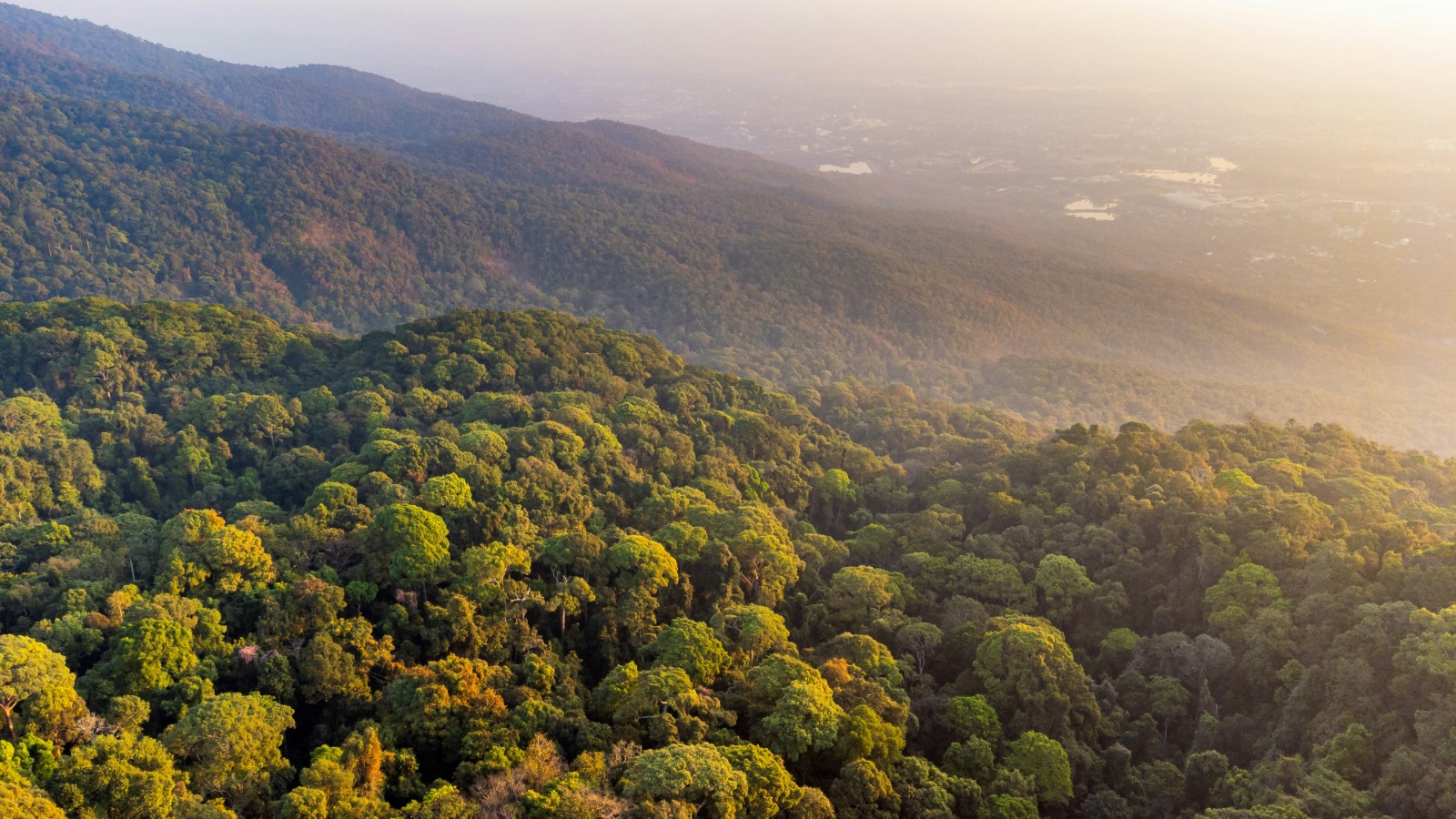
The continent is home to approximately 663 million hectares of forest—16 per cent of the world’s forest area. Its forests support millions of livelihoods, store carbon, protect biodiversity and underpin agricultural and rural economies.
What is increasingly significant, however, is the emergence of African-led approaches that seek to make standing forests an economic asset rather than simply a conservation cost.
Ethiopia: Betting on domestic investment
Ethiopia is demonstrating how domestic public finance can underpin large-scale restoration while attracting international capital.
Land degradation is estimated to cost the country approximately US$4.3 billion every year through reduced agricultural productivity and lost ecosystem services.
In response, the Federal Government allocates between 0.5 and 1 per cent of its annual budget—about US$40–80 million—to forest and landscape restoration through its Green Legacy and Landscape Restoration Fund.
That domestic commitment has helped leverage hundreds of millions of dollars in concessional finance and co-financing from international partners.
The approach reflects an important shift: domestic resources can provide the foundation for international investment rather than waiting for external finance to initiate action.
Ethiopia has also strengthened its support for land rights and community participation, becoming the 17th country to endorse the Intergovernmental Land Tenure Commitment in August.
The country’s preparations to host COP32 in Addis Ababa in 2027 could give it an influential platform to bring these experiences into the global climate-finance debate.
Kenya: Turning forests into an investment opportunity
Kenya is combining domestic budget allocations with international capital to support forest- and landscape-based economic development.
The Progress Report records at least US$229 million in new external finance, including a US$200 million World Bank operation and a US$29.2 million Green Climate Fund grant focused on the Lake Region.
Kenya has also increased its forestry budget by approximately US$38.7 million in FY2025/26 and maintained an allocation of about US$143.8 million for FY2026/27.
The country’s emerging forest bioeconomy pipeline points to an even broader ambition: linking forest protection with investment, jobs and economic value.
Nigeria: Building a national investment framework
Nigeria is taking a different but complementary approach.
Its Securing Nigeria’s Forest Future Country Package, expected to launch internationally at COP31, is designed to bring development partners, financial institutions, philanthropy and private investors behind national forest, climate and biodiversity priorities.
The government-led framework aims to strengthen forest management, restore degraded landscapes, protect biodiversity and build climate resilience while creating conditions for blended finance, carbon finance and private investment.
Environment Minister Balarabe Abbas Lawal has emphasised the importance of ensuring that such investments translate into livelihoods, commercially viable forest value chains and meaningful opportunities for women and young people.
Gabon: Paying for the value of standing forests
In the Congo Basin, Gabon is helping advance another model: paying for environmental outcomes.
As a partner of the Central African Forest Initiative (CAFI), Gabon is participating in efforts to link financing directly to forest and ecosystem performance.
CAFI’s Payments for Ecosystem Services pipeline currently stands at US$290 million, with an ambition to mobilise up to US$2 billion by 2035 across the Congo Basin.
The initiative aims to reach approximately 7.8 million direct beneficiaries and bring about 2.9 million hectares into payments for environmental services and related performance-based schemes.
At least half of the resources are intended to flow directly to farmers, local communities and Indigenous Peoples.
Gabon has also established an FCLP Country Package to align forest, climate and development priorities with investment and international partnerships.
From finance recipients to finance innovators
The significance of these developments extends beyond the individual programmes.
Côte d’Ivoire has launched Africa’s first Sustainability-Linked Finance Framework and secured West Africa’s first €433 million sustainability-linked sovereign loan. Uganda, meanwhile, is piloting an approach to integrate forest and agricultural resilience into sovereign debt and credit analysis.
Taken together, these initiatives suggest a broader evolution in Africa’s role in the global forest economy.
African governments are still calling for greater international finance. But increasingly, they are also putting forward domestic budgets, results-based payments, carbon markets, sovereign-finance mechanisms and country-led investment frameworks to determine how that money can be deployed.
That could prove to be one of the most important shifts in the forest-finance debate.
The question is no longer simply whether the world can find more money for forests. It is whether governments, investors and communities can build financial systems that make keeping forests standing economically viable.
Africa is beginning to offer some answers.
The next test is scale, and whether these emerging models can deliver measurable benefits for forests, economies and communities quickly enough to help meet the 2030 goal of halting and reversing forest loss.