Uganda’s FY2027/28 budget targets jobs, exports and household incomes as government tightens spending
The Ministry of Finance has set a preliminary Sh79.22 trillion resource envelope for FY2027/28, compared with Sh84.39 trillion for the current financial year.
Uganda has begun preparations for the FY2027/28 national budget with the Government placing job creation, export growth, household incomes and private-sector investment at the centre of its economic strategy.
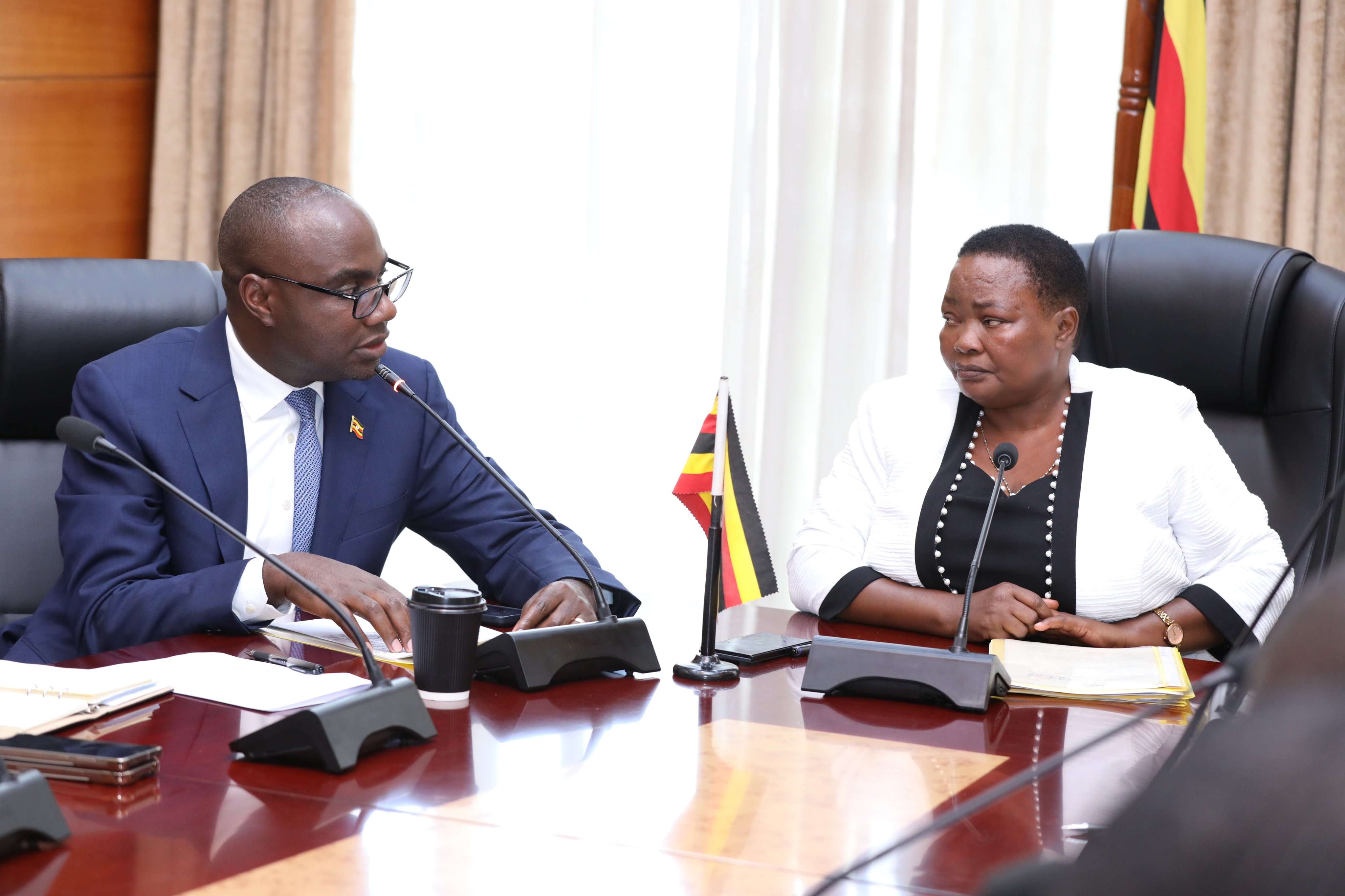
Finance Minister Henry Musasizi presented the FY2027/28 Budget Strategy as Prime Minister Robinah Nabbanja launched the Presidential Advisory Committee on Budget (PACOB), a new mechanism intended to sharpen prioritisation and ensure public resources are directed towards programmes capable of delivering measurable results.
The Ministry of Finance has set a preliminary Sh79.22 trillion resource envelope for FY2027/28, compared with Sh84.39 trillion for the current financial year. The tighter envelope signals a stronger emphasis on fiscal discipline, domestic revenue mobilisation and more efficient use of available resources.
The budget strategy retains the theme: “Full Monetisation of Uganda’s Economy through Commercial Agriculture, Industrialisation, Expanding and Broadening Services, Digital Transformation and Market Access.”
According to the Finance Ministry, the strategy is intended to deepen implementation of the Tenfold Growth Strategy, Fourth National Development Plan and NRM Manifesto 2026–2031, while also aligning spending with the Charter for Fiscal Responsibility.
Oil expected to accelerate economic growth
Musasizi said Uganda’s economy is projected to grow by 7.6% in FY2026/27 and 9.1% in FY2027/28, with the acceleration expected to be driven principally by the anticipated start of commercial oil and gas production.
The Government expects the oil sector to generate wider economic linkages through construction, manufacturing, services and exports.
The Finance Ministry says the FY2027/28 strategy will also place greater emphasis on using oil revenues prudently, while ensuring that investment from the petroleum sector contributes to broader productivity and competitiveness.
Seven strategic shifts
The budget strategy is built around seven broad shifts, including revenue-led fiscal consolidation, prudent management of oil revenues, mobilisation of private capital and faster implementation of the Agriculture, Tourism, Minerals and Science, Technology and Innovation (ATMS) programmes.
Government also intends to put greater emphasis on jobs, exports and household incomes, expand wealth-creation programmes and enforce budget reforms.
The approach represents an effort to make public spending more directly connected to economic transformation rather than simply expanding expenditure.
Musasizi has said new borrowing will increasingly be reserved for investments with demonstrable economic returns, while already-contracted concessional financing should be absorbed more rapidly.
PACOB told to challenge spending priorities
Launching PACOB, Prime Minister Nabbanja instructed its members to go beyond endorsing proposals submitted by ministries, departments and agencies.
She tasked the committee with identifying “priorities within priorities” and testing proposed expenditures against the available resource envelope.
The Prime Minister identified strategic roads and the Standard Gauge Railway, reliable and affordable electricity, irrigation, oil and gas infrastructure, digital connectivity, science and technology, exports, jobs and household incomes among areas requiring particular attention.
She directed the committee to assess every budget proposal against four tests:
- Strategic alignment
- Evidence of results
- Implementation readiness
Value for money
The Office of the Prime Minister, which will serve as PACOB’s secretariat, was also directed to track accepted recommendations through the budgeting and implementation process and produce a concise action report by November 30.
Greater focus on productive sectors
The FY2027/28 strategy identifies agro-industrialisation, tourism, mineral-based industrial development and science, technology and innovation as key engines of growth.
Government plans to complement these sectors with investments in infrastructure, irrigation, industrial parks, wealth-creation funds, regional integration and export markets.
For agriculture, the emphasis is increasingly shifting from subsistence production towards commercialisation, processing and market access.
For industry, the strategy seeks to strengthen value addition, particularly around Uganda’s mineral and petroleum resources.
Tourism remains a major foreign-exchange and employment opportunity, while science, technology and innovation are expected to support productivity and the digital transformation of the economy.
Private capital becomes more important
With the FY2027/28 resource envelope lower than the current year’s, Government is looking beyond the public purse to finance economic expansion.
The strategy places greater emphasis on domestic revenue mobilisation and private capital, alongside improved implementation of existing financing commitments.
This means Government will increasingly seek to use public investment to crowd in private-sector capital, particularly in productive infrastructure and sectors capable of generating jobs, exports and higher household incomes.
The Finance Ministry has described revenue-led fiscal consolidation as one of the central shifts in the new budget strategy, including widening the tax base through data and technology, improving compliance and sealing revenue leakages.
Oil wealth to be managed cautiously
The anticipated oil revenues present both an opportunity and a fiscal management challenge.
The Government’s strategy provides for prudent management of petroleum revenues, with the Finance Ministry stating that transfers to the Consolidated Fund will be capped at 0.8% of the previous year’s non-oil GDP, with the balance placed in the Petroleum Revenue Investment Reserve.
The intention is to ensure that oil wealth supports investments that strengthen the productive capacity of the non-oil economy.
From budget allocations to measurable results
The launch of PACOB comes against a growing Government emphasis on ensuring that approved budgets translate into tangible economic and social outcomes.
The Finance Ministry says every public investment should demonstrate measurable returns, including its contribution to productive jobs, exports, foreign-exchange savings and private investment.
The new approach could therefore change how ministries and agencies make their case for funding, as proposals will increasingly have to demonstrate not only their policy relevance but also their readiness for implementation and expected returns.
The FY2027/28 budget process will now move from broad strategic direction towards detailed sector and programme allocations.
For businesses and investors, the emerging priorities point to opportunities around agriculture and agro-processing, tourism, minerals, oil and gas, infrastructure, energy, digital services, science and technology and export-oriented enterprises.
The central question for the next phase of the budget process will be how Uganda converts the projected economic expansion and anticipated oil revenues into productive investment, jobs, exports and higher household incomes, while maintaining fiscal discipline within the smaller resource envelope.