The Shs2.2 trillion bet on UDB and Uganda’s next economic transformation
For UDB, the new tower may therefore represent more than a new headquarters. It marks the physical home of an institution being asked to play a much larger role in financing Uganda’s economic transformation.
Uganda is putting more financial muscle behind its industrialisation ambitions, with the Government having injected Shs2.2 trillion into Uganda Development Bank (UDB) to strengthen the country’s capacity to finance long-term productive investment.
The latest injection of Shs442.2 billion in the 2026/27 financial year takes UDB’s government-provided capital to a level that could significantly expand its role in financing the businesses and projects expected to drive Uganda’s next phase of economic transformation.
Finance Minister Henry Musasizi said the strengthened balance sheet should allow UDB to provide more affordable, patient capital to enterprises operating in strategic sectors, including agro-industrialisation, tourism, mineral-based industrialisation, science, technology and innovation.
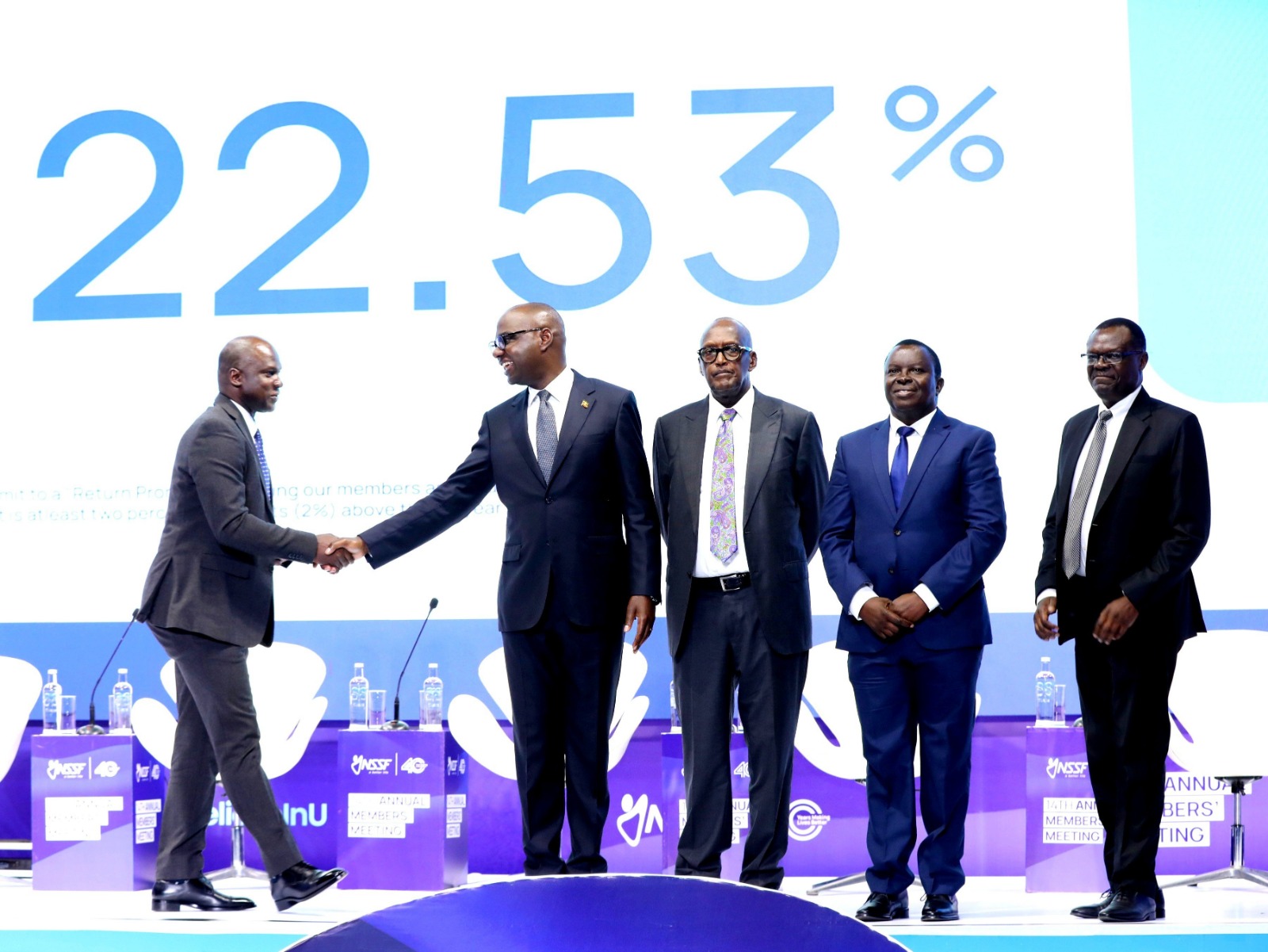
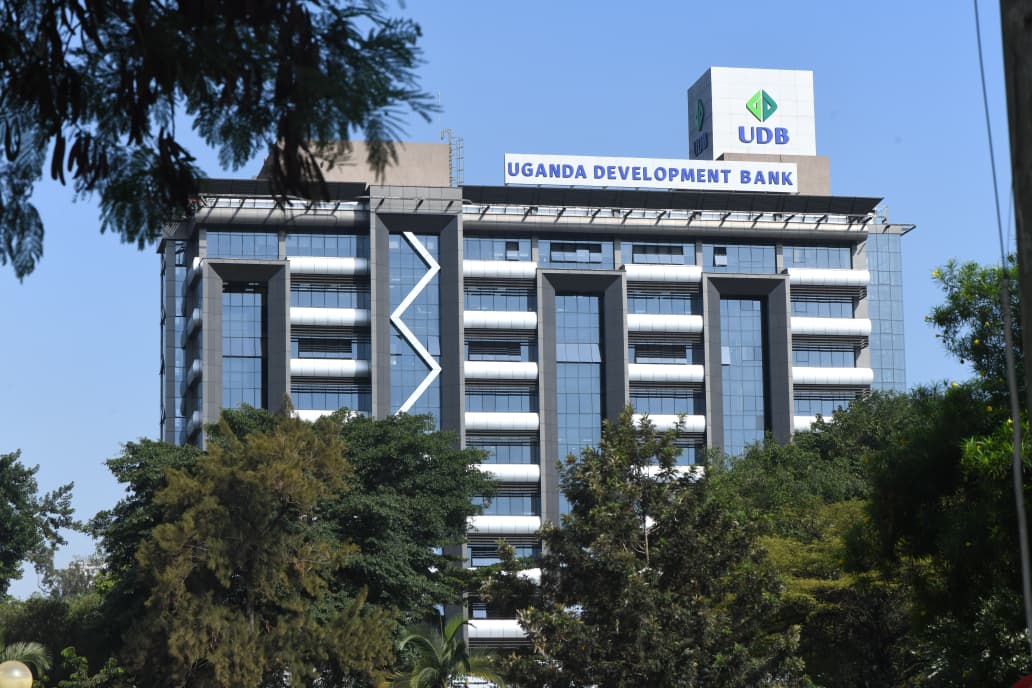
Musasizi was speaking at the commissioning of UDB Tower, the bank’s renovated 14-storey headquarters on Plot 22, Hannington Road, Kampala.
From policy to productive capital
For UDB, the significance of the expanded capital base goes beyond the size of its balance sheet.
Development banks occupy a distinctive space in economies where commercial lenders may be reluctant to provide the long-tenor financing required for factories, processing facilities, infrastructure, technology and other capital-intensive investments.
Musasizi said UDB sits at the intersection between Government’s development priorities and the capital needed to turn those priorities into productive enterprises.
“Uganda’s next phase of economic transformation requires strong institutions with the capacity to mobilise long-term capital and channel it towards productive investments,” Musasizi said.
The Government expects the bank to help expand Uganda’s productive base, create employment, increase exports and ultimately raise household incomes.
That role is becoming more important as Uganda pursues its Tenfold Growth Strategy, which targets transforming the economy into a US$500 billion economy by 2040.
Achieving that ambition, Musasizi said, will require more than public expenditure. It will require the mobilisation of domestic savings, private capital and foreign direct investment, with development finance institutions helping to reduce some of the risks associated with long-term investments.
The next frontier: crowding in private capital
The Finance Minister challenged UDB to broaden its financing toolkit rather than relying principally on conventional lending.
He urged the bank to deepen its use of private equity, structured and project finance, corporate bonds, blended finance and public-private partnerships.
De-risking and credit-enhancement mechanisms, he added, should also be deployed to encourage private investors to participate in projects aligned with national development priorities.
The message points to a broader evolution in development finance: Government capital is expected not only to finance projects directly, but also to act as a catalyst for mobilising several multiples of private investment.
For a country seeking to accelerate industrialisation while maintaining fiscal discipline, that multiplier effect could become increasingly important.
UDB’s development impact in numbers
The scale of UDB’s existing economic footprint offers an indication of what a better-capitalised institution could potentially deliver.
According to the bank’s 2025 Development Impact Report, the 525 enterprises assessed generated Shs6.261 trillion in gross revenue, Shs1.158 trillion in net profit after tax and Shs387 billion in tax contributions.
The enterprises also created or maintained 69,202 jobs, including 50,221 jobs for young people and 27,641 for women.
Their activities generated Shs1.847 trillion in foreign exchange earnings, underscoring the potential role of development finance in supporting businesses that earn foreign currency and reduce pressure on the country’s external position.
UDB currently has 904 direct customers and 112,399 total customers across 114 districts, with operations spanning three regions.
The bank plans to extend its reach to two additional regions during the current financial year, potentially widening access to development finance beyond its existing footprint.
A headquarters designed for the next chapter
The commissioning of UDB Tower provided a physical expression of the institution’s transformation.
UDB Board Chairman Geoffrey Kihuguru said the building should not be viewed simply as an office complex, but as part of a longer-term investment in the institution.
The bank, he said, must continue developing the governance systems, human capital, infrastructure and institutional resilience needed to mobilise capital and finance investments of national significance.
“Our responsibility is to build a development finance institution that is not only relevant to Uganda’s needs today, but one that has the capacity and resilience to serve generations to come,” Kihuguru said.
Managing Director Dr Patricia Ojangole described the commissioning as an important milestone in UDB’s institutional transformation.
The modern facility brings the bank’s people and operations together while providing space intended to improve collaboration, innovation and customer service.
More than bricks and mortar
Covering approximately 7,806 square metres over 14 floors, UDB Tower includes modern workspaces, customer-service facilities, meeting and training rooms, an innovation room, boardroom and upgraded ICT infrastructure.
The building also incorporates a 25-kilowatt solar-power system, smart energy-management technology and design features aimed at maximising natural light and ventilation.
Yet the more consequential investment may be less visible.
UDB’s ability to transform Government capital into commercially viable enterprises, mobilise additional private financing and sustain those investments over time will determine the institution’s broader economic impact.
With Shs2.2 trillion now provided in Government capital, the challenge is shifting from capitalisation to deployment: ensuring that the money reaches productive businesses and projects capable of generating jobs, exports, tax revenues and long-term economic value.
For UDB, the new tower may therefore represent more than a new headquarters. It marks the physical home of an institution being asked to play a much larger role in financing Uganda’s economic transformation.