Growth vs. Trade-Offs: What Uganda’s Shs84.39 trillion budget means
While the financing mix reflects growing domestic resource mobilisation, it also highlights continued reliance on borrowing, raising questions about debt sustainability in the medium term.
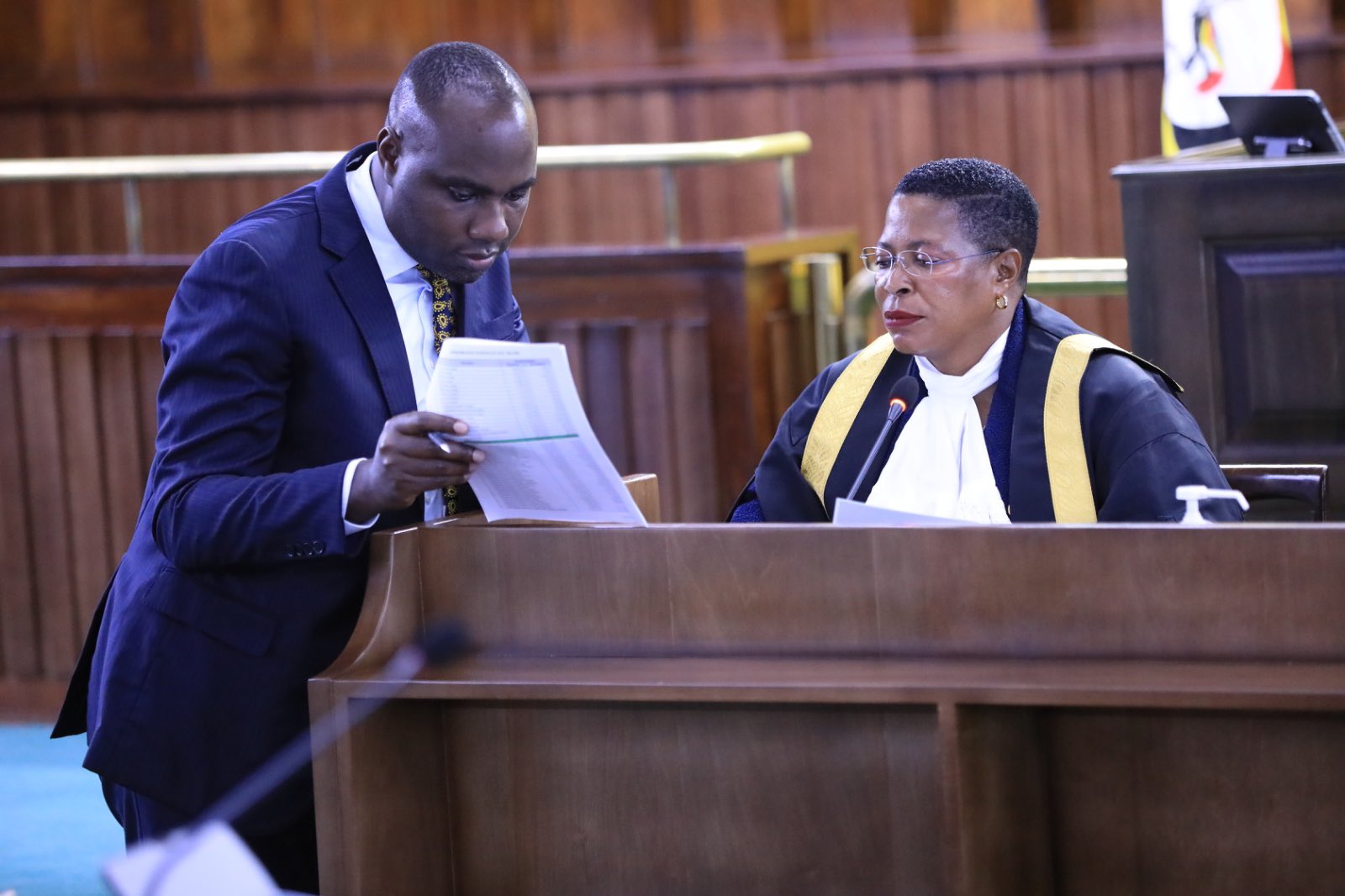
Parliament on Friday, 24th April 2026, passed an ambitious Shs84.39 trillion national budget for the 2026/27 financial year, signalling a decisive push toward industrialisation, infrastructure expansion, and economic transformation.
The budget marks a significant jump from Shs72.38 trillion in the current fiscal year, underscoring government’s intent to accelerate growth under a new policy cycle. Of the total, Shs47.16 trillion will go toward appropriated expenditure, while Shs37.23 trillion is earmarked for statutory obligations.
At its core, the budget is framed around a bold theme: “Full Monetisation of Uganda’s Economy through Commercial Agriculture, Industrialisation, Expanding and Broadening Services, Digital Transformation and Market Access.”
It is also the first financial blueprint aligned with the ruling party’s 2026–2031 manifesto and the broader Tenfold Growth Strategy, which aims to expand Uganda’s economy to $500 billion by 2040.
Speaking to lawmakers, Minister of State for Finance in charge of General Duties, Henry Musasizi, said the budget will prioritise consolidating existing gains while accelerating key economic enablers.
Financing Growth
The government plans to finance the budget largely through domestic means, with Shs44.18 trillion expected from local revenue collections. Additional funding will come from domestic borrowing (Shs11.97 trillion), project support (Shs11.27 trillion), and domestic refinancing (Shs13.97 trillion), alongside smaller contributions from the Petroleum Fund, budget support, and local government revenues.
While the financing mix reflects growing domestic resource mobilisation, it also highlights continued reliance on borrowingraising questions about debt sustainability in the medium term.
Infrastructure Takes the Lead
A clear winner in this budget is infrastructure.
The Development Plan Implementation programme alone will absorb Shs35.7 trillion, an increase of more than Shs6.2 trillion, signalling an aggressive push to deliver flagship projects under the national development agenda.
Spending on Integrated Transport Infrastructure and Services will rise sharply to Shs8.78 trillion, targeting roads, railways, and logistics systems critical to market access and trade efficiency.
Equally significant is the near doubling of funding for Sustainable Energy Development to Shs2.06 trillion, reflecting the central role of reliable electricity in driving industrial output.
Industrialisation and Value Addition in Focus
The budget places renewed emphasis on industrialisation, with manufacturing allocations tripling to Shs1.06 trillion—one of the most dramatic increases across sectors.
This is complemented by increased investment in agro-industrialisation (Shs2.26 trillion), aimed at transitioning Uganda from subsistence agriculture to value-added production.
Meanwhile, funding for innovation and technology development rises to Shs626.8 billion, and digital transformation to Shs513.8 billion, reinforcing the government’s push toward a modern, tech-enabled economy.
Investing in People and Stability
Human capital remains a central pillar, with Shs13.56 trillion allocated to health, education, and social services—a reflection of the need to build a productive workforce.
At the same time, Governance and Security will receive Shs10.2 trillion, ensuring institutional stability as the country pursues its economic ambitions.
Funding for Regional Balanced Development will also increase to Shs2.16 trillion, targeting inclusive growth across underserved regions.
The Trade-Offs: Cuts and Concerns
Despite the overall expansion, the budget reveals difficult trade-offs.
Private Sector Development funding declines slightly to Shs2.54 trillion, a move that could raise eyebrows given the sector’s role in job creation.
More striking is the sharp cut to Sustainable Urbanisation and Housing, which drops from Shs1.49 trillion to just Shs488 billion—a reduction likely to spark debate amid rapid urban growth.
The Sustainable Extractives Industry budget is also halved, while allocations for arrears and appropriations in aid fall significantly, suggesting a shift in fiscal management priorities.
Steady Support for Governance and Sustainability
Other sectors are seeing moderate but steady increases. Tourism Development has been allocated Shs571.5 billion to boost Uganda’s global competitiveness, while Natural Resources and Environment receives Shs514 billion to support sustainability efforts.
The Administration of Justice is set to receive Shs651.5 billion, while Legislation and Oversight takes Shs1.22 trillion—ensuring continued support for governance and accountability frameworks.
A High-Stakes Growth Strategy
Taken together, the 2026/27 budget reflects a government doubling down on infrastructure, energy, and industrialisation as engines of growth, while investing in human capital and digital systems to support long-term transformation.
However, the success of this strategy will hinge on execution. Questions remain around efficiency in public spending, the impact of reduced allocations in key sectors, and the sustainability of increased borrowing.
For businesses and investors, the message is clear: Uganda is positioning itself for accelerated growth—but the real test lies in turning ambitious allocations into tangible economic outcomes.