
How 320m-litre Kampala storage terminal could transform Uganda’s energy security
UNOC has previously identified storage expansion, the refinery and pipeline infrastructure among strategic investments required to develop the country's petroleum value chain.
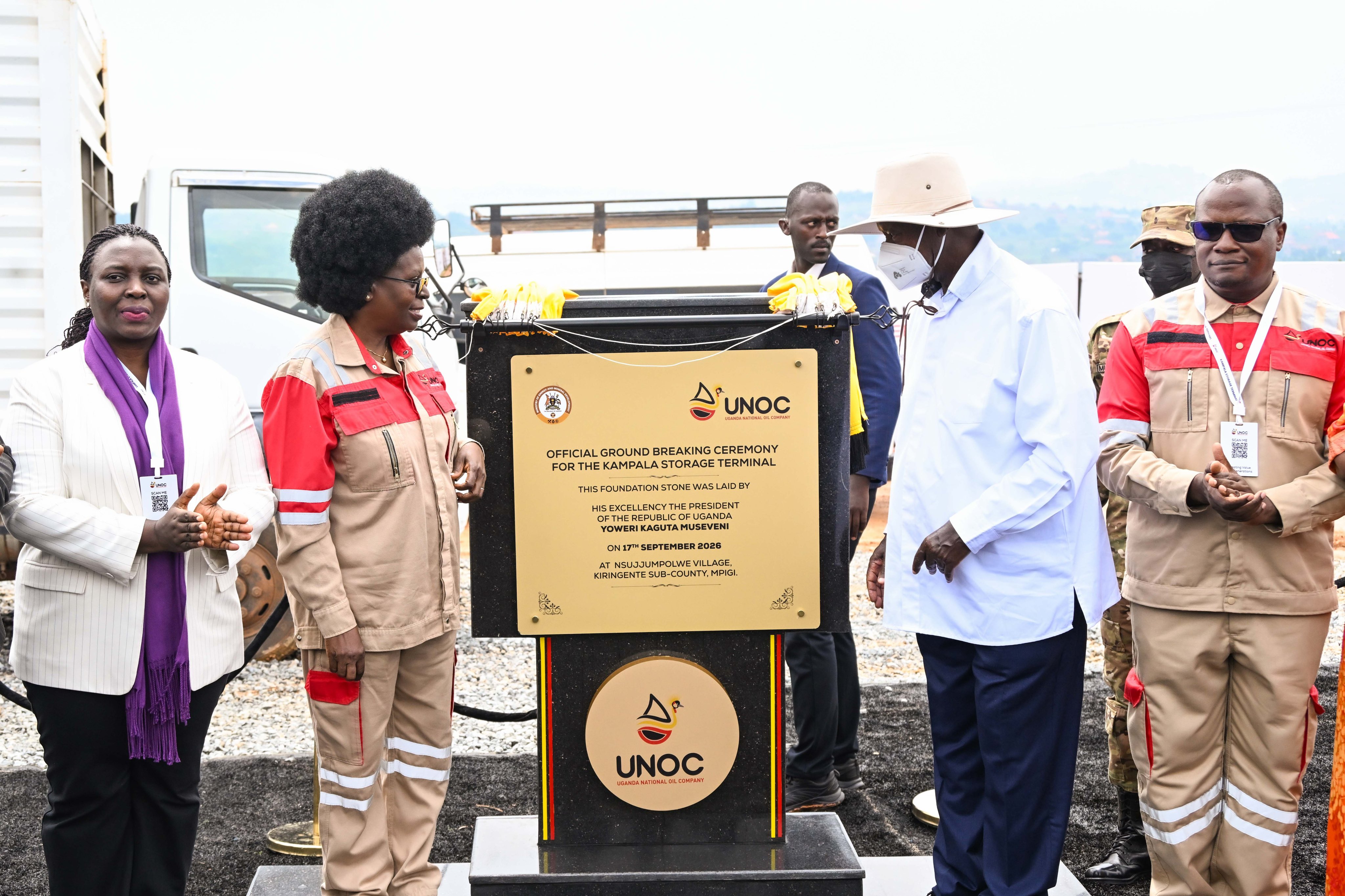
Uganda’s energy sector is set for a major shift with the groundbreaking of the 320-million-litre Kampala Storage Terminal (KST) in Mpigi District, a project expected to strengthen national fuel security, improve supply reliability and position the country to play a bigger role in the regional petroleum trade.
The terminal, being developed under the leadership of the Uganda National Oil Company (UNOC), is more than a fuel-storage facility.
It is designed to become a critical link in Uganda’s emerging integrated petroleum infrastructure, connecting fuel importation, storage, distribution and, eventually, locally refined petroleum products.
UNOC Board Chairman Mathias Katamba described KST as a strategic national asset that will provide Uganda with greater capacity to hold petroleum stocks and manage supply disruptions.
The project is particularly significant for a country whose economy depends heavily on uninterrupted supplies of petrol, diesel, aviation fuel and other petroleum products.
Building a stronger fuel reserve
At its core, KST will give Uganda substantially more capacity to store petroleum products within the country.
The 320-million-litre facility, together with the upgraded Jinja Storage Terminal, is expected to take government and UNOC-managed storage capacity to approximately 360 million litres, according to Energy Minister Dr Ruth Nankabirwa’s remarks at the groundbreaking.
This expanded capacity matters because petroleum supply is vulnerable to disruptions along long supply chains.
Uganda currently relies heavily on imported petroleum products, making storage capacity an important component of national energy security.
With larger stocks available locally, the country can have greater flexibility to manage temporary disruptions in imports, transportation bottlenecks or regional supply shocks.
In practical terms, the terminal creates a bigger buffer between international supply and the pump stations that serve households, businesses, transporters, manufacturers and other users of petroleum products.
Preparing for Uganda’s oil era
KST also forms part of the infrastructure required to transform Uganda from a petroleum-import-dependent economy into a country with an integrated domestic petroleum value chain.
The facility is expected to connect to the planned refinery at Kabaale in Hoima District through a proposed 211-kilometre pipeline, creating an important infrastructure link between Uganda’s future refining capacity and the main fuel market around Kampala.
This means KST could eventually become a major receiving, storage and distribution point for petroleum products produced by Uganda’s refinery.
The significance goes beyond simply storing fuel.
It means Uganda is developing the infrastructure necessary to move petroleum products efficiently from production and refining centres to major consumption markets.
UNOC’s earlier plans for KST envisaged the terminal as a major Government-owned petroleum infrastructure project, with UNOC mandated to develop, manage and operate the facility.
A missing piece in the petroleum value chain
Uganda’s petroleum ambitions include upstream oil production, the East African Crude Oil Pipeline, the planned refinery and downstream distribution.
Storage sits in the middle of that chain.
Without adequate storage, even increased petroleum supply can remain vulnerable to logistical disruptions. A modern terminal therefore provides the physical capacity to receive large volumes of fuel, hold strategic stocks and distribute products according to market demand.
KST consequently adds an important piece to Uganda’s broader petroleum infrastructure architecture.
UNOC has previously identified storage expansion, the refinery and pipeline infrastructure among strategic investments required to develop the country’s petroleum value chain.
In December 2025, the company said financing arrangements would support, among other projects, a greenfield storage facility in Namwabula, Mpigi, expansion of the Jinja terminal and extension of the petroleum products pipeline from Kenya. ([UNOC][2])
Potential impact on fuel supply reliability
For motorists and businesses, one of the most important implications of KST will be supply reliability.
A larger domestic storage base can allow petroleum suppliers to hold more inventory closer to the country’s largest consumption market.
That could help reduce the vulnerability of the downstream market to short-term interruptions and provide greater flexibility in managing demand fluctuations.
It does not, by itself, guarantee lower pump prices. Fuel prices will continue to be influenced by international crude and petroleum-product prices, exchange rates, transportation costs, taxes and other market factors.
But better storage infrastructure can improve the **logistics and resilience** of the supply system.
Supporting industrialisation and business
The terminal is also expected to generate economic activity around its construction and eventual operation.
The Ministry of Energy and Mineral Development says the project will create opportunities for local employment and enterprise participation while strengthening Uganda’s petroleum value chain.
Contractors, transport companies, engineering firms, security providers, maintenance companies and other service providers could benefit from the infrastructure investment.
Over time, improved petroleum logistics can also support industries that depend heavily on reliable fuel supplies, including manufacturing, construction, agriculture, transport and aviation.
Uganda seeking greater control of its petroleum logistics
President Yoweri Museveni used the groundbreaking to highlight the Government’s long-standing concern about Uganda’s dependence on external supply chains and intermediaries.
He recalled that, after taking office in 1986, he was informed that Uganda was purchasing petroleum products through middlemen in Kenya.
Museveni said Government interventions subsequently contributed to changes in the prices at which petroleum products were being sourced, citing diesel, petrol and aviation fuel price movements.
His central message at the KST groundbreaking was that developing Uganda’s own petroleum infrastructure is essential as the country moves towards exploiting its petroleum resources.
“As we develop our petroleum resources, we must strengthen our strategic reserves,” Museveni said.
He also pointed to regional cooperation, noting the presence of a Tanzanian delegation representing President Samia Suluhu Hassan as Uganda works with Tanzania and other East African countries to strengthen regional petroleum security.
Regional significance
KST could eventually become relevant beyond Uganda’s domestic market.
As Uganda develops refining, pipeline and storage infrastructure, the country will have greater capacity to participate in regional petroleum logistics.
The combination of domestic storage, the planned refinery, the petroleum products pipeline network and existing regional trade routes could strengthen Uganda’s position as an important petroleum distribution hub in the Great Lakes and East African region.
For the Government, therefore, the terminal represents not simply another infrastructure project, but part of a longer-term strategy to build an integrated petroleum value chain.
From importing fuel to managing the value chain
The biggest significance of the Kampala Storage Terminal is ultimately about control and resilience.
Uganda will remain connected to international petroleum markets, but expanding domestic storage gives the country more control over where and how much fuel it can hold, how it responds to supply disruptions and how future locally refined products can enter the domestic market.
The groundbreaking therefore marks another step in Uganda’s transition towards a more integrated petroleum economy, one in which storage, pipelines, refining and distribution work together to support energy security, industrialisation and economic growth.
As Permanent Secretary Irene Bateebe noted, KST is intended to support Government’s plans for a resilient petroleum value chain under NDP IV, while maximising local content, safety and environmental compliance.
The real test, however, will come with execution: completing the terminal on schedule, maintaining high safety and environmental standards, ensuring efficient operations and connecting it effectively to the wider petroleum infrastructure network.
If those links are delivered, the 320-million-litre terminal could become one of the most important pieces of Uganda’s downstream energy infrastructure.