Judiciary launches land settlement fortnight to tackle backlog of more than 7,000 land cases
The Land Settlement Fortnight is expected to serve as a model for future mediation drives aimed at improving efficiency across Uganda's justice system and strengthening public confidence in alternative dispute resolution as an effective means of settling disputes.
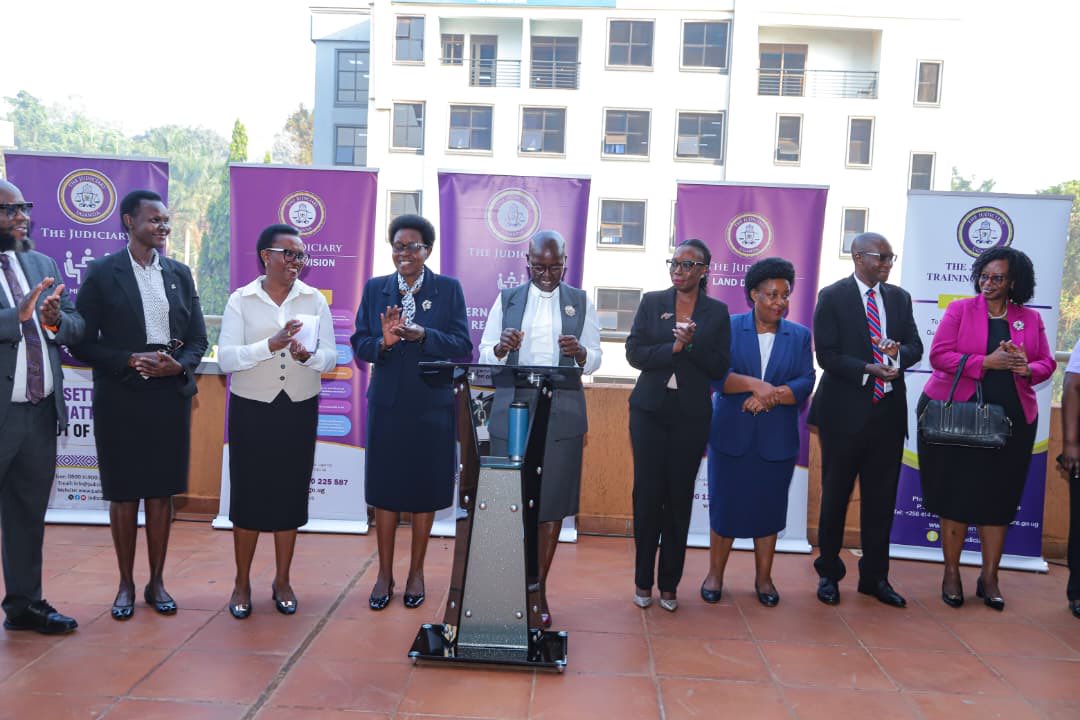
The Judiciary has intensified efforts to reduce Uganda’s growing backlog of land disputes with the launch of the Land Division’s Land Settlement Fortnight, a two-week initiative expected to resolve hundreds of cases through court-annexed mediation.
The exercise was officially launched on Monday by the Principal Judge, Lady Justice Jane Frances Abodo, at TWED Towers in Kampala. During the fortnight, the Land Division has cause-listed 519 land cases for mediation, with a target of settling at least 270 disputes.
The initiative forms part of the Judiciary’s broader strategy to promote Alternative Dispute Resolution (ADR) as a faster, less costly and less adversarial approach to resolving disputes while easing pressure on the courts.
Launching the programme, Lady Justice Abodo said the exercise comes at a critical time when the Land Division continues to grapple with one of the Judiciary’s heaviest caseloads.
Statistics presented during the launch show that the Division registered 1,067 new cases during the third quarter of the 2025/2026 Financial Year, bringing the total pending caseload to 7,279 cases as of March 31, 2026.
Although 1,363 cases were disposed of during the same period, including 58 through mediation, the Division still has a backlog of 3,294 cases, representing 45.2 percent of all pending matters.
“The statistics demonstrate the urgent need to expand mediation as an effective tool for resolving land disputes,” Lady Justice Abodo said.
She noted that land disputes remain among the most complex cases before the courts because they often involve multiple parties, extensive documentary evidence and deeply rooted emotional, social and economic interests.
According to the Principal Judge, delayed resolution of land disputes affects families and communities, discourages investment, slows economic development and undermines public confidence in the justice system.
She commended judges, registrars, mediators and support staff of the Land Division for their dedication in handling the growing workload despite limited resources.
Lady Justice Abodo also applauded advocates and accredited mediators for partnering with the Judiciary to promote access to justice through mediation.
She explained that the Settlement Fortnight is being implemented under the Judicature (Court-Annexed Mediation) Rules, 2026, which establish a structured framework for resolving disputes through mediation within 60 days.
The Rules provide for Judiciary-supported mediation services and make mediated settlement agreements enforceable as court orders.
Calling for greater commitment from all justice sector actors, Lady Justice Abodo urged judicial officers to identify suitable cases for mediation, prioritise older matters and remove inactive files that unnecessarily inflate the Division’s pending caseload.
She also appealed to advocates to encourage their clients to pursue practical settlements instead of prolonged litigation and urged mediators to use their expertise to help disputing parties reach mutually beneficial agreements.
The Principal Judge reaffirmed the Judiciary’s commitment to strengthening the Land Division through improved case management, continuous capacity building, enhanced collaboration with stakeholders and better operational support.
Earlier, the Head of the Land Division, Lady Justice Damalie Lwanga, described mediation as an affordable, efficient and relationship-preserving mechanism that enables parties to settle disputes without undergoing lengthy court proceedings.
She revealed that the Division had prepared extensively for the exercise through an Alternative Dispute Resolution Roundtable held in May and specialised mediation training conducted by the Judicial Training Institute.
Lady Justice Lwanga urged litigants and their advocates to attend mediation sessions in person, participate in good faith and embrace dialogue as a practical pathway to lasting solutions.
She expressed confidence that the fortnight would significantly contribute to reducing the Land Division’s case backlog while improving access to timely justice for Ugandans involved in land disputes.
The Land Settlement Fortnight is expected to serve as a model for future mediation drives aimed at improving efficiency across Uganda’s justice system and strengthening public confidence in alternative dispute resolution as an effective means of settling disputes.