Muhoozi’s PLU faces legal wall in bid to oust opposition leader Joel Ssenyonyi
Consequently, Parliament has no constitutional or statutory mechanism to censure, impeach or vote the office holder out through a parliamentary resolution.
By Parliament Watch
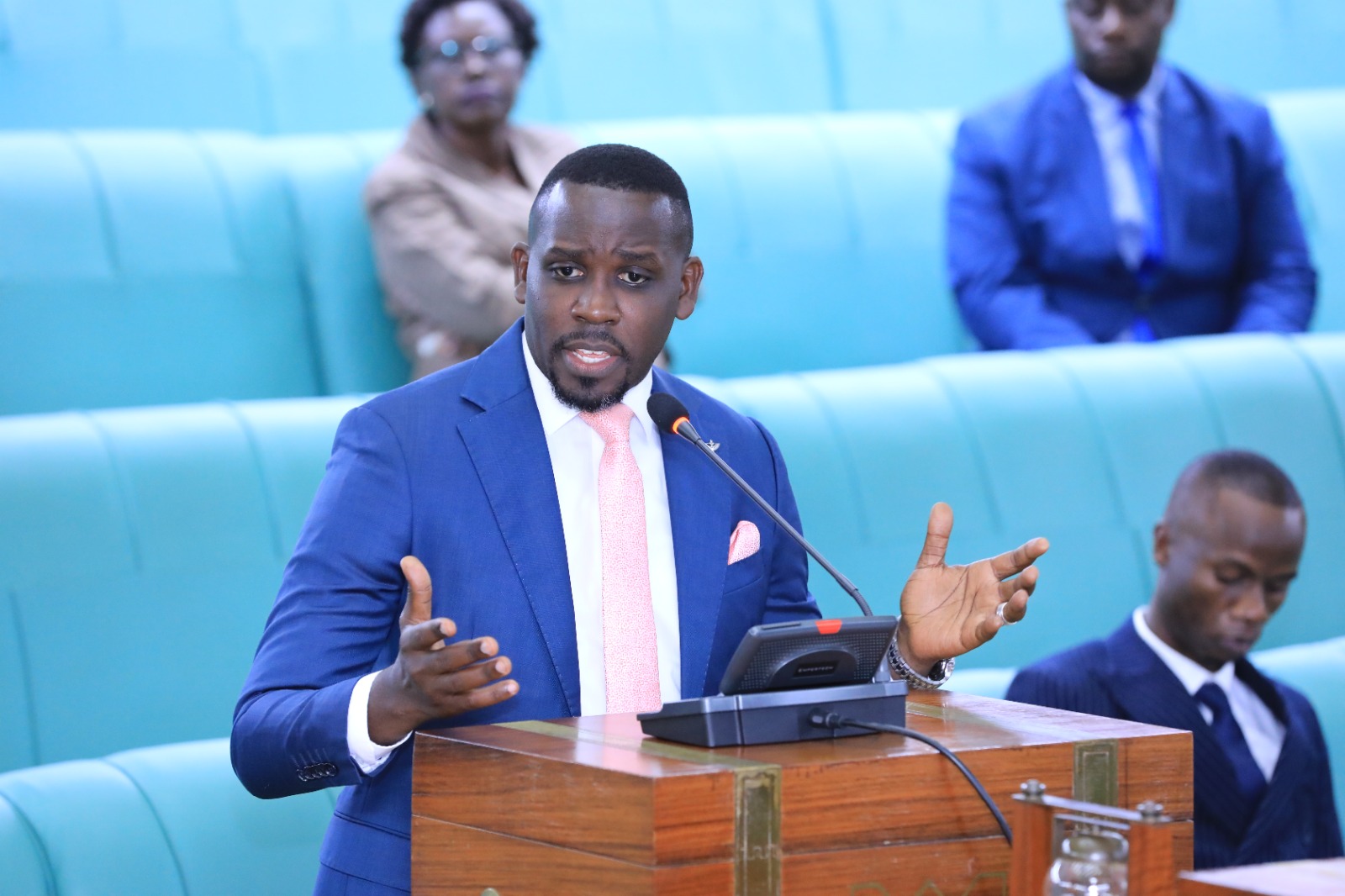
The Patriotic League of Uganda (PLU), led by Gen. Muhoozi Kainerugaba, may marshal political influence, rally Members of Parliament and mount a public campaign against Leader of the Opposition (LoP) Joel Ssenyonyi. Yet under Uganda’s current constitutional and statutory framework, none of those efforts can legally remove him from office.
Unlike the Speaker, Deputy Speaker, Cabinet ministers or elected Parliamentary Commissioners, the Leader of the Opposition is not elected by the entire House. Consequently, Parliament has no constitutional or statutory mechanism to censure, impeach or vote the office holder out through a parliamentary resolution.
That legal reality presents the first, and perhaps the biggest, obstacle to a campaign launched on Friday after Gen. Muhoozi publicly called for Ssenyonyi’s removal.
“I want a new Leader of the Opposition in Parliament. And I will get him. He will be endorsed by me,” Gen. Muhoozi posted on X before later announcing that he had instructed PLU legislators to study how Ssenyonyi could be removed “as soon as possible.”
Kasambya County MP David Kabanda promptly responded, assuring the PLU chairman that “two weeks are enough.”
The exchange has since sparked debate over whether Parliament possesses the legal authority to remove the Leader of the Opposition through political action.
While PLU may command significant political influence and enjoy the backing of several legislators, constitutional lawyers note that removing the Leader of the Opposition is fundamentally different from removing other parliamentary office bearers.
Article 82A of the Constitution, introduced by the Constitution (Amendment) Act, 2005, formally establishes the Office of the Leader of the Opposition.
Its operational framework is provided under the Administration of Parliament (Amendment) Act, 2006, which vests the power to appoint the Leader of the Opposition exclusively in the opposition political party with the largest numerical strength in Parliament.
The Speaker’s role is limited to formally announcing that party’s nominee to the House. In the current Parliament, that party is the National Unity Platform (NUP). Consequently, Joel Ssenyonyi occupies the office by virtue of his nomination by NUP, not through election by Parliament.
Unlike the Speaker, Deputy Speaker and Parliamentary Commissioners, whose offices are filled through votes of the House and whose removal is expressly provided for under the Constitution, the Administration of Parliament Act and the Rules of Procedure, the Leader of the Opposition derives legitimacy from his political party rather than Parliament itself.
The law outlines only a limited number of circumstances under which the office falls vacant. First, the appointing political party may withdraw its confidence and nominate another Member of Parliament. In Ssenyonyi’s case, that authority rests solely with the National Unity Platform.
“Only the appointing political party can replace the Leader of the Opposition. Parliament itself has no legal mandate to remove the office holder,” a legislator familiar with parliamentary procedure told Parliament Watch on condition of anonymity because they were not authorised to speak publicly.
Second, the Leader of the Opposition may voluntarily resign. Third, if the office holder ceases to belong to the political party that appointed him or her, the legal basis for occupying the office automatically ceases.
Fourth, loss of parliamentary membership equally extinguishes eligibility, since only a sitting Member of Parliament can serve as Leader of the Opposition.
Finally, should another opposition political party become the largest opposition bloc in Parliament, the constitutional entitlement to nominate the Leader of the Opposition would shift to that party.
Notably absent from both the Constitution and the Administration of Parliament Act is any provision empowering Parliament, the ruling National Resistance Movement (NRM), PLU or any other political grouping to remove the Leader of the Opposition through a vote of censure or a simple majority resolution.
The legal architecture reflects the principles underpinning Uganda’s multiparty political system. The Office of the Leader of the Opposition was created to ensure that the largest opposition party independently chooses its parliamentary leader without interference from the governing majority.
Constitutional scholars have long argued that allowing the ruling side to determine who leads the opposition would undermine the doctrine of political pluralism guaranteed under Article 71 of the Constitution.
Such an arrangement would also weaken the institutional independence necessary for effective parliamentary oversight under Article 79, which vests legislative authority in Parliament while recognising the distinct constitutional roles performed by both government and opposition.
The distinction is particularly important in Westminster-style parliamentary democracies, where the Leader of the Opposition serves not as an extension of the parliamentary majority but as its principal constitutional counterweight.
None of this prevents PLU from pursuing political objectives. The movement remains free to lobby legislators, campaign publicly or attempt to persuade the National Unity Platform to reconsider its leadership choices.
However, unless NUP itself decides to replace Ssenyonyi, or one of the legally recognised grounds for vacating the office arises, those political efforts cannot translate into his lawful removal. The episode highlights an important constitutional distinction between political influence and legal authority.
In Uganda’s constitutional order, not every public office is subject to the will of the parliamentary majority. Certain offices are intentionally insulated from majority control to preserve institutional independence and maintain the balance between government and opposition that lies at the heart of multiparty democracy.
Whether PLU’s campaign gathers political momentum remains to be seen. But under the current constitutional and statutory framework, the road to removing Joel Ssenyonyi does not run through Parliament. It runs through the National Unity Platform.
As debate over his position intensified, Ssenyonyi claimed on Friday evening that there was an alleged scheme to implicate him in the high-profile Butambala terrorism case, describing it as part of a broader campaign against critics of the government.
“I’m told there is a ploy to potentially add me onto the ‘Terrorism’ file of Butambala, or one of those other files in court,” Ssenyonyi wrote on X.
“I’ve said previously: when you fight corruption, it fights back. Similarly, when you fight bad governance, it fights back. But we shall overcome.”
Ssenyonyi did not disclose the source of the information or provide evidence supporting the allegation. By press time, neither the government nor security agencies had publicly responded to his claims.
His remarks came amid heightened political tensions following a series of social media posts by Chief of Defence Forces Gen. Muhoozi Kainerugaba targeting senior opposition leaders, including repeated declarations that he intended to remove Ssenyonyi as Leader of the Opposition.
In another post, Gen. Muhoozi appeared to link the recent arrest of Kampala Lord Mayor Erias Lukwago to what he described as a broader “Rectification Campaign.”
“My arrest of Lukwago is just the beginning of the ‘Rectification Campaign’ in Uganda. The lists are long. Many more traitors are going to be arrested too. Uganda will be purified,” he wrote.
Neither the Uganda People’s Defence Forces nor the government had formally clarified the legal or operational basis of the statements by press time.