Uganda moves to unlock $4.6bn World Bank funding as government targets faster growth
Ggoobi said Government had strengthened the Public Investment Management System to ensure projects are sufficiently prepared before negotiations with development partners begin.
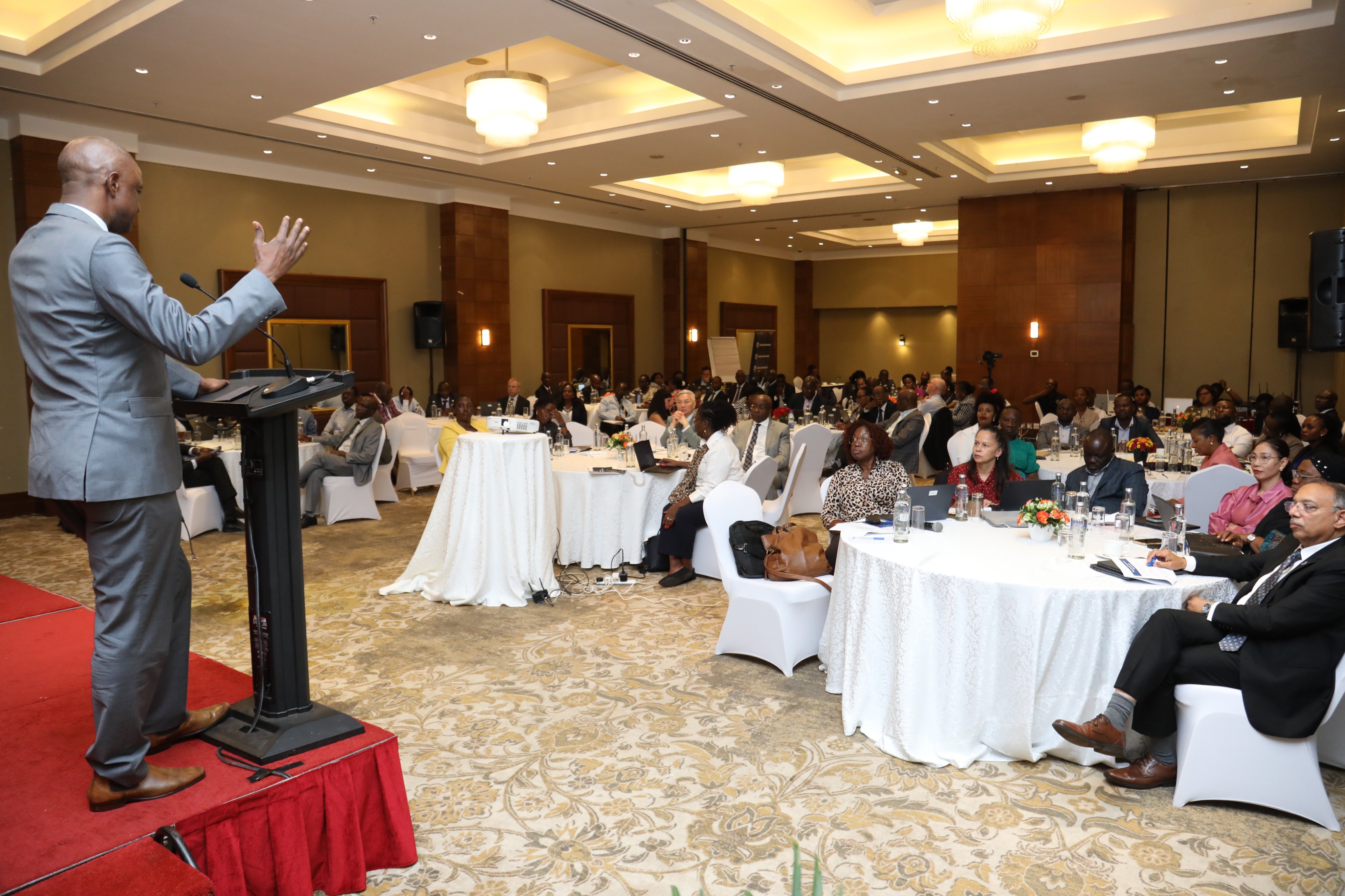
Uganda is stepping up efforts to accelerate the implementation of a US$4.6 billion World Bank development portfolio, with Government moving to address project delays and ensure that development financing translates into tangible economic and social outcomes.
The portfolio comprises 18 operations and is being reviewed under a joint Uganda–World Bank Country Portfolio Performance Review aimed at assessing implementation progress, identifying bottlenecks and agreeing on time-bound measures to improve project delivery.
Permanent Secretary and Secretary to the Treasury Ramathan Ggoobi said Government was undertaking a detailed assessment to establish whether delays in projects were caused by financing constraints or management challenges.
“We are going to get quantified answers that separate the fiscal constraint from the management constraint,” Ggoobi said.
He identified premature commitment of projects as one of the major causes of slow implementation, noting that some projects only begin physical works in their third year.
Such delays, he said, leave projects with limited time to complete planned activities and increase the risk of extensions, incomplete works and additional costs to Government.
Government tightens project gatekeeping
Ggoobi said Government had strengthened the Public Investment Management System to ensure projects are sufficiently prepared before negotiations with development partners begin.
He said implementation-readiness conditions would also have to be met before financing agreements are signed.
These include approved procurement plans, completion of environmental and social safeguards and acquisition of the necessary rights-of-way.
The measures are intended to reduce the time between project approval and actual implementation while improving the efficiency with which borrowed and development resources are deployed.
Ggoobi also pointed to electronic government procurement as an important reform for improving efficiency, transparency and accountability in public projects.
He said all Programme-for-Results operations must use the system, while Government would continue discussions with the World Bank to extend its application to other projects.
$3.1bn remains available
The World Bank said Uganda’s development partnership has expanded significantly, with almost US$2 billion in new financial commitments added to the country’s portfolio over the past two years.
Qimiao Fan, World Bank Division Director for Uganda, Kenya, Somalia and Rwanda, said the portfolio was among the largest International Development Association portfolios in Africa.
Approximately US$3.1 billion remains available for disbursement, equivalent to about five percent of Uganda’s GDP.
Fan described the undisbursed financing as an opportunity for Uganda to accelerate development, particularly as the funding is aligned with the country’s Tenfold Growth Strategy, the National Development Plan and the World Bank’s FY2026–FY2035 Country Partnership Framework.
The framework prioritises stronger governance, human capital development, connectivity, private-sector productivity and the creation of more and better jobs.
Pressure mounts on slow projects
With nine projects scheduled to close in 2027 and 2028, Ggoobi called for faster implementation and timely decisions on projects that cannot be completed within their remaining implementation periods.
He said projects facing persistent delays should be considered for restructuring, scaling down or cancellation, while extensions should be limited to essential ongoing contractual obligations.
“The review should produce a clear improvement plan for every project,” he said, with each plan expected to specify the required action, responsible institution, financing implications and implementation timeline.
Persistently underperforming projects could ultimately face restructuring or termination.
Providing an implementation update, World Bank Senior Operations Officer Tonderai Fadzai Mukonoweshuro said six operations approved during FY2025/26 had added nearly US$2 billion to Uganda’s portfolio but had barely started disbursing.
The review therefore comes at a critical point for Uganda as Government seeks to convert approved development financing into actual investments in infrastructure, human capital, private-sector productivity and other areas of the economy.
The focus, officials said, is increasingly shifting from securing financing to delivering projects on time and ensuring that every dollar committed produces measurable development results.