What you need to know about the new and updated road and bridge standards that are aimed at boosting infrastructure quality
Unveiled at Speke Resort Munyonyo, the new specifications are being positioned as a cornerstone reform aimed at improving the quality, durability and efficiency of Uganda’s road and bridge infrastructure.
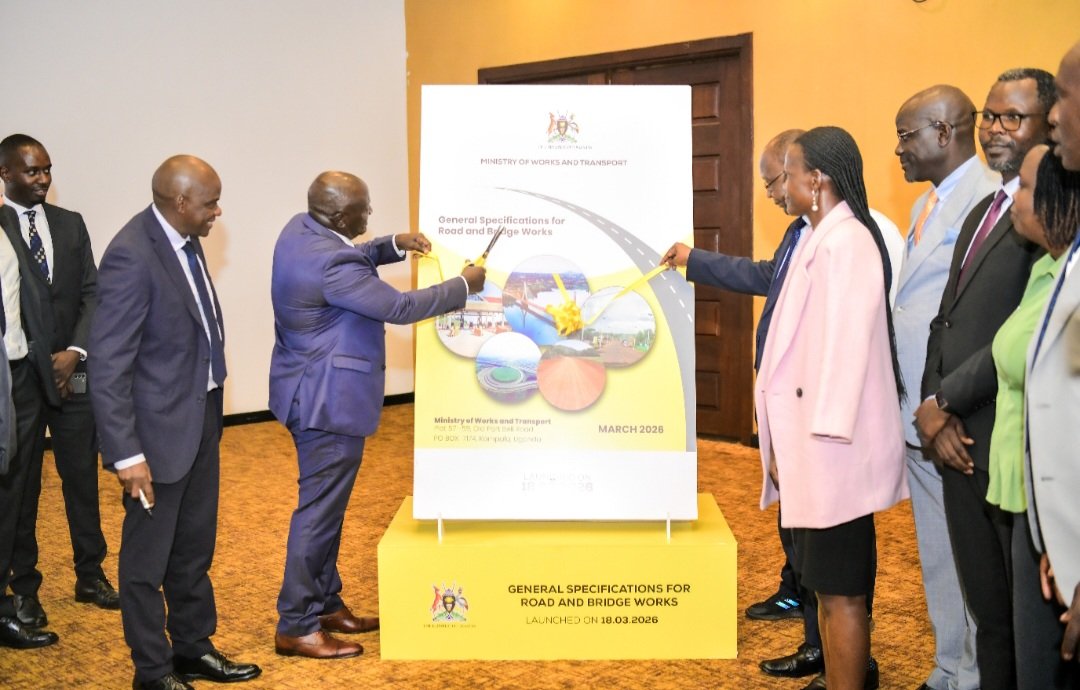
In a move set to reshape Uganda’s infrastructure landscape, the Ministry of Works and Transport has launched the General Specifications for Road and Bridge Works 2026, marking the first comprehensive update of the country’s engineering standards in more than two decades.
Unveiled at Speke Resort Munyonyo, the new specifications are being positioned as a cornerstone reform aimed at improving the quality, durability and efficiency of Uganda’s road and bridge infrastructure.
The specification launch event brought together policymakers, engineers, contractors, development partners and academia, underscoring the broad impact the new framework is expected to have across the sector.
Minister of Works and Transport Edward Katumba Wamala described the specifications as a critical step toward strengthening the country’s legal and technical foundation for infrastructure development.
“The specifications set clear standards for materials, workmanship, testing and quality control, ensuring roads and bridges are built to consistent, reliable standards, remain durable under traffic and environmental stress, and deliver better value for public investment,” he said.
A Shift Toward Quality and Accountability
For years, Uganda’s infrastructure sector has grappled with concerns over inconsistent construction standards, premature road deterioration and rising maintenance costs.
The new guidelines aim to address these challenges by introducing a harmonised, performance-based framework that governs the full lifecycle of road and bridge projects, from planning and design to construction, maintenance and operation.
Permanent Secretary Bageya Waiswa noted that the specifications will serve as a unifying reference point for all players in the sector, ensuring that projects across the country adhere to the same high standards.
“These General Specifications will guide the full lifecycle of our roads and bridges, from planning to maintenance, ensuring quality and sustainability,” he said.
At the technical level, the reforms signal a transition toward modern engineering practices that reflect evolving technologies and environmental considerations. The Engineer-in-Chief, Stephen Kiwanuka, emphasized that the framework is designed to respond to emerging demands, including climate resilience and efficiency.
“We are moving to a modern, performance-based framework that responds to evolving technology and environmental demands,” Kiwanuka said.
Addressing Longstanding Sector Challenges
The launch comes against the backdrop of persistent structural challenges that have affected Uganda’s road network. Rapid urbanisation has exposed weaknesses in drainage systems, contributing to frequent flooding in cities.
Encroachment on road reserves and drainage corridors has further complicated infrastructure management, while limited maintenance has accelerated the wear and tear of existing roads.
Gen. Katumba acknowledged these issues, stressing that the effectiveness of the new specifications will ultimately depend on strict compliance.
He called on engineers, contractors, consultants and supervising authorities to fully familiarise themselves with the new standards and apply them diligently, warning that failure to adhere to technical requirements has in the past undermined the lifespan and safety of infrastructure projects.
Infrastructure at the Heart of Growth
Road infrastructure remains central to Uganda’s economic transformation, supporting key sectors such as trade, agriculture, tourism, mining and industrialisation. Efficient transport networks also play a vital role in improving access to social services, connecting rural communities to markets, schools and healthcare.
By setting clearer benchmarks for quality and standardisation, the government hopes to maximise the return on public investment in infrastructure while reducing long-term maintenance costs.
The new specifications are also aligned with Uganda’s long-term development frameworks, including Vision 2040 and the National Development Plan IV, which prioritise infrastructure as a key driver of economic growth.
Implementation the Real Test
While the launch marks a significant milestone, sector observers note that implementation will be the true measure of success. The Minister has already directed the Engineer-in-Chief to ensure widespread dissemination of the new standards, alongside capacity building and training for local governments, training institutions and industry players.
If effectively rolled out, the General Specifications for Road and Bridge Works 2026 could usher in a new era of accountability, durability and efficiency in Uganda’s infrastructure sector, helping to build roads and bridges that not only connect communities, but also stand the test of time.