Historic medical milestone as Uganda performs and celebrates first-ever bone marrow transplant
For years, patients requiring such specialised care have had to travel to countries like India and South Africa, often at enormous financial cost. This development signals a turning point.
Uganda has taken a historic step in specialised healthcare after the Uganda Cancer Institute successfully carried out its first-ever bone marrow transplant, marking a breakthrough that could reshape cancer treatment and reduce reliance on costly care abroad.
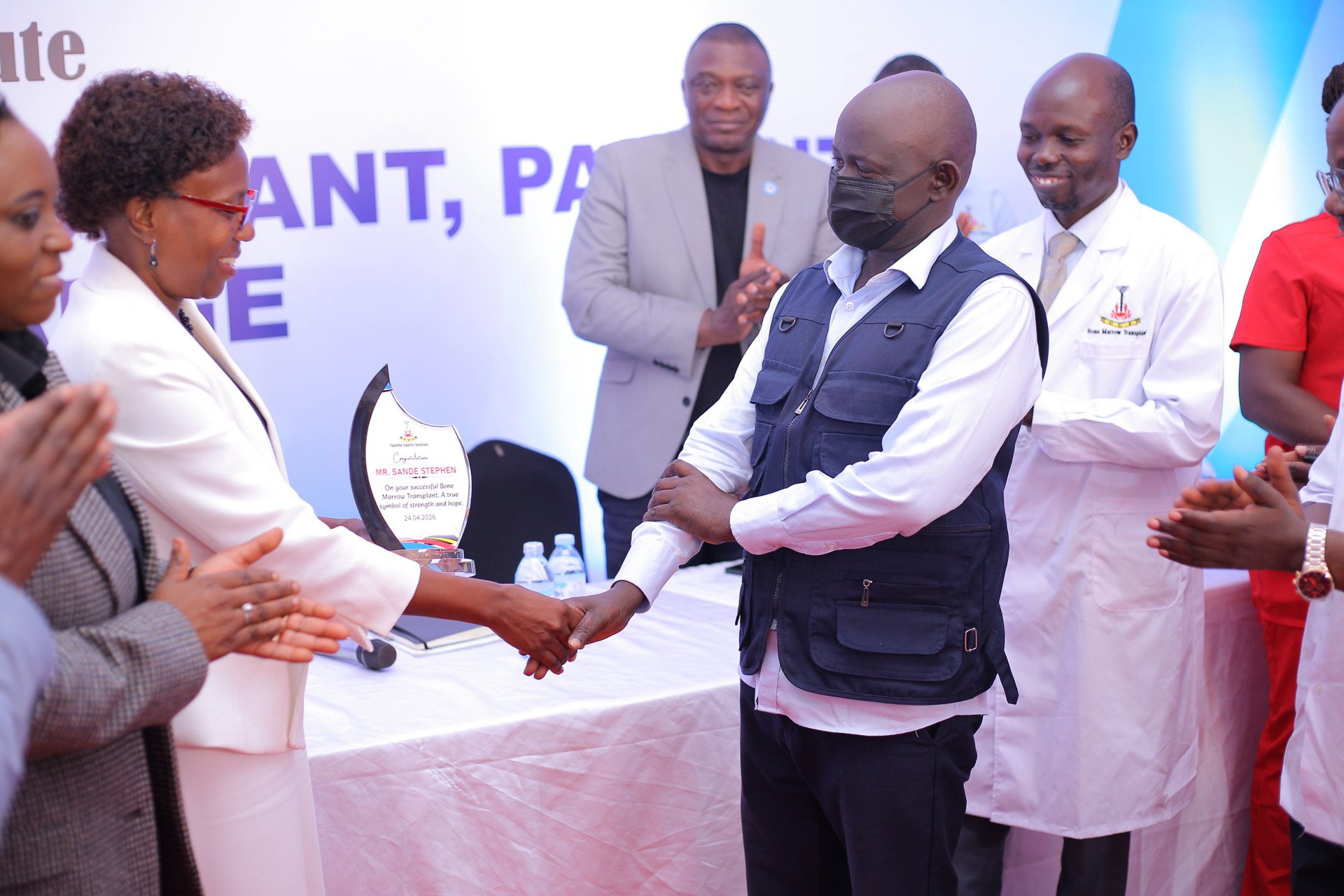
The milestone patient, Sande Stephen, who had been battling Multiple Myeloma, was officially discharged on April 24, 2026, in a ceremony attended by senior government officials and health sector leaders. His recovery is being hailed as proof that complex, life-saving procedures can now be performed locally.
A Medical First for Uganda
The transplant was led by Dr. Okello Clement, head of the institute’s Bone Marrow Transplant Programme, and involved managing highly complex stages, from high-dose chemotherapy to delicate post-transplant recovery.
Health officials described the procedure as a “massive leap” toward positioning Uganda as a regional hub for advanced oncology and hematology services.
For years, patients requiring such specialised care have had to travel to countries like India and South Africa, often at enormous financial cost. This development signals a turning point.
Government Push to End Medical Tourism
Speaking at the event, Health Minister Jane Ruth Aceng said the achievement aligns with Uganda’s long-term development agenda to strengthen domestic healthcare capacity.
She noted that Ugandans have historically spent millions of dollars abroad seeking treatment for complex blood disorders, a trend the government is determined to reverse.
“We are not just building centres; we are building a second chance at life,” she said, adding that the success demonstrates the country’s readiness to handle even the most advanced procedures.
Permanent Secretary Diana Atwine echoed the sentiment, praising the medical team for delivering “world-class precision” in managing the transplant process.
Hope for Broader Treatment Breakthroughs
Beyond cancer, officials say the implications could extend to other conditions such as Sickle Cell Disease, which affects thousands of Ugandan children. Bone marrow transplants are considered one of the most promising curative treatments for the condition, raising hopes that similar procedures could soon be widely available in Kampala.
The development of transplant and cellular therapy programmes at UCI is expected to accelerate research, training, and access to cutting-edge treatments.
Patient’s Journey Reflects New Confidence
For Sande Stephen, the milestone is deeply personal. After months of treatment, he is now walking again and preparing to return to work, an outcome he attributes to the care he received locally.
He credited his recovery to the dedication of Ugandan doctors and the government’s support in funding his treatment, urging the public to trust local expertise. His journey, from critical illness to recovery, has become a powerful symbol of what is now possible within Uganda’s health system.
A Turning Point for Healthcare
The successful transplant positions the Uganda Cancer Institute at the forefront of specialised care in the region, with officials optimistic that it will attract patients from neighbouring countries while easing the burden on Ugandan families.
As Uganda builds capacity in advanced medicine, this breakthrough underscores a broader shift: from dependence on foreign healthcare systems to growing confidence in homegrown solutions.
For patients and policymakers alike, the message is clear, world-class cancer care is no longer out of reach; it is being built at home.