Busoga’s children and the fight to end child labour
Busoga’s situation highlights the interplay between poverty, cultural norms, and economic demand. Targeted interventions here can yield measurable results. Investment in rural education, economic empowerment programs for households, and robust child protection systems can dramatically reduce child labour prevalence. The decline from 40.6 to 34 percent suggests that progress is possible when efforts are intentional and coordinated.

By Salira Brian Nangono
At dawn in Busoga, a quiet crisis unfolds. While some children prepare for school, others head to sugarcane fields, fishing sites, and roadside stalls. Their hands are calloused, their backs burdened—not by books, but by labour. For thousands of children, childhood has been quietly replaced by work. This is not accidental; it is the outcome of poverty, weak enforcement systems, and social norms that normalize exploitation.
Child labour is more than children working. The International Labour Organization defines it as work that is harmful to a child’s physical, mental, or moral development or interferes with education. UNICEF emphasizes that it robs children of their dignity, potential, and childhood. In Uganda, the Uganda Bureau of Statistics, aligned with the Employment Act 2006 and the Children Act Cap 59, classifies child labour as work that threatens health, safety, and development—covering children aged 5–11 engaged in any economic activity and older children performing hazardous or excessive work.
Globally, an estimated 138 million children are trapped in child labour, with 54 million in hazardous work. Sub-Saharan Africa bears the heaviest burden, and Uganda is no exception. But the crisis is starkest when we zoom in on Busoga. Recent surveys show that 34 percent of children here are engaged in child labour, primarily in sugarcane and rice farming. While this marks a decline from earlier figures of 40.6 percent, the pace of change is painfully slow. Poverty remains pervasive: 21.5 percent of children live below the national poverty line, forcing families into difficult choices that often place work above education.
Behind these numbers are lives shaped by hardship. A boy dives into Lake Victoria’s deep waters for a day’s catch. A girl walks miles to sell goods instead of attending school. Another child bends over in a field under the scorching sun. These are not isolated stories; they are systemic realities rooted in social, economic, and cultural factors.
To understand why child labour persists, we must examine the push and pull forces at play. Push factors originate within households and communities. Poverty forces families to rely on children’s labour to survive. Limited access to quality education—whether due to costs, distance, overcrowding, or poorly resourced schools—pushes children out of classrooms. Vulnerabilities such as illness, orphanhood, and unemployment intensify the problem. In Busoga, where economic hardship is widespread, child labour becomes an embedded coping mechanism.
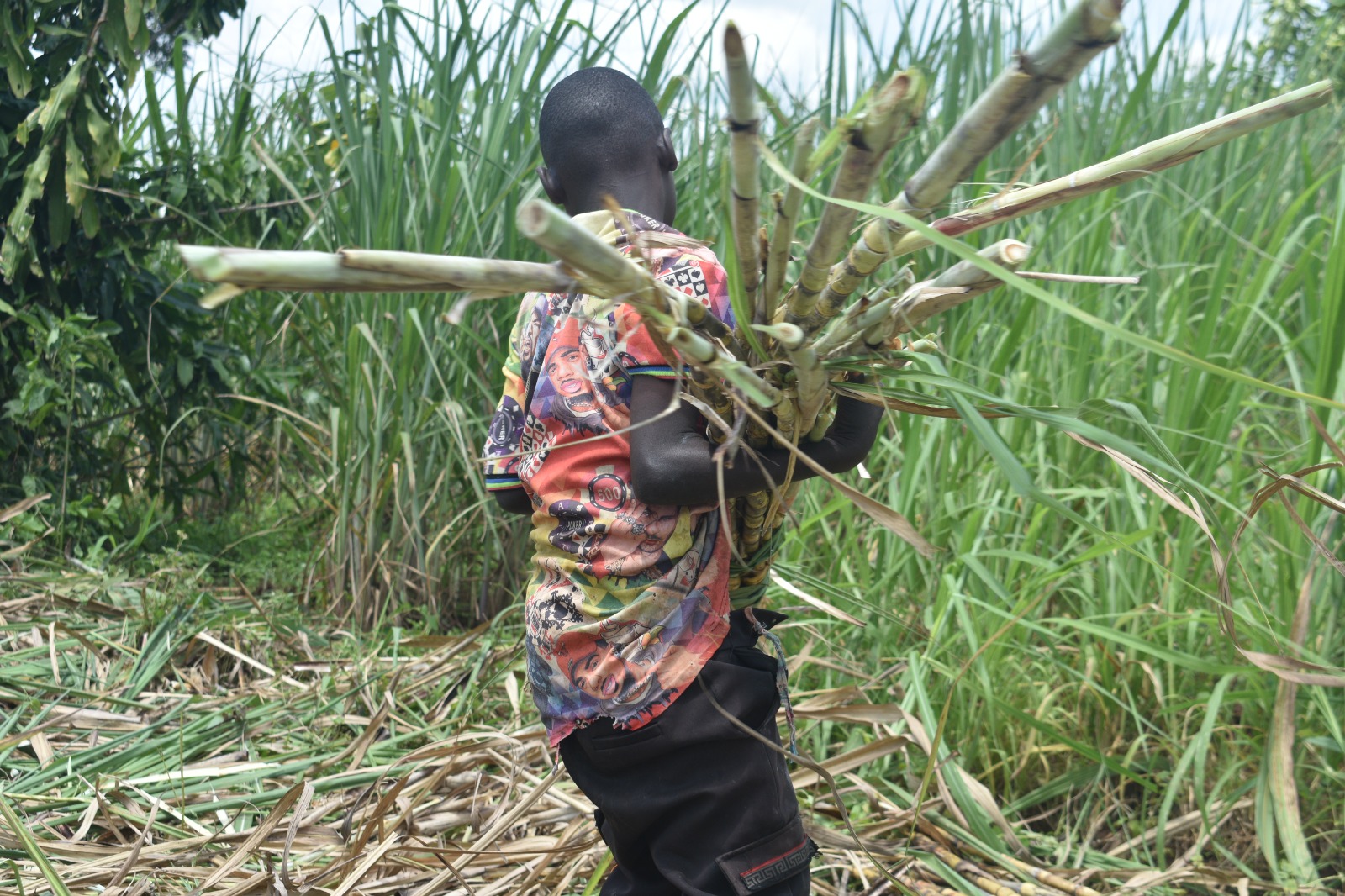
Pull factors, meanwhile, emerge from demand. Employers prefer children because they are cheaper, more compliant, and less likely to challenge unsafe conditions. In Busoga’s agriculture-based economy, children are absorbed into labor-intensive activities like planting, harvesting, and transporting crops. Informal sectors make enforcement weak, and global market pressures that favor low-cost production indirectly sustain exploitation.
The result is a vicious cycle: child labour limits education; lack of education constrains future opportunities; constrained opportunities perpetuate poverty; and poverty pushes more children into work. Breaking this cycle requires intentional, coordinated action.
Education must sit at the heart of the solution. Schools should not only be free but also accessible, functional, and capable of retaining learners. Initiatives such as school feeding programs, scholarships, and vocational training can incentivize families to prioritize education. Safe transport, flexible class schedules, and mentorship programs can also help keep children in school despite economic pressures.
At the same time, poverty must be addressed directly. Social protection programs, including cash transfers and livelihood support, can relieve the economic burden on households. Creating sustainable adult employment opportunities ensures that children are not forced to fill income gaps.
Legal enforcement is critical but insufficient if left on paper. Uganda’s laws against child labour are robust, yet inconsistent application allows exploitation to continue. Strengthening labour inspections, enforcing penalties, and empowering communities to report violations are essential steps toward meaningful change.
Equally important is challenging social norms. In many Busoga communities, child labour is seen as responsibility rather than exploitation. Awareness campaigns, community dialogue, and leadership from local influencers can shift these perceptions, reframing child work as harmful rather than honorable.
Global accountability also matters. Supply chains must be transparent, and businesses must ensure their operations do not rely on child labour. Ethical production should be standard, not optional. International partnerships can help provide resources, training, and advocacy to reduce child labour and strengthen protective systems at the local level.
Busoga’s situation highlights the interplay between poverty, cultural norms, and economic demand. Targeted interventions here can yield measurable results. Investment in rural education, economic empowerment programs for households, and robust child protection systems can dramatically reduce child labour prevalence. The decline from 40.6 to 34 percent suggests that progress is possible when efforts are intentional and coordinated.
Ending child labour is not a distant dream. It is achievable—but it requires political will, social responsibility, and economic commitment. Governments must enforce laws consistently. Communities must reject the normalization of exploitation. Families must be supported to make education viable. And businesses must prioritize ethical production.
Every child working in a field, on a lake, or along a roadside represents lost potential. They are future teachers, doctors, engineers, and leaders whose opportunities are being quietly eroded. Ending child labour is not just about removing children from work; it is about restoring their right to learn, grow, and dream.
Busoga’s children deserve better. Uganda—and the world—must act decisively to protect them. Because a nation that allows its children to work in hardship cannot fully realize its potential. Ending child labour is not just a moral imperative; it is a development necessity.
Author Bio
Salira Brian Nangono is a child labour expert and development practitioner based in Uganda, with over five years of direct experience in child labour projects and more than nine years working in child protection. He has collaborated with organizations including SOS Children’s Villages, Lutheran World Federation (LWF), Mothers2Mothers, Youth Alive Uganda, and other local and international initiatives. His work focuses on protecting vulnerable children, strengthening community-based interventions, and influencing policy to end child exploitation while promoting sustainable development.