Trump announces sweeping economic measures against Iran as global tensions rise
Trump said countries and entities that allow financial institutions, businesses, airports, or government bodies to provide assistance to Iran would face “tremendous economic consequences.
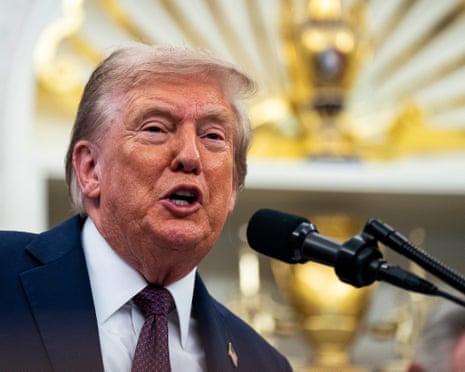
United States President Donald Trump has announced what he described as the “most crushing economic operation ever taken against any country,” declaring a new campaign of economic pressure and isolation against Iran.
In a statement shared on his Truth Social platform, Trump said the United States would launch what he called “Economic D-Day,” targeting Iran’s financial networks, oil trade, and international partners accused of providing support to Tehran.
Trump said countries and entities that allow financial institutions, businesses, airports, or government bodies to provide assistance to Iran would face “tremendous economic consequences.”
The US president accused Iran of pursuing destabilising activities and reiterated that Tehran would never be allowed to obtain nuclear weapons.
The announcement comes amid heightened tensions between Iran and the United States, with Washington increasing pressure on Tehran over its nuclear programme and regional influence.
Meanwhile, tensions have also increased between Israel and Turkey, after Israeli Defence Minister Israel Katz warned Turkish President Recep Tayyip Erdogan against what he described as actions threatening Israeli security.
Katz said Turkey should avoid testing Israel’s resolve, following reports of increased Turkish naval activity in the Eastern Mediterranean. Israeli officials said they were monitoring the movement of Turkish naval vessels near Israeli military ships.
Elsewhere, South Korea’s Defence Ministry has estimated that North Korea possesses between 80 and 120 nuclear weapons. The report comes after Pyongyang reportedly launched several short-range missiles toward waters off its eastern coast.
South Korean President Lee Jae-myung has also expressed support for Trump’s efforts to encourage dialogue with North Korea, saying reduced military tensions could help create conditions for peace on the Korean Peninsula.
In Europe, Russia and Ukraine remain locked in a continuing conflict, with Russian forces reporting missile strikes on military-related facilities around Kyiv. Moscow said the strikes targeted defence industry sites, drone production facilities, ammunition storage areas, and fuel depots.
The reported attacks involved multiple missile systems, including cruise missiles and ballistic missiles, according to Russian officials. Ukraine has not confirmed all the details of the reported targets.
The United States has also committed hundreds of millions of dollars toward supporting an international peace force for Gaza, according to reports. Several countries have expressed willingness to contribute troops, although plans remain uncertain amid disagreements over the future of the Israel-Hamas conflict.
In the Middle East, Iran’s nuclear capabilities remain a major international concern. Experts have noted that while spent nuclear fuel contains plutonium, extracting it for weapons production would require specialised reprocessing facilities.
Meanwhile, clashes continue in several conflict zones, including Yemen and the Israel-Hezbollah front in Lebanon, where opposing sides have reported military operations and territorial gains.
Global security analysts are also increasingly examining the role of artificial intelligence in warfare. Chinese defence researchers have warned that AI systems could produce inaccurate military intelligence, potentially affecting weapons development and battlefield decisions if not properly verified.
As conflicts and diplomatic tensions intensify across several regions, world powers continue to face challenges balancing military responses, economic pressure, and diplomatic negotiations.