More than 2,500 to graduate at Victoria University as AI shapes future of education
The 10th graduation marks another milestone in the university's development since it began operations in 2013.
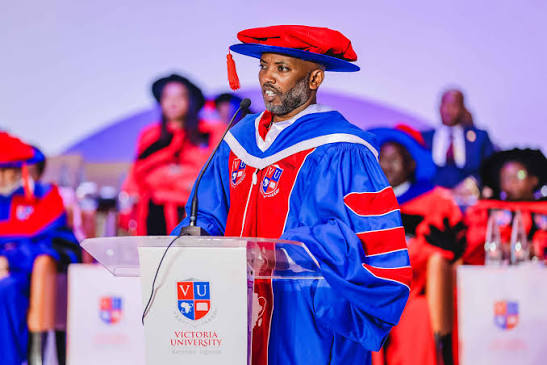
Victoria University is set to graduate about 2,500 students at its 10th graduation ceremony, with artificial intelligence (AI), digital skills and workplace readiness taking centre stage as the institution marks a decade of graduation ceremonies.
The two-day event will take place on October 19 and 20, 2026, at Speke Resort Convention Centre in Munyonyo, Kampala, under the theme “The Future Is High.” The graduands are expected to receive certificates, diplomas, bachelor’s degrees and master’s degrees across various academic disciplines.
The ceremony comes as universities face growing pressure to equip graduates with skills that match the demands of a rapidly changing labour market, where digital technologies and AI are transforming how businesses operate and professionals perform their work.
Julius Bukyana, Victoria University’s Corporate and Public Relations Manager, said this year’s graduation would highlight the growing influence of technology on education and employment.
“In the era of work-integrated learning and artificial intelligence, this year’s graduation ceremony is destined to zoom in on technological advances in education,” Bukyana said.
He said higher education institutions needed to prepare students with practical knowledge and the ability to adapt to technological developments reshaping the workplace.
Focus on employability
Victoria University has positioned experiential learning and work-integrated learning as central components of its approach to higher education, seeking to bridge the gap between classroom instruction and practical workplace experience.
The model is intended to help students apply theoretical knowledge to real-world challenges while developing competencies relevant to employment, entrepreneurship and professional advancement.
The institution offers programmes in science and technology, health sciences, business and management, humanities and social sciences, among other fields.
Its technology-focused courses include artificial intelligence and data science, cybersecurity, software engineering, information technology and computer science.
The emphasis on digital competence comes amid increasing demand for professionals capable of using emerging technologies in sectors such as finance, healthcare, telecommunications, agriculture and public administration.
However, preparing graduates for the changing labour market requires more than academic qualifications.
Employers increasingly need workers who can solve problems, communicate effectively, adapt to new technologies and translate knowledge into productive outcomes.
Victoria University’s focus on work-integrated learning is intended to respond to these demands by exposing students to practical applications of their training.
A decade of graduation ceremonies
The 10th graduation marks another milestone in the university’s development since it began operations in 2013.
The institution’s previous ceremonies have also highlighted innovation, technology and employability as priorities in preparing students for the future of work.
At its ninth graduation in October 2025, the university awarded qualifications to more than 2,000 students, according to reports published at the time. The ceremony focused on innovation, digitalisation and employability.
The latest ceremony is expected to bring together graduands, families, university leaders, academic staff and invited guests to celebrate students’ achievements and reflect on the future of higher education.
For the graduates, the event will mark the transition from academic study to employment, entrepreneurship or further professional training.
For the university, it provides an opportunity to assess how its academic programmes respond to technological change and the evolving needs of employers.
As AI continues to reshape education and industry, the challenge for higher education institutions will be to ensure that graduates can use technology responsibly, think critically and develop solutions to practical economic and social challenges.
Victoria University’s 10th graduation therefore comes at a time when the value of higher education is increasingly measured not only by the qualifications awarded, but also by the practical skills, adaptability and opportunities graduates gain from their studies.