Parliament wants second examination chance for learners caught by emergencies
Whether Parliament will eventually amend the UNEB Act to provide for exceptional examination sittings remains to be seen. But the debate has placed the question of fairness in national examinations firmly on the legislative agenda.
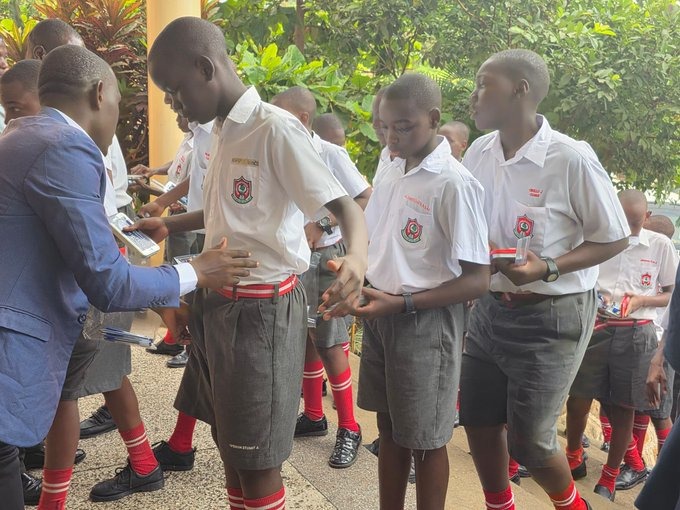
Lawmakers have called for changes to Uganda’s examination laws to provide a second chance for thousands of learners who miss national examinations because of illness, accidents, childbirth and other emergencies, warning that the current framework could punish candidates for circumstances beyond their control.
The debate in Parliament has put the spotlight on the Uganda National Examinations Board (UNEB) and the absence of a general provision allowing candidates who fail to sit their registered examinations to return for another sitting.
Kigulu County South MP Andrew Kiiza Kaluya triggered the discussion after presenting figures from UNEB’s 2025 reports showing that approximately 13,200 candidates across the three national examination levels did not sit their papers.
According to Kaluya, the affected candidates included 10,000 Primary Leaving Examination (PLE) candidates, 2,000 Uganda Certificate of Education (UCE) candidates and 1,200 Uganda Advanced Certificate of Education (UACE) candidates.
He told Parliament that the candidates missed examinations due to circumstances including illness, road accidents, childbirth, domestic violence and natural disasters.
Kaluya argued that many of the affected learners had registered, paid examination fees and prepared for their examinations but were denied the opportunity to demonstrate their academic abilities because of emergencies.
His appeal was for UNEB to consider a second sitting for such candidates rather than leaving them to wait for another examination cycle.
However, Minister of State for Primary Education Phyllis Chemutai rejected the proposal for a general supplementary examination, saying it was neither practical nor sustainable under the existing legal framework.
Chemutai, who is also the Kapchorwa Woman MP, explained that the UNEB Act does not provide for a second sitting for candidates who miss national examinations.
She further cautioned that introducing such an arrangement could create opportunities for misuse and manipulation of the examination process, besides imposing considerable additional costs on government.
But the minister’s position drew a pointed response from Speaker Jacob Oboth-Oboth, who questioned the fairness of legislation that does not accommodate exceptional circumstances.
“Every law, which has no exception, is a sad one,” Oboth-Oboth said.
To illustrate his concerns, the Speaker recounted the case of a Senior Four candidate who reportedly missed examinations after travelling to India to donate a kidney to his twin sibling.
The case, he suggested, demonstrated how a candidate could make a life-saving personal sacrifice yet suffer academically because the examination system had no provision for exceptional circumstances.
“Attorney General, you are presiding over laws which don’t have a room for fairness and equity,” he told the Attorney General’s office.
The Deputy Attorney General, Jackson Kafuuzi, who represents Kyaka South County, agreed that the law could be reviewed to address the concerns raised by legislators.
“The laws are not cast in stone. They can be amended,” Kafuuzi said.
He proposed introducing a special examination window, suggesting that candidates who miss national examinations could be allowed to sit them within a specified period, possibly one month.
Kafuuzi also argued that Parliament could provide for the financial requirements of the proposed arrangement through the national budgeting process.
The Speaker welcomed the suggestion but emphasised that any intervention would require changes to the existing law.
“So, we start with the law,” Oboth-Oboth replied.
The discussion raises broader questions about how Uganda’s examination system can balance the need to protect examination integrity with the responsibility to provide equitable opportunities for learners.
While UNEB must guard against examination malpractice, the circumstances highlighted by legislators point to the need for clear procedures to verify genuine emergencies and determine which candidates qualify for exceptional consideration.
A structured arrangement could potentially provide relief to learners affected by serious medical emergencies, accidents and other unavoidable events without opening the examination system to unrestricted supplementary sittings.
For the 13,200 candidates cited in Parliament, the debate goes beyond examination regulations. It concerns the consequences of losing an academic year despite having registered and prepared for an examination they were unable to attend.
Whether Parliament will eventually amend the UNEB Act to provide for exceptional examination sittings remains to be seen. But the debate has placed the question of fairness in national examinations firmly on the legislative agenda.