Dysfunction as a preferred governance tool in Africa: the case of Uganda
No amount of promises to address their problems and expectations, which may involve reciting old promises, on the part of overstayed regimes, seems to be raising the confidence and trust of the youth in the aging governors' capacity to deliver goods, services, justice, freedom, democracy,l and human rights.
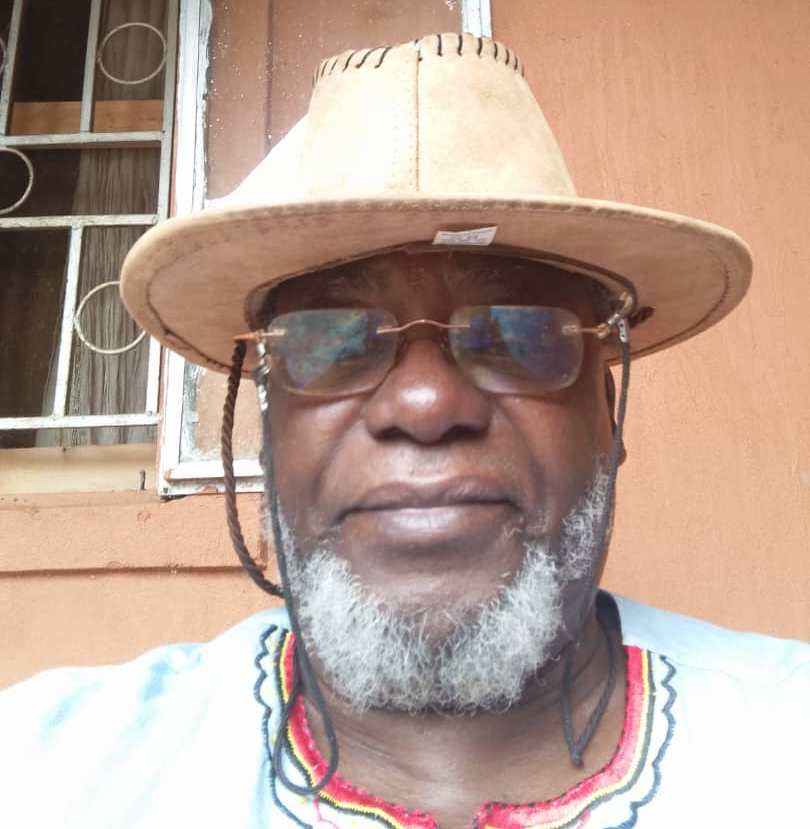
By Oweyegha-Afunaduula
Dysfunction is the opposite of function. Systems dysfunction or function. Dysfunctioning means not operating or performing normally. It is used to refer to technical or biological systems that have failed to function normally or properly.
Functioning means operating or working in a particular planned, or expected or proper way. It means performing specified actions or activities towards fulfilling objectives, goals or tasks over a set period of time. It thus means fulfilling a particular set purpose, objective, goal or task. Countries that are called failed states set themselves actions to fulfill their specific objectives, goals and tasks, but because of bad governance they end up achieving far below expected targets. In Africa, the governors find themselves in serious trouble with their increasingly youthful population that collectively feel let down.
No amount of promises to address their problems and expectations, which may involve reciting old promises, on the part of overstayed regimes, seems to be raising the confidence and trust of the youth in the aging governors’ capacity to deliver goods, services, justice, freedom, democracy, l and human rights.
The youth are not convinced that the aging governors can protect sovereignty, citizenship and nationalism. Instead, the youth perceive that the governors have become so unaccountable and unconcerned that instead of talking about and protecting collective gains in quality of life of the citizens, they talk about their private gains in business, trade, wealth and access to resources, and their personal investments in and outside the countries, at the expense of the people and their communities.
The governors are using violence to contain their increasingly youthfil popilations. Even when they organize elections, they do not do so to effect change in leadership, but to maintain the status quo to perpetuate their selfishness and greed. For them, everything begins with them and ends with them. The future generations are not in the equation of their brand of leadership, which is increasingly dictatorship designed to retain power and dominate the politics of their countries. In the process, their kind of governance is dysfunctional. They have turned dysfunction into a tool of governance that they need to maintain the status quo for their own benefit. They may even manipulate the people with money and job inducements to endorse them with their votes. However, the more they do that the more they create dysfunctional states.
Dysfunction means abnormality or impairment in the operation of a given system or society, or disruption or failure of normal social relations or political processes. In the failed states of Africa, dysfunction has become an integral phenomenon of governance, thereby making people regret why they became free of colonialism under which governance did not result in failed states.
In this article “Dysfunction as a preferred governance tool in Africa: The Case of Uganda”, I want to explore how the adoption of the tool by political systems in Africa has compromised social, political, social, economic, ecological, environmental, cultural, ethical, moral and institutional stability, sustainability and continuity.
It is, or has been, accompanied by decay and collapse of the character of a nation in terms of citizenship, nationhood, sovereignty and the relationship between the people and their governors, with .meteorically declining value and respect of the people by the governors.
Accountability to the people has taken a nosedive with the passage of time. The people are taken as commodities to be traded or things to be eliminated if their support to the governors is judged to have declined. They are denied goods and services and oppressed in diverse ways, including through over-taxation and multiple taxation. Their land is grabbed by people in power or those connected to them and freely given to immigrants or those taken as foreign investors such as the Indians and Chinese. The quality of education, health, transport, roads, agriculture and infractire is allowed to depreciate as an integral aspect of capture and control. All this is manipulated dysfunction.
As if all this is not enough, when it comes to elections, the state machinery organizes them not for the reigning President or regime to lose them but to ensure power retention for dysfunction while promising heaven on Earth. Since the State organizes and controls the Electoral process, it also controls who is elected or not elected depending on what value he or she will add to its continued capture of the instruments of power and the control access to power and resources.
The best example of a country where all these phenomena have happened and are happening in a very complex way is Uganda which over the last nearly 40 years, has been ruled by President Tibuhaburwa and his personalized party, the National Resistance Movement (NRM), registered by the Uganda Electoral Commission as National Resistance Movement Organisation (NRMO). Unsurprisingly the Electoral Commission has allowed President Museveni to perpepetuate the name of his bushwar group, NRM, rather than use the name, NRMO, which though legal, he considered alien to his hold onto power from 1986 to present.
Very early in his rule of Uganda, President Tibuhaburwa Museveni declared that those area in Uganda or the people in them that did not support him or the NRM would not partake of the “national cake”. This was a concealed declaration that Uganda’ resources would not be allocated to develop and transform those areas. They would not get quality education, health, roads, transport, infrastructure, or even employment would be denied to their people even if they had the experience and qualifications.
Over time, President Tibuhaburwa Museveni stopped mentioning the national cake. Instead, he set on ensuring that those areas that were not supportive enough or at all of NRM and him, were denied everything necessary for development and transformation. Those areas were seen just as mines of votes for NRM and the President. Not only were infrastructure and visible progress left behind by previous governments allowed to become derelict, on the whole, no new infrastructure have been erected during the time NrM and the President have been in power. However, eventually all areas – those that traditionally supported and did not support the NRM and President Museveni, started to look the same: all denied the basic factors for life, and abuses by the State became similar.All this reflected the emergence of dysfunction as a critical tool in the governance of Uganda by President Museveni and NRM
After dilly darling with decentralization, ostensibly to transfer power to the periphery, President Museveni and NRM resorted to extreme re-centralisation. This meant that the periphery would generate money from various activities and then transfer all of it to the centre, which would then decide how much to transfer back to the property.
The dysfunctionality of local governments is seen than the ever- rising mismatch between their plans to develop and the money bequeathed to them by the centre. Disfuntiobality is proliferating everywhere, igniting collective disfaction with long reign of NRM and President Tibuhaburwa Museveni. Institutions are collapsing and can no longer deliver goods and services effectively.
Challenges, including corruption, authoritarianism, and inefficiency.m are proliferating in government and outside government These issues have hindered development, exacerbated poverty, and undermined human rights, freedom, justice and democracy. Poor people are easier to manipulate and are not socially and politically equipped to struggle for human rights, democracy, freedom and justice.
The youth, who are most affected, and want to be active citizens. They want to have their future in their own hands. They have almost collectively decided to go it alone, away from the old and elderly. In Uganda they have revalued the national flag abdmm and are determined to bring change, which has been resisted by President Tibuhaburwa Museveni and NRM. They seem also to be adopting the tool of “resistance”, which is constitutional used, to achieve their object of liberation, not through the power of the gun, but the power of the people. They want meaningful. They want meaningful justice (which they are determined to free from the military), freedom and democracy. They want respect for human rights.
They have formed a movement, the Generation Z Movement, but this is Continental and interconnected, dependent,’as it is, on modern technology (Internet) and social media. They are aware that African leaders in general, and President Tibuhaburwa Museveni in particular, are prioritizing maintaining power and personal interests over effective governance. They know, this is leading to a state of dysfunction, where institutions are weakened, accountability is lacking, and poverty of all kinds is proliferating and being weaponised against the people to serve the interests of power, instead of working to protect them so that their identities and belonging survive modernity and endure.
In Uganda, the Generation Zs have heard President Tibuhaburwa Museveni pronounce that interests are superior to identity abd belonging, and are now aware that the enemy number one of the identities and belonging of the indigenous groups of Uganda is President Tibuhaburwa Museveni Tibuhaburwa Museveni, and that he has increasingly used dysfunction as a deadly tool of governance in the century of information, new knowledge and environment. They want a new philosophy of development: “people first, environment next, nature next and infrastrure last” in place of President Tibuhaburwa Museveni’s philosophy of development: “infrastructure first, environment next, nature next, people last”
Well, it is true that just as infra structure and the environment are clashing, infrastrure is clashing with indigenous communities, Generation Zs and the Status quo will definitely clash. However, Generation Zs will triumph because all the future belongs to them. Dysfunction will be a thing of the past because unlike the status quo, Generation Zs want a functional country, with a functional State, free of Mafias that are the engine of all evil in every sphere of human endeavour.
Whereas the Gen Z movement is fast emerging as a new revolutionary force challenging the status quo, leading to the collapse of some governments including Madagascar, Bangladesh, and the near collapse of Ruto’s government in Kenya as well as Samia Suluhu’s shaking in Tanzania (Bwire, pers.comm). In Tibuhaburwa Museceni’s Uganda, however, it may be a unique scenario. Most of the Gen Z in the other countries are organized and united by common purpose and language. In Uganda, the Gen Zs are being recruited and manipulated by different political actors as “foot soldiers” purely for self-aggrandizement. The Uganda Gen Zs are stratified into various streaks of ideological colour (NRM, NUP, FDC), ethnicity, social grading (elite corporates vs the unwashed of the slums), etc, a feature which would make them supine. As long as the Ugandan Gen Zs are comfortable with a meal of kikomando, sauna, live band, premier league, handouts from patrons, etc, you can’t expect much from such a group as far as influencing political and social change in Uganda is concerned (Bwire, pers.comm).
For God and My Country.
Prof. Oweyegha-Afunaduula is a Conservation Biologist and member of Center for Critical Thinking and Alternative Analysis