
Government courts Airtel and Huawei to accelerate Uganda’s digital economy and local tech manufacturing
The back-to-back meetings with Airtel Uganda and Huawei underscore government's increasing focus on positioning digital technology as a key pillar of economic transformation.
Uganda is strengthening partnerships with leading technology companies as it seeks to accelerate digital transformation, expand affordable internet access and build a domestic technology manufacturing industry capable of supporting its ambition of becoming a US$500 billion economy by 2040.
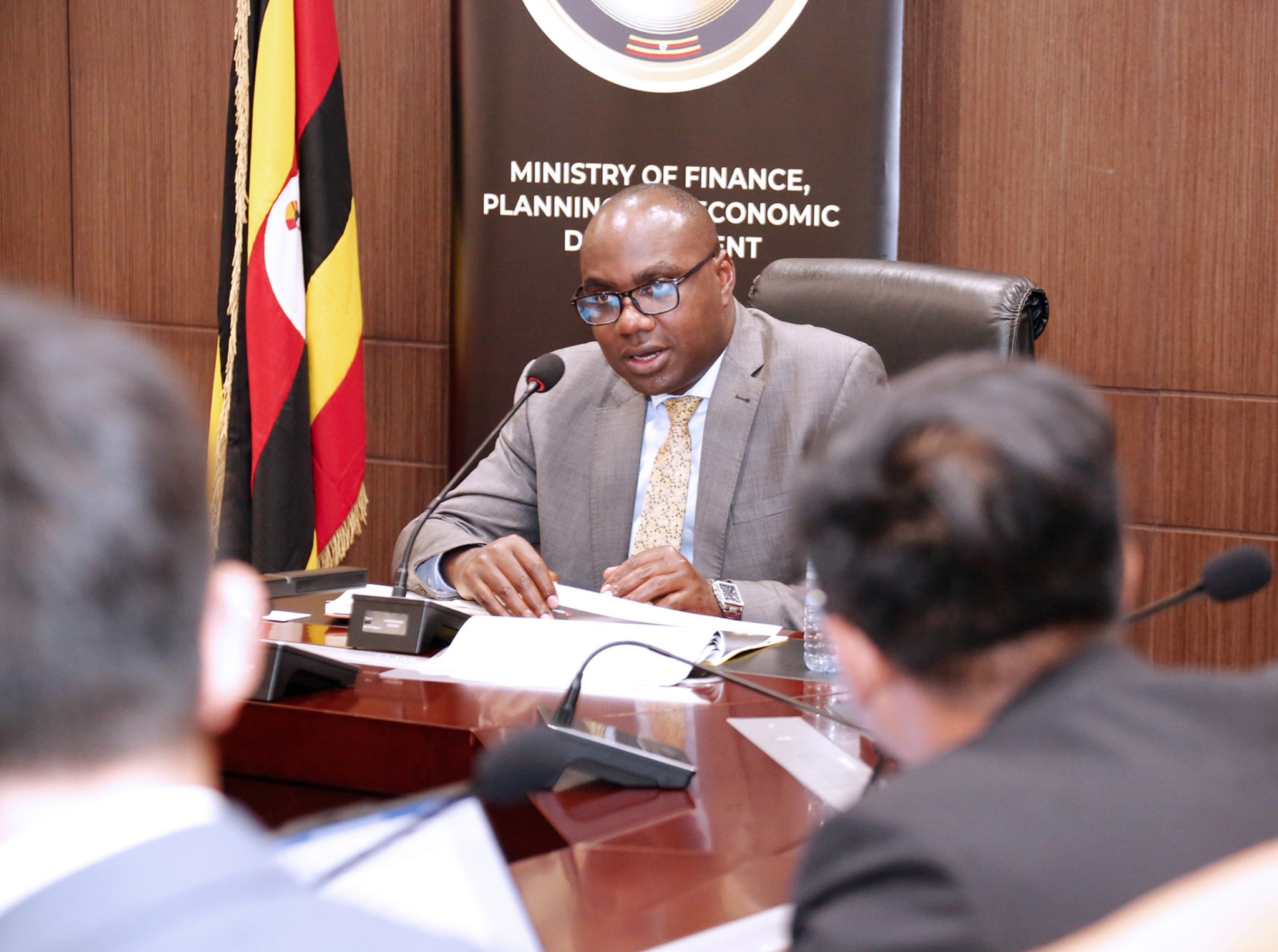
Finance Minister Henry Musasizi this week held separate meetings with the leadership of Airtel Uganda and Huawei Technologies Uganda, where discussions focused on expanding digital infrastructure, lowering the cost of digital services, increasing smartphone penetration and promoting local manufacturing of ICT devices.
The engagements signal government’s growing recognition that digital infrastructure has become as critical to economic growth as roads, electricity and industrial parks.
Airtel Commended for Driving Digital Inclusion
Meeting Airtel Uganda’s newly appointed Chief Executive Officer and Managing Director, Soumendra Sahu, alongside State Minister for General Duties Cissy Mulondo, Musasizi congratulated the telecom executive on his appointment and praised Airtel’s contribution to Uganda’s socio-economic development.
The Minister said Airtel has played a vital role in expanding reliable telecommunications services across the country through investments in modern digital infrastructure, particularly fibre-optic networks, while creating employment opportunities and contributing significant tax revenues that finance national development.
He reaffirmed government’s commitment to supporting private sector-led growth, describing the sector as a key driver of employment creation, domestic revenue mobilisation and economic resilience.
“A vibrant private sector is essential for creating jobs, expanding services, increasing domestic revenue and reducing dependence on external financing,” Musasizi said.
He encouraged Airtel to continue investing in secure and modern digital systems that can improve public service delivery, enhance business productivity and strengthen Uganda’s competitiveness in the rapidly evolving digital economy.
Education and Digital Skills
Airtel’s new Managing Director pledged the company’s continued commitment to expanding connectivity and supporting Uganda’s digital transformation agenda.
Sahu said Airtel will continue investing in digital infrastructure while strengthening partnerships with government to increase digital inclusion.
Beyond commercial investments, Airtel highlighted several corporate social responsibility initiatives aimed at closing Uganda’s digital divide.
Working with government agencies, the company currently provides free internet connectivity to about 200 schools, helping learners and teachers access digital educational resources.
Through its university scholarship programme, Airtel also fully sponsors 20 outstanding students, with equal representation of young women and men, while offering graduate training programmes designed to ease the transition from university to employment.
Smartphone Industry Under Spotlight
One of the major issues discussed during the meeting was Uganda’s emerging smartphone manufacturing industry.
Government and Airtel explored smartphone taxation policies alongside measures to support local smartphone assembly plants.
Director of Economic Affairs Moses Kaggwa emphasised the need to protect local manufacturers as Uganda seeks to build domestic capacity in electronics production and reduce reliance on imported devices.
Expanding affordable smartphone ownership remains central to Uganda’s digital transformation strategy, given that millions of citizens still rely on basic mobile phones with limited access to digital services.
Huawei Pushes for Affordable Digital Access
Later in the day, Musasizi met executives from Huawei Technologies Uganda, led by Managing Director Zhang Hao (Edward), where discussions centred on making digital technologies more affordable while strengthening Uganda’s innovation ecosystem.
Huawei, one of the world’s leading providers of information and communications technology infrastructure and smart devices, has operated in Uganda for 25 years, supporting the country’s telecommunications expansion and digital infrastructure development.
The Minister commended Huawei for helping make digital services more accessible and for supporting Uganda’s digital transformation agenda under the government’s Tenfold Growth Strategy.
He also praised the company’s investment in ICT skills development, saying the next phase should focus on enabling Ugandans to manufacture computers, smartphones and other digital equipment locally.
“The ICT skills being imparted to young people should now advance towards enabling local manufacturing of computers, phones and other ICT equipment,” Musasizi said.
He added that strengthening Science, Technology and Innovation (STI) remains one of government’s anchor sectors for driving industrialisation and long-term economic growth.
Lowering the Cost of Digital Services
Huawei presented proposals aimed at reducing the cost of digital connectivity in Uganda, including targeted tax incentives and initiatives to increase smartphone affordability.
The company proposed introducing more low-cost smartphones to increase smartphone penetration from the current 46 percent, arguing that wider smartphone ownership would accelerate digital financial services, e-commerce, online education and digital government services.
The discussions also covered policy reforms that could reduce the overall cost of accessing digital services while encouraging greater private sector investment in ICT infrastructure.
Digital Economy Emerging as Growth Engine
The back-to-back meetings with Airtel Uganda and Huawei underscore government’s increasing focus on positioning digital technology as a key pillar of economic transformation.
With investments in fibre-optic infrastructure, affordable smartphones, digital skills development, local ICT manufacturing and nationwide connectivity, Uganda is laying the foundation for a more inclusive digital economy capable of creating jobs, attracting investment and improving productivity across sectors.
As the country pursues its ambition of becoming a US$500 billion economy by 2040, policymakers increasingly view digital infrastructure not simply as a communications tool, but as a strategic economic asset that will underpin industrialisation, innovation, financial inclusion and global competitiveness.