Health ministry commissioner warns district leaders over weak oversight of government services
The Social Service Committees are being established to give communities a greater role in monitoring government services and ensuring that public programmes respond to local needs.

The Ministry of Health has warned district leaders against lax supervision of government programmes, saying weak oversight and follow-up could undermine efforts to improve health and social service delivery at community level.
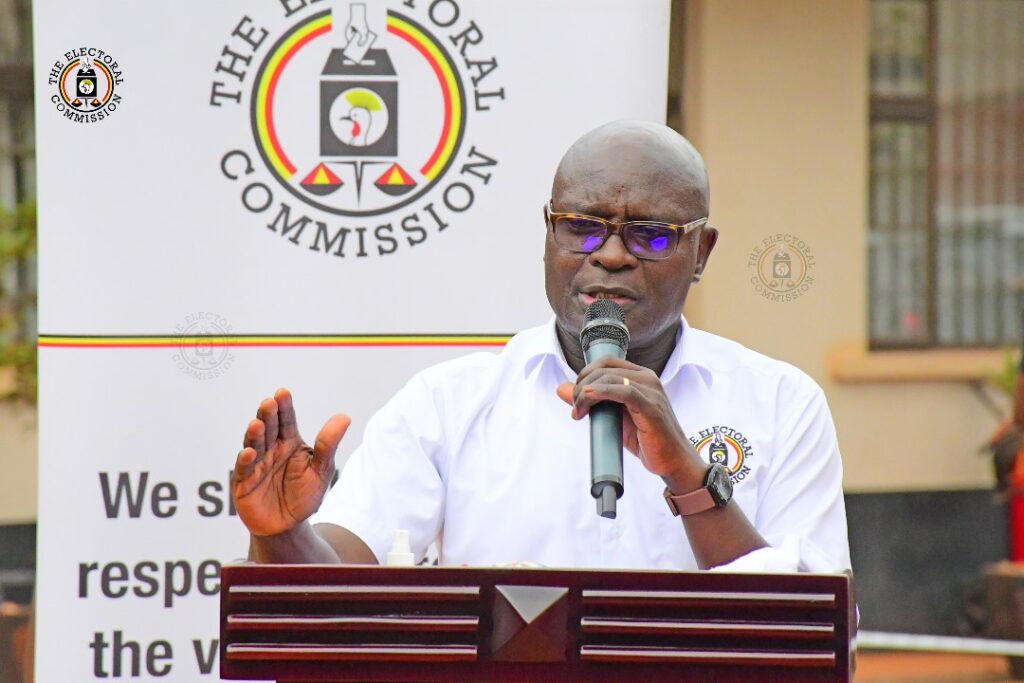
The warning was issued by Dr Richard Kabanda, Commissioner in the Department of Health Promotion, Education and Communication, during a meeting in Kyotera District to officially functionalise Social Service Committees (SSCs).
The meeting brought together three Permanent Secretaries—Aggrey David Kibenge of the Ministry of Gender, Labour and Social Development, Dr Diana Atwine of the Ministry of Health, and Dr Kedrace Turyagenda of the Ministry of Education and Sports—to oversee the establishment of the committees.
Kabanda expressed concern over what he described as a laissez-faire approach by some district leaders towards supervision and follow-up of government programmes.
He said inadequate oversight could compromise the quality of services delivered to communities and weaken accountability for government interventions.
Kabanda warned that such an approach would not be tolerated under the SSC programme, which is intended to strengthen supervision, coordination and accountability at grassroots level.
Strengthening community oversight
The Social Service Committees are being established to give communities a greater role in monitoring government services and ensuring that public programmes respond to local needs.
The committees are expected to strengthen community ownership of government services by creating a structured mechanism through which communities can participate in monitoring service delivery.
The programme will also seek to improve the delivery of integrated health and social services by leveraging the work of Community Health Extension Workers (CHEWs) and Village Health Teams (VHTs).
Through the parish structure, the SSCs will provide grassroots monitoring and accountability mechanisms for health and social services.
This is intended to bring oversight closer to communities, allowing service delivery challenges to be identified and addressed more quickly.
Multi-sector approach to service delivery
The programme also seeks to strengthen coordination between sectors that play a role in community wellbeing.
The SSCs will bring together stakeholders from health, education, local government and community development at parish level.
The multi-sector approach is based on the recognition that health outcomes are influenced by several social and economic factors, requiring government agencies to work together rather than operating in isolation.
By establishing a common structure at parish level, government hopes to improve coordination and reduce gaps in service delivery.
The committees are also expected to complement existing community structures and strengthen communication between communities and district authorities.
Kyotera becomes third district
Kyotera is the third district to have its Social Service Committees functionalised under the programme.
The SSC initiative is currently being implemented in districts where the Community Health Extension Workers programme is being rolled out.
Namutumba and Mayuge districts were the first two areas to establish functional SSCs, making Kyotera the latest district to join the programme.
The expansion is expected to provide government with lessons on how grassroots accountability and multi-sectoral coordination can be strengthened as the CHEWs programme expands.
Focus on accountability
The establishment of the committees comes amid growing emphasis on strengthening community participation and accountability in the delivery of public services.
For the Ministry of Health, effective supervision is particularly important in ensuring that community-level health interventions reach the intended beneficiaries.
CHEWs and VHTs play a critical role in connecting households to the health system, but their effectiveness depends on adequate coordination, supervision and support from local government structures.
The SSCs are therefore expected to provide an additional layer of oversight while helping communities take greater ownership of health and social services.
Kabanda said district leadership must take responsibility for ensuring that government programmes are properly supervised and followed up.
The government hopes that functional Social Service Committees will help close gaps between policy implementation and service delivery on the ground, while creating stronger accountability for resources and programmes.
With Kyotera now joining Namutumba and Mayuge, the SSC model is expected to expand further to other districts implementing the CHEWs programme, strengthening the link between communities and government service providers.