Report reveals how dfcu Bank financed 6,527 SMEs and supported 80,000 women entrepreneurs
Charles M. Mudiwa, the bank’s Managing Director and Chief Executive Officer, said the report reflected the institution’s responsibility to account for the resources and trust entrusted to it by customers, investors and the wider public.
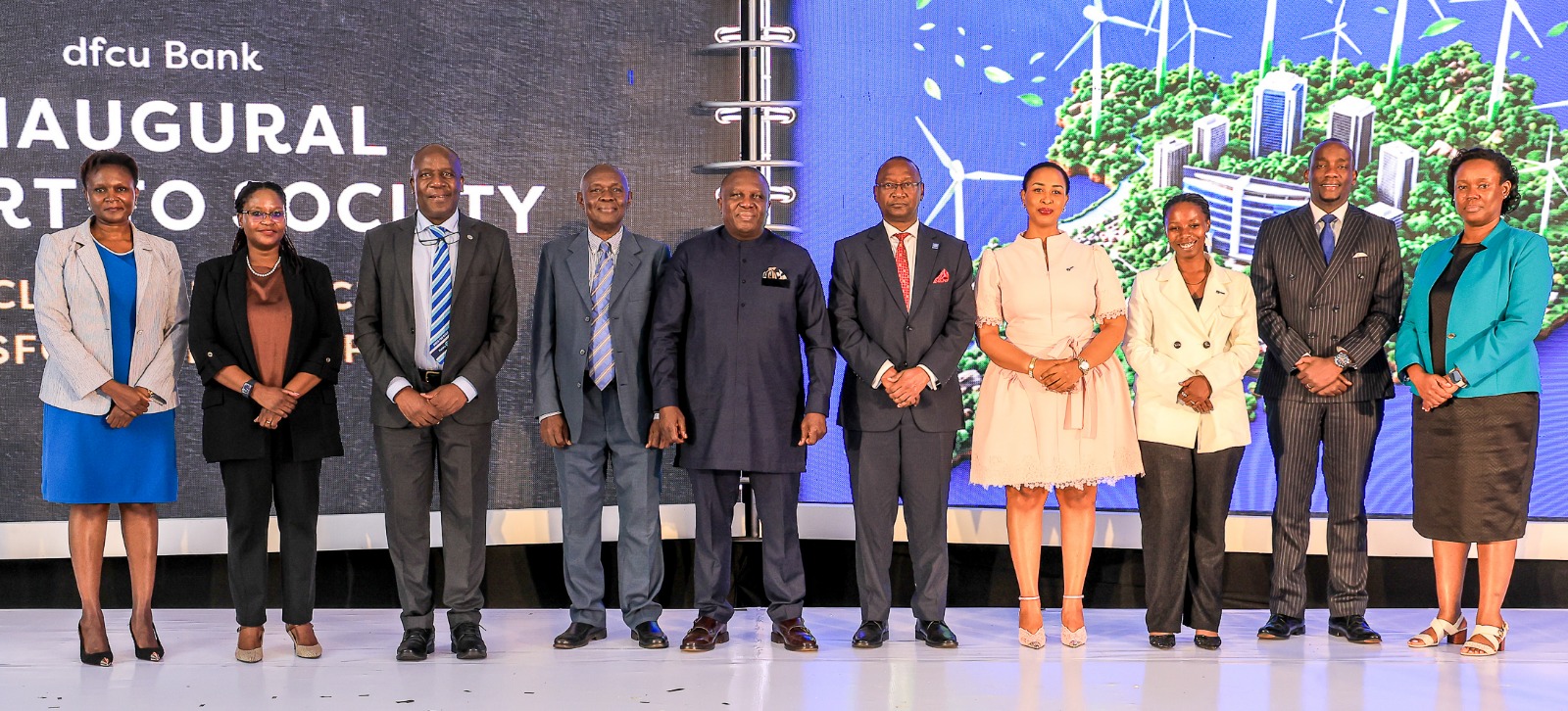
dfcu Bank financed 6,527 small and medium-sized enterprises (SMEs) in 2025, while its Women in Business programme supported more than 80,000 women entrepreneurs, according to the bank’s inaugural Report to Society 2025.
The report highlights the bank’s contribution to Uganda’s economic development through enterprise financing, financial inclusion, community healthcare, environmental initiatives and support for businesses seeking to expand.
Launched at Serena Hotel in Kigo, the report brings together data and programme outcomes intended to demonstrate how the bank’s operations and community investments contribute to livelihoods and economic opportunities beyond conventional banking services.
The report also records that dfcu Foundation facilitated UGX 38.08 billion in financing to enterprises, helping businesses access formal credit to invest in growth.
Since 2018, the Foundation has supported more than 4,000 enterprises and reached over 80,000 beneficiaries, the majority of whom are women and young people.
Dr James Ssemwanga, Chairperson of dfcu Foundation, said the organisation was focused on helping businesses move beyond survival to become stronger, more productive and resilient.
He said many enterprises needed more than capital to expand, including business development services, market access, partnerships and appropriate financial services.
The Foundation aims to support more than 100,000 additional beneficiaries between 2025 and 2030 by strengthening enterprises, connecting value chains and building productive market ecosystems.
UGX1 billion for community healthcare
Beyond enterprise financing, the report highlights dfcu Bank’s investment in community health programmes.
Through a three-year partnership with Rotary Uganda, the bank committed UGX1 billion to expand access to preventive healthcare through medical camps across the country.
According to the report, the bank’s community health interventions reached more than 25,000 Ugandans.
The medical outreaches provide free outpatient consultations, diagnostic tests, medicines, dental and eye care, health education and referrals. They also offer screening for conditions including hypertension, diabetes, HIV, cancer and sickle cell disease.
Recent outreaches were held in Jinja, Mbuya, Mutungo, Kasenyi Landing Site and Kamwokya.
The initiative seeks to bring essential health services closer to communities, encourage early diagnosis and address barriers faced by people who struggle to access medical care.
Environmental initiatives
The report also documents dfcu’s environmental activities, including 62,000 trees planted or distributed in 2025, according to campaign figures cited in the publication.
The initiative forms part of the bank’s broader commitment to environmental stewardship and sustainable development.
However, the report highlights the importance of distinguishing between trees planted and those distributed, as well as tracking survival rates, maintenance and long-term environmental outcomes to establish the lasting impact of tree-growing programmes.
Bank emphasises accountability
Dr Winifred Mary Tarinyeba Kiryabwire, Chairperson of the Board of Directors of dfcu Bank, said the report was intended to make the institution’s contribution to society more visible and strengthen accountability to stakeholders.
She said the publication documented the bank’s impact while reinforcing the importance of sound governance, transparent reporting and responsible decision-making.
Charles M. Mudiwa, the bank’s Managing Director and Chief Executive Officer, said the report reflected the institution’s responsibility to account for the resources and trust entrusted to it by customers, investors and the wider public.
He said dfcu’s contribution should be assessed not only through its financial performance but also through its impact on livelihoods, enterprises and communities.
Jimmy D. Mugerwa, Chairman of dfcu Limited, the holding company, similarly said the group’s long-term success should reflect the opportunities it helps create and the resilience of the communities it serves.
The report positions the publication as an accountability tool that brings together the bank’s work in SME financing, women’s entrepreneurship, community health, enterprise development and environmental initiatives.
Helena Mayanja, Head of Corporate Affairs and Sustainability at dfcu Bank, said the report connected the institution’s impact stories with results recorded across its programmes, while reinforcing its commitment to transparency and continuous improvement.
Supporting Uganda’s economic growth
Established in 1964 as a development finance institution, dfcu has supported businesses across agriculture, manufacturing, education, health, tourism, construction, transport and trade.
The report links the bank’s activities to broader development priorities, including financial inclusion, enterprise growth, women’s economic participation and sustainable livelihoods.
While the published figures provide an overview of the bank’s reported activities and reach, continued measurement of longer-term outcomes will be important in determining how the interventions translate into sustained business growth, employment, improved community wellbeing and environmental benefits.
Through the inaugural Report to Society 2025, dfcu Bank says it intends to strengthen public accountability and demonstrate how financial services and community partnerships can contribute to Uganda’s socioeconomic development.