Olara Otunnu: Museveni backs former UPC president for UN secretary general candidature
Whether Uganda's diplomatic offensive succeeds will ultimately depend on the complex negotiations among UN member states.
Olara Otunnu: Museveni backs former UPC president for UN secretary general candidature
In a political and diplomatic moment that could reshape both Uganda’s international standing and Ambassador Olara Otunnu’s long and distinguished public career, President Yoweri Kaguta Museveni has formally reaffirmed Uganda’s full backing for Otunnu’s candidature for the position of Secretary-General of the United Nations.
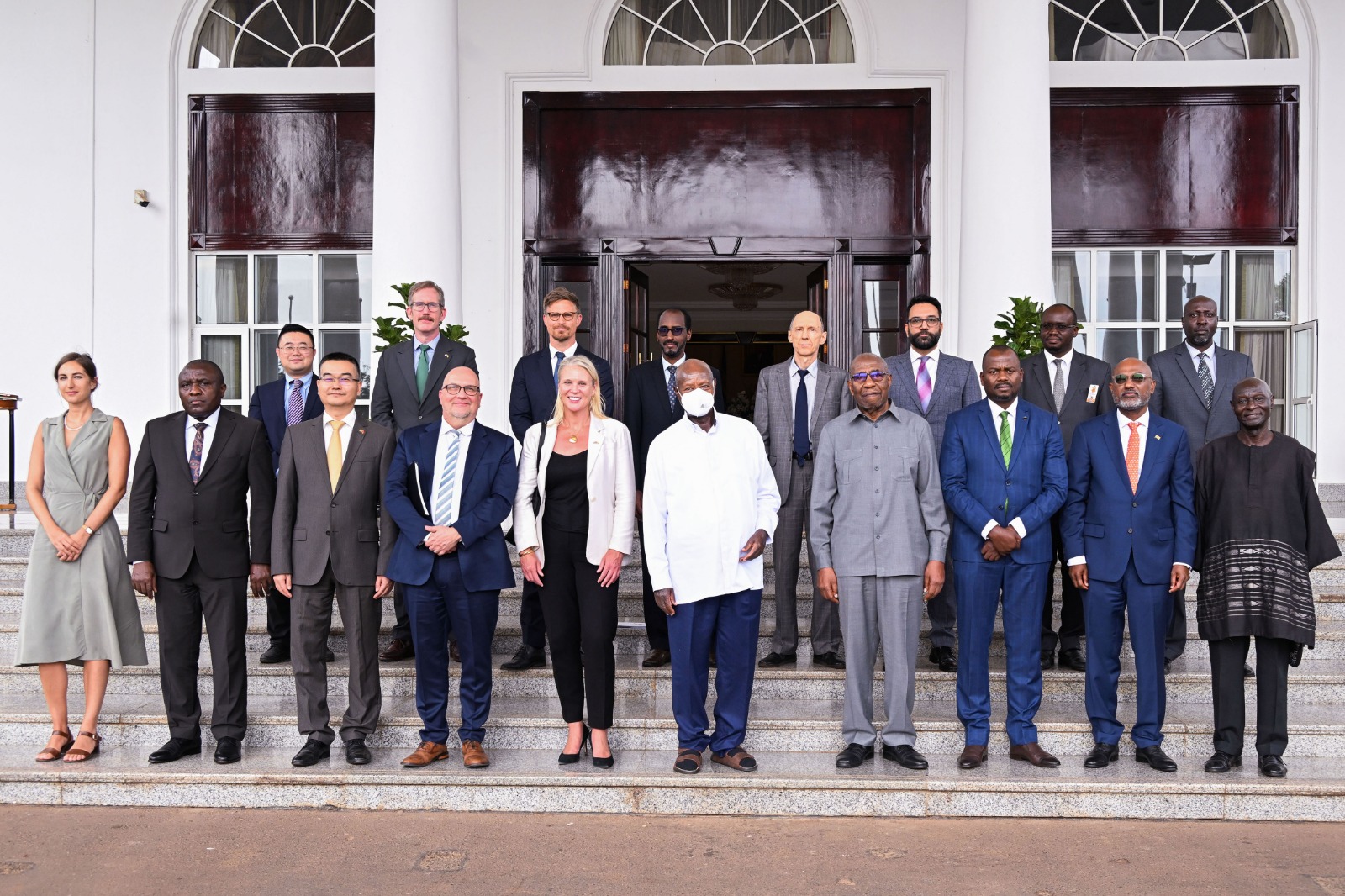
The endorsement, made during a high-level meeting at State House Entebbe with ambassadors representing members of the United Nations Security Council, marks Uganda’s most significant diplomatic push yet to position one of its most accomplished international civil servants for the world’s top diplomatic office.
The meeting brought together representatives of both permanent and non-permanent members of the Security Council, including the United States, the United Kingdom, France, Russia, Pakistan, Denmark, Somalia and the Democratic Republic of the Congo, underscoring the importance Uganda attaches to Otunnu’s campaign.
For many observers, the event represented more than a diplomatic courtesy. It symbolised an extraordinary political reconciliation between Museveni and Otunnu—two men whose relationship has traversed decades of Uganda’s turbulent political history, from their days at Makerere University to periods of sharp political disagreement.
A rare endorsement across political divides
Introducing Otunnu to the diplomats, Museveni portrayed him as an accomplished diplomat whose extensive experience within the United Nations system uniquely qualifies him to steer the organisation through a period marked by geopolitical tensions, armed conflicts, climate crises and technological disruption.
“He is really the type of person you will need in the UN system because he is very much aligned to it. I therefore hand over Olara Otunnu to you,” Museveni said.
The President recalled having known Otunnu since their student days at Makerere University, where Otunnu served as Guild President, describing him as a leader whose intellectual credentials and international exposure have remained consistent throughout his career.
Museveni also highlighted Otunnu’s command of both English and French, saying multilingual diplomacy remains an important asset in leading the world’s most diverse international organisation.
“He speaks English and French very well without a tribal accent, so I hand Ambassador Olara Otunnu to you so that he can brief you himself,” the President remarked.
Although Otunnu later became President of the Uganda People’s Congress (UPC) and twice contested for Uganda’s presidency against the ruling National Resistance Movement (NRM), Museveni acknowledged that his decades of international service have made him one of Uganda’s most recognised diplomats globally.
Uganda sells its own credentials
Museveni used the occasion to project Uganda’s own credentials within the United Nations system, arguing that the country’s record on regional peacekeeping and refugee protection provides a strong foundation for supporting one of its nationals to lead the organisation.
“Uganda’s credentials in the UN are many, but the uncontested ones are two: our contribution to regional security—I don’t think anybody will say Uganda is not known for that—and our support for refugees. Our candidate comes from that background.”
Uganda remains one of Africa’s largest contributors to regional peace and stabilisation efforts, particularly in Somalia and the Great Lakes Region, while also hosting one of the world’s largest refugee populations under an internationally recognised open-door refugee policy.
Otunnu outlines a reform agenda
In his address, Ambassador Otunnu thanked Museveni for publicly confirming Uganda’s unwavering support, noting that some Security Council members had sought clarity after previous attempts to secure Uganda’s endorsement had fallen short.
His presentation reflected decades spent at the highest levels of international diplomacy.
Otunnu reminded diplomats that he has served as Uganda’s Permanent Representative to the United Nations, President of the UN Security Council, Chairperson of the UN Commission on Human Rights, President of the International Peace Academy (now the International Peace Institute), and United Nations Under-Secretary-General and Special Representative for Children and Armed Conflict.
Drawing on that experience, he argued that conflict prevention and sustaining peace should remain the UN’s foremost mission.
He also proposed reforms aimed at strengthening the organisation’s effectiveness, transparency and institutional credibility through improved coordination, accountability and operational efficiency.
Beyond peace and security, Otunnu called for the United Nations to assume a stronger convening role in mobilising development financing for poorer nations with credible national development strategies.
Recognising the rapid emergence of artificial intelligence as a defining global issue, he proposed that the UN become the principal platform for international cooperation on AI governance by bringing together governments, scientists, industry leaders and civil society.
He further pledged to uphold merit, professionalism and inclusivity within the UN Secretariat while preserving the Secretary-General’s role as a consensus builder guided by moral authority rather than political power.
Diplomatic campaign gathers momentum
Representatives of Security Council member states welcomed the opportunity to engage directly with both Museveni and Otunnu, describing his international record as impressive and expressing interest in his priorities on peacebuilding, development, human rights, institutional reform and emerging technologies.
The diplomats also acknowledged Uganda’s contribution to regional peace and security, particularly in the Horn of Africa and the Great Lakes Region, alongside its globally recognised refugee policy.
To reinforce the campaign, Museveni announced that former Prime Minister Dr. Ruhakana Rugunda would spearhead a diplomatic outreach mission to capitals represented on the Security Council.
“We are going to send our delegation led by Dr. Rugunda to your capitals,” Museveni announced.
Rugunda described Otunnu as one of Uganda’s most distinguished statesmen, whose blend of national political leadership and international diplomatic experience makes him well prepared to lead the United Nations.
“I am very happy that you have endorsed Ambassador Otunnu. We will give him our full support.”
He added that Uganda believes the time has finally come for Otunnu to realise a long-held ambition.
“I think now is the time to actualise this long-postponed aspiration.”
A candidacy with continental significance
Should Otunnu ultimately secure the position, he would become the first Ugandan and one of only a handful of Africans to serve as Secretary-General of the United Nations.
His campaign also comes amid renewed discussions about regional balance in the leadership of major international institutions, with many African leaders arguing that the continent deserves greater representation in global governance.
For Uganda, the endorsement signals a willingness to rally behind a figure whose career has often transcended domestic political divisions, presenting a rare moment in which national diplomacy has taken precedence over partisan politics.
Whether Uganda’s diplomatic offensive succeeds will ultimately depend on the complex negotiations among UN member states.
But with Museveni’s public endorsement now unequivocally on record and a diplomatic campaign set to intensify, Ambassador Olara Otunnu’s long pursuit of the world’s highest diplomatic office has entered a decisive new phase.