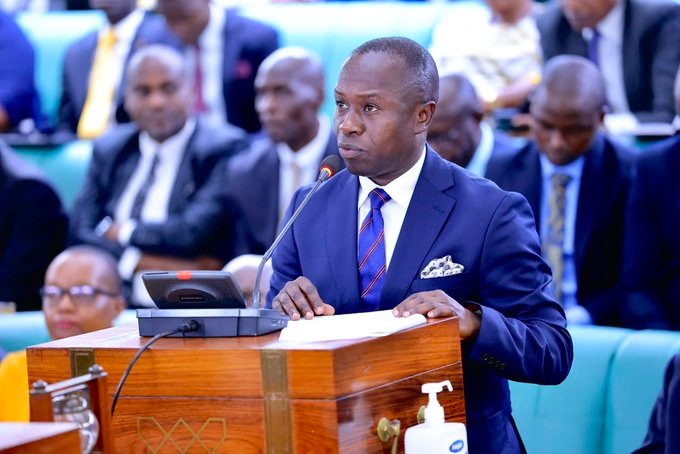
The Green Advantage: How ESG Is becoming Uganda’s next business competitive advantage
Atingi-Ego said sustainability was no longer simply a corporate compliance requirement but an increasingly important business consideration influencing investment decisions, market access and economic performance.

Bank of Uganda Governor Michael Atingi-Ego has urged Ugandan businesses and financial institutions to embrace environmental, social and governance (ESG) reporting, warning that sustainability practices are increasingly determining access to international markets, investment capital and business competitiveness.
Atingi-Ego said companies that invest early in credible sustainability reporting, climate-risk management and transparent business practices would be better positioned to attract long-term financing and maintain access to increasingly regulated export markets.
He particularly pointed to the European Union’s Deforestation Regulation, which from December 30, 2026 will require large and medium-sized operators and downstream traders placing coffee and other covered commodities on the EU market to demonstrate that their products are traceable, legally produced and deforestation-free.
For Uganda, whose coffee is largely exported to Europe, he described the requirements as a significant competitive test but also an opportunity for businesses to strengthen their production and supply-chain systems.
“This test is not a threat. Handled well, it is an opportunity,” Atingi-Ego said.
He was delivering closing remarks at the British Chamber of Commerce Uganda (BCCU) ESG Gala Dinner and Forum in Kampala on Wednesday, November 18, under the theme ESG in Action: Turning Sustainability into Competitive Advantage.
Atingi-Ego said sustainability was no longer simply a corporate compliance requirement but an increasingly important business consideration influencing investment decisions, market access and economic performance.
He urged business leaders to begin sustainability reporting immediately rather than wait for the mandatory reporting requirements scheduled to take effect in 2028.
The Institute of Certified Public Accountants of Uganda adopted the IFRS S1 and S2 Sustainability Disclosure Standards, with voluntary adoption beginning on January 1, 2026. Mandatory adoption will apply from January 2028 to listed companies, banks and other financial institutions, insurers and government business entities applying IFRS.
Under the framework, IFRS S1 requires companies to disclose material sustainability-related risks and opportunities affecting their financial prospects, while IFRS S2 focuses specifically on climate-related risks, opportunities and greenhouse gas emissions.
“The first report need not be perfect. But it must be honest. Put ESG on your board agenda, and invest in the data systems that make credible disclosure possible,” Atingi-Ego advised business leaders.
Climate finance opportunity
Beyond regulatory compliance, the Governor said sustainability presented a major investment opportunity for Uganda, particularly in agriculture, energy, manufacturing, tourism and infrastructure.
He cited Uganda’s updated Nationally Determined Contribution under the United Nations Framework Convention on Climate Change, which estimates that the country requires approximately $28.1 billion for climate action through 2030.
Of this amount, Uganda expects to finance about $4.1 billion domestically, leaving approximately 85% to be mobilised from international public and private sources.
Atingi-Ego said the financing requirement should be viewed as an investment opportunity for businesses, financial institutions and development partners to develop bankable green projects and attract international capital.
He called for expanded use of green and sustainability-linked loans, bonds, guarantees and blended finance structures to distribute investment risks and improve access to long-term funding.
He also urged financial institutions to integrate climate risks into lending decisions while continuing to finance enterprises transitioning towards more sustainable operations.
“De-risking by exclusion is not risk management; it is risk transfer, to those least able to bear it,” he said.
He encouraged banks to finance climate-resilient businesses across agriculture and agro-processing, manufacturing, tourism, energy, minerals and infrastructure, while addressing barriers that prevent micro, small and medium-sized enterprises from accessing affordable credit.
Climate risks and financial stability
Atingi-Ego said climate change was increasingly becoming a financial stability concern because droughts and floods disrupt agricultural production, increase food prices, weaken borrowers’ repayment capacity and undermine the quality of financial institutions’ loan portfolios.
He cited estimates showing that natural disasters cost Uganda approximately $152 million in the 2019/20 financial year and a further $65 million across 2021 and 2022.
He said climate-related risks could affect the broader economy through disruptions to food production, rural incomes, infrastructure and lending activities.
The Bank of Uganda, he said, was developing supervisory guidance to help regulated financial institutions identify, measure, manage and disclose climate-related financial risks.
The central bank has also signed a cooperation agreement with the European Investment Bank to support technical assistance on climate-risk supervision, disclosure and reporting, as well as development of a roadmap for greening the financial sector.
Atingi-Ego said the Bank’s approach would seek to strengthen financial resilience without unnecessarily restricting access to credit.
Economic outlook
The Governor also addressed Uganda’s economic outlook, noting that headline inflation had risen to 5.8% in October from 4.6% in September, driven by higher global energy prices, a weaker shilling and unfavourable weather conditions.
The Bank of Uganda raised the Central Bank Rate to 12% in October and maintained it in November. It projects inflation to average between 7.5% and 8% over the next 12 months, while economic growth for the 2026/27 financial year has been revised to between 5.5% and 6%.
Despite the near-term pressures, Atingi-Ego projected average economic growth of approximately 8% annually over the next five years, supported by private investment, stronger exports, anticipated oil-sector development and Government’s Tenfold Growth Strategy.
He said sustainable and well-governed businesses would be important to achieving this growth trajectory.
He also challenged the British Chamber of Commerce Uganda to connect British companies seeking to green their supply chains with Ugandan businesses and financial institutions capable of meeting sustainability standards.
He proposed that the Chamber work with the Bank of Uganda, the Institute of Certified Public Accountants of Uganda and the Capital Markets Authority to convene a sustainable finance deal-room in 2027, where credible Ugandan projects could meet British and international investors.
“Markets are not deepened by declarations. They are deepened by deals — and this Chamber can make the introductions,” he said.
Atingi-Ego said Uganda’s ability to turn sustainability commitments into credible business practices, measurable results and investment opportunities would determine whether ESG becomes a source of competitive advantage and sustainable economic growth.