
Uganda makes twice the power it needs – so why are the lights off?
Ugandans are not asking for complicated institutions or endless explanations. They want reliable electricity, clean water, affordable connections and a provider that responds when something goes wrong.
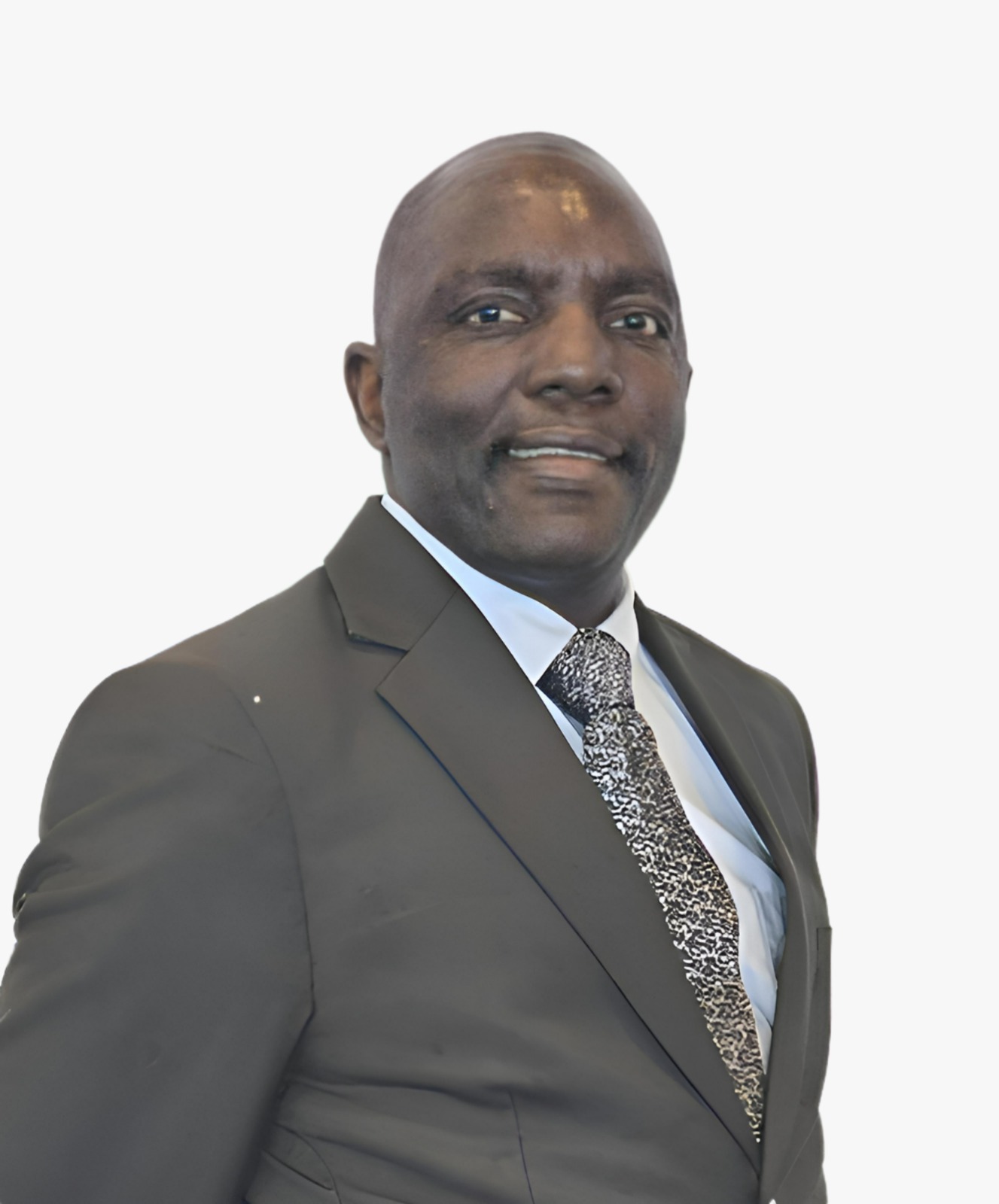
By Norman Katende
There was a time when reaching someone in Uganda meant finding a rotary-dial landline and sometimes waiting for an operator to connect your call.
Owning a telephone was a luxury. In many villages, only one person had one, which made them almost a community saviour. You left a message and agreed on a time, often the next weekend, for your relative to call back. Calls were so expensive that many people settled for a telegram.
At the centre of this system was the Uganda Posts and Telecommunications Corporation (UPTC), which was given a monopoly to protect the Government’s investment.
Then the market opened. Celtel arrived in 1995, but mobile phones were at first a status symbol for the wealthy. It was MTN’s entry in 1998 that started the real revolution. That was the same year UPTC was split into Uganda Telecom, Posta Uganda and the Uganda Communications Commission (UCC). As competition grew, the cost of getting connected, once around Shs25,000, fell sharply.
By March 2026, Uganda had 47.5 million active mobile subscriptions against just 375,000 fixed lines, according to UCC, and registered mobile money accounts had reached 58.7 million. A phone is no longer a status symbol but a basic part of daily life.
So why has the same transformation not happened in water and electricity? After more than four decades, both are still dominated by national institutions working under largely monopolistic structures, with change mostly in names and leadership.
When Umeme took over distribution in 2005, service improved in several ways, and more than US$850 million was invested over its 20-year concession. But weak contracts, poor planning and a failure to anticipate growing demand left their mark. When the concession ended on March 31, 2025, distribution returned to the state-owned Uganda Electricity Distribution Company Limited (UEDCL).
Things have not improved. UEDCL’s acting managing director told Parliament that outages nearly doubled during the transition, while the average time to respond to a fault rose from about 12 hours to almost 20. Between May 2025 and March 2026, the utility recorded close to 4,487 hours of outages, losing electricity worth roughly Shs12.3 billion. The country suffered nationwide blackouts in April and June this year, and in August an MP on the Public Accounts Committee told UEDCL that Ugandans were worse off than in the Umeme days. “People joke that the blackouts are now more than darkness”.
The paradox is striking. Uganda’s installed generation capacity stood at about 2,048MW at the end of 2024, against demand of roughly 985MW. That surplus of more than 1,000MW owes much to the 600MW Karuma dam. Yet only about a quarter of Ugandans are connected to the national grid, and in rural areas the figure is about nine per cent. We produce power we cannot deliver.
For businesses, unreliable power means spoiled stock, idle machines and lost customers. Generators are expensive to run, and solar’s upfront cost is beyond many households.
The deeper problem is structural. Replacing a private monopoly with a public one has solved nothing, because there is little reason to innovate when the law shields established players from competition.
Consider the man who built a small power-generating dam near Suam and brought electricity to his neighbours. He was not allowed to sell directly to consumers and pay taxes, but he had to sell to the national utility at a lower rate instead. Are our laws designed to widen access, or to protect institutions?
Many of these rules made sense when the Government was building a national network. Circumstances have changed, and regulation must change too.
Growing up in Kakira, I admired how the sugar factory supplied electricity to its entire residential quarters. Today, Kakira’s cogeneration plant produces about 51MW from sugarcane waste and sells up to 32MW to the national grid. That shows what private investment can do when it is allowed to.
Water tells a similar story. The National Water and Sewerage Corporation (NWSC) has made real progress: it more than doubled its connections, from 512,271 in 2017/18 to over 1.03 million by December 2025 and aims for 1.3 million by 2030. Yet the Ministry of Water says 82 per cent of villages have at least one safe water source, which means nearly one village in five has none. “At least one source” is also a long way from a tap in every home. Villages average 150 homes.
When one institution must produce, supply, distribute, regulate and supervise all at once, gaps appear, however qualified its staff.
Rather than abolishing our utilities, we should reposition them to focus on regulation, infrastructure planning and bulk supply, and open distribution and customer service to licensed private operators.
The Government would set service standards and transparent pricing, then invite several companies, perhaps seven or more, to compete in connections, maintenance and distribution, while national institutions protect the public interest.
With competition, companies have every reason to respond quickly to complaints, install transformers, repair lines and process connections. When customers can choose, poor service becomes a business risk rather than something they must put up with.
The advantage is that they will be improving service, innovating, creating more jobs and utilising skills.
There are legitimate concerns, such as affordability and the risk that companies serve only profitable areas. These are reasons for strong regulation, contracts that oblige operators to serve rural areas, and effective consumer protection. They are not reasons to reject reform.
Ugandans are not asking for complicated institutions or endless explanations. They want reliable electricity, clean water, affordable connections and a provider that responds when something goes wrong.
We once moved from a village sharing a single landline to more than 47 million mobile connections. The next revolution should not be about who controls the utilities. It should be about who delivers the best service to the Ugandan consumer.
Norman Katende is an award-winning journalist and the author of Parenting: A Universal Language.