Tracking Every Shilling: How digital monitoring is reshaping Uganda’s public procurement as PPDA, CSBAG deepen oversight
CSBAG Executive Director Julius Mukunda welcomed the partnership, describing it as an important shift in the relationship between government institutions and civil society.
Uganda’s efforts to strengthen accountability in public procurement are gaining momentum as the Public Procurement and Disposal of Public Assets Authority (PPDA) expands access to its upgraded Contract Monitoring System (CMS), giving civil society organisations a stronger role in tracking government projects.
The development follows a two-day onboarding and training workshop held in Jinja from August 19–20, 2026, during which the Civil Society Budget Advocacy Group (CSBAG) was trained on how to use the upgraded digital system to monitor the implementation of government contracts.
The initiative is part of PPDA’s broader effort to integrate civil society into public contract monitoring, enabling citizens and CSOs to document project progress and raise concerns about delays, incomplete works and possible misuse of public resources.
PPDA Executive Director Canon Benson Turamye commended CSBAG for its sustained advocacy for public accountability and urged participants to actively monitor government projects.
“This money is not ours; it belongs to the taxpayers. We are custodians, entrusted to ensure every shilling is used effectively. As office bearers, we must be accountable to the citizens of this country,” Turamye said.
Digital tool to strengthen citizen oversight
The upgraded CMS is designed to provide real-time visibility into the implementation of public contracts, including project progress, performance, timelines and value for money.
For civil society organisations, the system offers a structured avenue for moving beyond general advocacy to evidence-based monitoring of specific government projects.
CSBAG Executive Director Julius Mukunda welcomed the partnership, describing it as an important shift in the relationship between government institutions and civil society.
He said civil society organisations had historically sometimes been viewed with suspicion by government entities, but the partnership with PPDA signals a new phase of joint action against corruption and waste in the public sector.
Mukunda said CSBAG was taking the training seriously because the digital system could serve as an important deterrent to corruption by allowing citizens and CSOs to document project implementation in real time.
He cited concerns over abandoned projects and instances where contractors may receive payments for work that has not been completed, putting taxpayers’ money at risk.
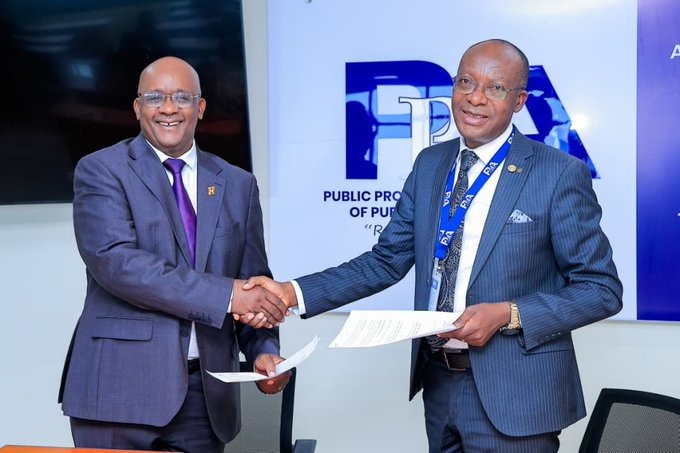
The two institutions subsequently signed a Memorandum of Understanding (MoU) to formalise their partnership.
How the monitoring system works
PPDA Manager Legal Affairs Doreen Kyazze explained that the CMS allows community monitors to submit findings through a mobile application to their respective CSOs for verification.
Once verified, the findings are shared with the relevant implementing institution. Unresolved concerns can then be escalated to PPDA for further action.
Kyazze encouraged CSOs to work closely with local leaders when monitoring government contracts, saying local participation can strengthen the effectiveness of project oversight.
She also noted that Procuring and Disposing Entities requiring assistance in contract monitoring can seek support from PPDA.
According to Kyazze, the CMS is intended to strengthen accountability, prevent corruption and promote value for money in public procurement.
Giving civil society access to procurement information
Dr Aloysius Byaruhanga, PPDA Director of Performance Monitoring for Central Government, said integrating CSBAG into the CMS represents an important step towards strengthening transparency and accountability in public contracting.
He said CSBAG’s experience in public expenditure monitoring and budget advocacy makes its participation valuable in strengthening civil society oversight.
The partnership, he added, would provide an additional layer of scrutiny, facilitate faster reporting of concerns and strengthen collaboration between PPDA and civil society.
PPDA Manager Performance Monitoring Abaine Michael also took participants through the public procurement cycle, outlining key stages, responsible stakeholders and principles such as transparency, accountability, confidentiality and non-discrimination.
He said PPDA authorises CSOs to access procurement information on its behalf while providing the necessary safeguards.
Abaine also emphasised the importance of properly managing and disposing of public assets in accordance with established procedures.
Monitoring more than financial performance
The training also highlighted the need for contract monitoring to cover environmental, health, safety, gender and social inclusion considerations.
Walter Ojok, Senior Officer for Procurement and Disposal Capacity Building at PPDA, urged CSBAG and other stakeholders to monitor issues including traffic management, disposal of soil and spoil materials, protection of cultural sites and workers’ safety.
He also called for contractors to maintain workers’ registers and ensure that every project site has a Grievance Redress Committee capable of addressing concerns raised by communities.
This broader approach means contract monitoring should assess not only whether a project is being constructed or delivered but also whether implementation complies with social, environmental and safety requirements.
Procurement under pressure to deliver
The CSBAG-PPDA partnership comes as government places greater emphasis on reforming public procurement to improve service delivery and maximise value from public expenditure.
The new Minister of State for Finance (General Duties), Cissy Mulondo, has pledged support for reforms aimed at making public procurement faster, more transparent and accountable.
During her maiden engagement with the PPDA Board and Management, Mulondo highlighted the scale of public procurement in Uganda, noting that more than 65 percent of the government budget passes through public procurement.
“When procurement works well, Uganda wins. When procurement fails, service delivery fails,” she said.
Mulondo pledged support for PPDA’s reforms, digitisation agenda and institutional independence, while challenging procurement professionals to balance speed with compliance.
“Procurement must not be a bottleneck to development. It must be an enabler,” she said.
Linking procurement to development
PPDA Executive Director Turamye briefed the Minister on interventions aimed at using public procurement as a tool for national development.
These include promoting local content, expanding opportunities for youth, women and persons with disabilities, standardising costs and improving contract management.
The reforms reflect a growing recognition that public procurement is not simply an administrative process but a major instrument for economic development.
For CSBAG, access to the CMS provides an opportunity to strengthen independent oversight of how public money is translated into roads, schools, health facilities and other government investments.
For PPDA, bringing CSOs into the digital monitoring framework adds another layer of scrutiny to a procurement system through which a substantial share of public resources flows.
The partnership could therefore help close the gap between contract award and actual project delivery by ensuring that citizens and civil society have a more structured role in tracking what happens on the ground.
As Uganda pushes to make public procurement faster and more efficient, the success of the upgraded CMS will ultimately depend on how effectively government agencies, CSOs, local leaders and communities use the information and monitoring tools available to hold implementers accountable.
The PPDA-CSBAG partnership marks a step in that direction, putting digital technology, citizen participation and evidence-based oversight at the centre of efforts to protect taxpayers’ money and improve value for public spending.