UBOS, building review board partner to map Uganda’s building stock
For a sector that requires significant public and private investment, the availability of reliable data could also improve decision-making by providing a clearer understanding of where buildings are located, their characteristics and their condition.
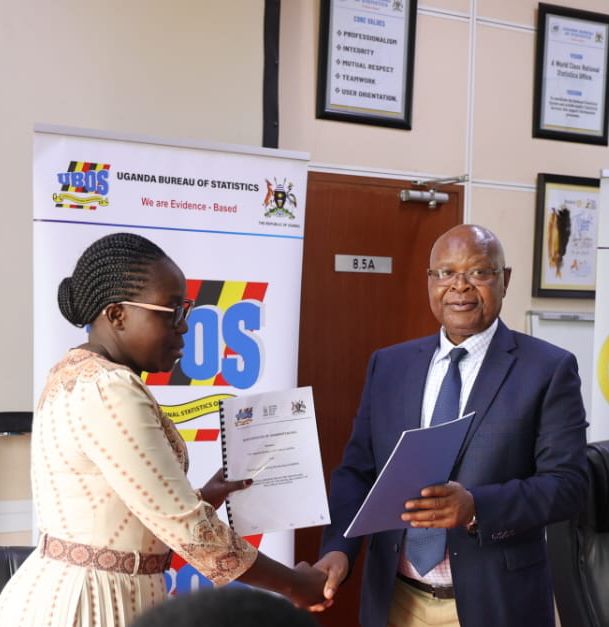
The Uganda Bureau of Statistics (UBOS) and the National Building Review Board (NBRB) have signed a Memorandum of Understanding (MoU) to facilitate the design and implementation of Uganda’s first-ever Baseline Survey of Buildings, a move expected to strengthen planning, regulation and investment in the construction sector.
The agreement was signed at Statistics House on August 7, 2026, in a ceremony presided over by UBOS Executive Director Dr. Chris Mukiza. The NBRB delegation was led by its Executive Secretary, Eng. Flavia Gutto Bwire.
The partnership establishes a framework for the two institutions to generate comprehensive and up-to-date statistics on Uganda’s building stock, providing government, investors, development partners and other stakeholders with a clearer picture of the country’s built environment.
The survey will collect information on key characteristics of buildings, including their structural condition, compliance with building regulations, ownership and occupancy, as well as their geographical distribution across the country.
Data to support construction sector decisions
Speaking at the signing ceremony, Dr. Mukiza underscored the importance of reliable official statistics in national development planning, saying the partnership demonstrates how collaboration between public institutions can strengthen Uganda’s National Statistical System.
The baseline survey is expected to create a comprehensive inventory of buildings and generate statistics that can support infrastructure planning, construction-sector regulation, disaster risk reduction and monitoring of compliance with building standards.
For a sector that requires significant public and private investment, the availability of reliable data could also improve decision-making by providing a clearer understanding of where buildings are located, their characteristics and their condition.
The findings are expected to inform evidence-based policies aimed at improving Uganda’s construction and urban development landscape.
Joint technical team to oversee survey
Under the MoU, UBOS and NBRB will establish a Joint Technical Committee to oversee the implementation of the survey.
The committee will be responsible for key stages of the exercise, including development of the survey methodology and questionnaires, pilot testing, field operations, data processing, validation and dissemination of results.
UBOS will provide technical leadership in survey design, statistical methodology, quality assurance, data processing, analysis and dissemination.
NBRB, meanwhile, will coordinate implementation, mobilise resources and provide technical expertise on building inspection, standards and regulatory compliance.
The division of responsibilities is intended to combine UBOS’s statistical expertise with NBRB’s technical and regulatory knowledge of Uganda’s building sector.
Building data expected to strengthen investment planning
The baseline survey comes at a time when Uganda is pursuing infrastructure development, urbanisation and industrialisation, all of which require reliable information on the country’s physical assets.
Accurate building data can help authorities identify infrastructure needs, monitor adherence to construction standards and strengthen preparedness for disasters affecting the built environment.
For investors and development partners, the resulting database could provide useful information for assessing construction and property-related opportunities, while government agencies could use the statistics to improve planning and allocation of infrastructure resources.
The two institutions expect the exercise ultimately to contribute to improved regulation of the construction sector, enhanced public safety and more sustainable urban development.
The partnership also represents a broader push by government institutions to strengthen evidence-based planning by filling critical data gaps across Uganda’s economy and social sectors.