
US Supreme Court allows Trump mail-voting order to move forward
The court on Monday lifted a lower-court injunction that had blocked key provisions of Trump’s March executive order in 23 Democratic-led states and Washington, D.C.
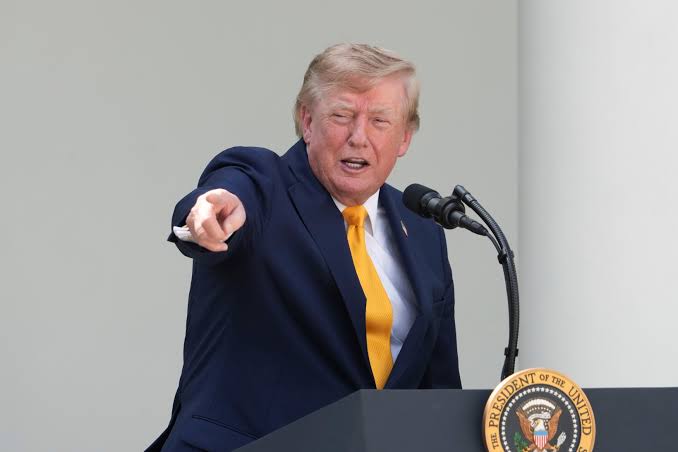
The US Supreme Court has allowed parts of President Donald Trump’s controversial executive order seeking tighter controls on mail-in voting to move forward, giving the administration a temporary victory ahead of the November midterm elections.
The court on Monday lifted a lower-court injunction that had blocked key provisions of Trump’s March executive order in 23 Democratic-led states and Washington, D.C.
The 6-3 decision does not, however, settle the broader legal dispute over whether Trump has the authority to impose the changes. The administration can proceed with certain steps while legal challenges continue.
Trump’s order seeks to increase federal involvement in election administration, including giving the Department of Homeland Security a role in compiling voter eligibility information and directing the US Postal Service to introduce new procedures for handling mail ballots.
The administration has argued that the measures are necessary to strengthen election security and prevent ineligible voting.
Critics, including Democratic-led states, say elections are primarily administered by states and that the President does not have unilateral authority to impose sweeping changes to voting procedures.
Legal battle continues
The Supreme Court’s ruling does not mean all provisions of Trump’s order can immediately take effect. A separate nationwide injunction remains in place against some provisions involving the Postal Service.
The court also indicated that its decision should not be interpreted as a final determination that every measure taken under the executive order is lawful.
The three liberal justices dissented, warning that the decision could create uncertainty for election officials preparing for the midterms.
The states challenging the order have argued that implementing new federal requirements would force them to change election procedures, divert resources and potentially confuse voters who rely on mail ballots.
The timing has heightened concerns because several states are expected to begin sending mail ballots to voters within weeks.
Election preparations under pressure
The dispute comes as the 2026 midterm elections approach and mail voting remains an important part of the US electoral system.
Trump has repeatedly criticised mail voting and called for greater safeguards around the process. His administration says stronger federal oversight is necessary to protect election integrity.
Opponents contend that the measures could interfere with state election systems and create uncertainty shortly before voters go to the polls.
Monday’s ruling therefore represents a significant, but preliminary, victory for the Trump administration. Further litigation is expected to determine whether the contested provisions can ultimately be enforced.
With election preparations already underway, the legal battle over mail ballots is likely to remain a major political and constitutional issue in the run-up to the November midterm elections.