Medical interns refuse to report for internship duty until their concerns are satisfactorily addressed
The federation's position places government under growing pressure to find a compromise before the August 15 deadline.
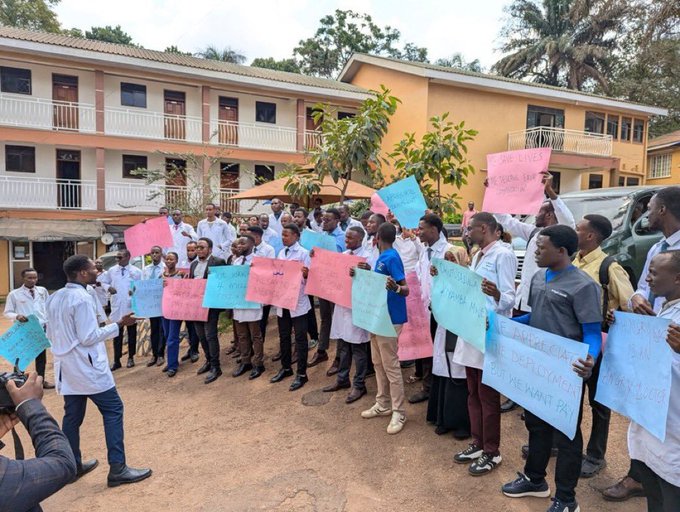
Uganda’s medical internship standoff has deepened after the Federation for Uganda Medical Interns (FUMI) rejected a government directive requiring interns to report to their assigned training centres by August 15, 2026, saying they will not resume internship until their concerns over welfare and government policy are addressed.
In a letter dated August 13 and addressed to Health Minister Dr. Chris Baryomunsi, FUMI Secretary General Cham Kuril Okwir Allan said medical interns remain committed to their decision not to report despite the Ministry of Health warning that those who fail to take up their placements by the deadline could forfeit their internship opportunities.
The federation said it considers the government’s position unfortunate but maintained that the interns’ concerns have been outstanding for long enough to warrant a substantive response.
The dispute centres on the implementation of a new health education and training policy, the level of financial support provided to interns and the broader conditions under which newly qualified doctors undertake their mandatory supervised practice.
Interns seek fresh consultation
FUMI says it supports the principle behind the policy but wants its implementation reviewed through wider consultation.
“We do believe in the need for this policy, just not in its current form,” the federation said.
According to FUMI, it conducted a welfare survey involving about 300 medical interns earlier this year to gather evidence on the challenges facing interns.
The federation said its welfare report, together with a request for a meeting to discuss the findings, was submitted to the Ministry of Health on July 18. However, it says no meeting has been granted despite follow-ups.
FUMI argues that its exclusion from the consultation process raises questions about whether the ongoing government consultations adequately represent the interests of medical interns.
The dispute comes at a time when Uganda’s public health facilities are already grappling with staffing shortages, increasing patient loads and pressure on healthcare workers.
Patient safety becomes central to dispute
Beyond the question of allowances and internship placements, FUMI has sought to shift the debate towards patient safety, warning that prolonged understaffing could have consequences for the quality and speed of healthcare delivery.
The federation disputes suggestions that hospitals can comfortably function without medical interns.
It argues that staffing levels in many health facilities remain below 39 percent, meaning interns often help bridge critical staffing gaps.
According to FUMI, when interns are absent, the available workforce becomes overstretched, forcing health workers to prioritise the most urgent cases.
The federation warns that reduced consultation time, fatigue and pressure on healthcare workers can increase the risks of misdiagnosis, prescribing and dispensing errors and other forms of medical negligence.
For FUMI, the issue is therefore not simply whether hospitals remain open when interns are absent, but whether they can maintain the quality and responsiveness of care expected by patients.
Emergency cases cannot wait
The federation says medical interns play an important role in managing emergencies, including road traffic injuries, postpartum haemorrhage and poisoning.
While emergency cases may be prioritised during periods of staff shortages, FUMI argues that limited human resources can still result in delays when available personnel are overwhelmed.
Such delays, it says, can turn otherwise manageable medical conditions into more serious cases requiring prolonged and intensive treatment—or, in the worst circumstances, result in loss of life.
The federation is therefore challenging government to consider the wider implications of the internship dispute for Uganda’s health system, particularly for patients who depend on public hospitals for urgent care.
A wider health financing debate
FUMI has also linked the internship dispute to Uganda’s broader healthcare financing challenges.
The federation points to the country’s health budget allocation of about six percent and argues that improving healthcare delivery will require greater investment in the sector.
It says the government should explore additional financing mechanisms, including supplementary budgets, rather than relying primarily on cost-cutting measures to manage the internship programme.
The federation says it is also concerned about the pressure facing hospital executives, senior consultants and medical superintendents who must manage patient workloads amid staffing shortages.
According to FUMI, some senior health professionals have expressed concern about staffing gaps and the need for interns to return to facilities to help manage patient loads.
From internship dispute to health-system question
The confrontation has increasingly evolved from a dispute over internship deployment into a wider debate about Uganda’s health workforce.
Medical interns occupy a unique position in the healthcare system. They are newly qualified doctors undergoing mandatory supervised practice before receiving full professional registration and assuming greater responsibility for patient care.
For government, ensuring that the internship system remains functional is critical to maintaining the pipeline of doctors entering the health workforce.
For interns, however, reporting to hospitals without adequate welfare support presents serious financial and professional challenges.
FUMI says forcing interns to report without resolving their concerns would be comparable to proceeding against medical advice, an analogy intended to underline the seriousness with which the young doctors view the dispute.
Interns appeal directly to government
Despite the standoff, FUMI says it remains willing to engage government in dialogue.
The federation has renewed its request for an urgent meeting with President Yoweri Museveni, to be facilitated through the Ministry of Health.
It says its campaign is not solely about the interests of medical interns but also about improving the health system for ordinary Ugandans who rely on public healthcare facilities.
FUMI also says middle-income Ugandans who depend on private facilities stand to be affected because medical doctors trained through the internship system eventually serve across both public and private healthcare sectors.
The federation’s position places government under growing pressure to find a compromise before the August 15 deadline.
With thousands of young doctors waiting for clarity on their deployment and welfare, the resolution of the dispute could have implications far beyond the interns themselves, affecting hospital staffing, patient care and the future direction of Uganda’s health workforce policy.
For now, however, FUMI’s message is unequivocal: the interns are not prepared to report until their concerns are addressed, while government must decide whether to enforce the reporting deadline or return to the negotiating table.