You cannot fix “ganyegenya” taxis without fixing “ganyegenya” roads, FDC cautions transport ministry on impounding old taxis in Kampala
Fungaroo questioned why Government has not delivered the mass public transport system promised to Kampala residents over the years.
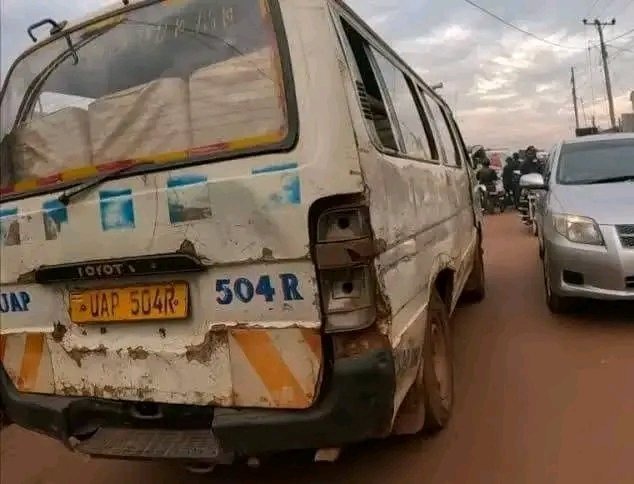
The Forum for Democratic Change (FDC) has criticised the government’s decision to launch a 100-day crackdown on taxis operating in dangerous mechanical condition, warning that the move could worsen transport challenges in the Greater Kampala Metropolitan Area.
The Minister of State for Works and Transport, Fred Byamukama, recently directed police to begin impounding taxis deemed to be in dangerous mechanical condition from Monday, August 24, 2026. On Monday, police put that directive in action.
FDC Deputy President Fungaroo Kaps Hassan said the party supports efforts to remove unsafe vehicles from the roads but questioned the timing and preparedness of government to provide alternative transport for commuters who depend on taxis.
“Whereas we agree that many taxis operating on Kampala’s roads are in poor conditions, as the minister puts it, and removing them is a good move, this action is impulsive in nature,” Fungaroo said.
He warned that removing a significant number of taxis without increasing transport alternatives could create scarcity, push up fares and place additional pressure on households already struggling with the high cost of living.
“Removing a number of taxis from the roads without putting an adequate alternative transport system in place will create scarcity, and this scarcity will inevitably increase transport costs for the ordinary commuter,” he said.
Ganyegenya Taxis, Ganyegenya Roads
Fungaroo also linked the deteriorating condition of many taxis to the poor state of roads across the metropolitan area.
“You cannot fix ‘Ganyegenya’ taxis without fixing ‘Ganyegenya’ roads,” he said, arguing that vehicles operating daily on badly maintained roads inevitably deteriorate.
He cited roads such as Natete-Nakawuka-Kasanje and Mpererwe-Kitezi-Buwambo, saying even new vehicles would struggle to remain in good mechanical condition when subjected to such roads for years.
“Every taxi being impounded today was once a new vehicle. It did not leave the showroom as a ‘Ganyegenya’,” Fungaroo said.
“In simple terms, Ganyegenya roads help manufacture Ganyegenya taxis.”
He said Government should therefore combine enforcement of vehicle safety standards with investment in road infrastructure if it wants to permanently address the problem.
Where Are the Promised Buses?
Fungaroo questioned why Government has not delivered the mass public transport system promised to Kampala residents over the years.
He cited a 2006 government plan to introduce 400 large buses in Kampala and the National Transport Master Plan, including the Transport Master Plan for the Greater Kampala Metropolitan Area (NTMP/GKMA) 2008–2023.
The plan envisaged reorganising public transport and gradually replacing minibuses with higher-capacity systems such as stage buses.
“The plan expired in 2023 with nothing implemented. Mr Byamukama should tell us what happened to this plan,” he said.
Fungaroo also pointed to previous private-sector efforts, including Pioneer Easy Bus, which began operating on a pilot basis before rolling out more widely in 2012.
He said an agreement involving KCCA in 2010 to expand the Pioneer Easy Bus fleet to 522 buses did not materialise, while other private initiatives also failed to establish a sustainable mass-transit system.
He argued that the continued dependence on taxis is partly a result of Government’s failure to provide reliable alternatives.
FDC Questions Repeated Light Rail Promises
The FDC leader also questioned the repeated government pledges to establish a light rail system in the Greater Kampala Metropolitan Area.
He noted that the Greater Kampala Metropolitan Area Light Rail Mass Transit System has featured in successive NRM manifestos since 2016.
According to Fungaroo, the 2016–2021 manifesto proposed development of a modern light rail system serving Kampala, Wakiso and Mukono.
The 2021–2026 manifesto again committed government to developing the GKMA Light Rail Train System, while the 2026–2031 manifesto promises to construct a light rail mass transit system to reduce traffic congestion and the cost of public transport.
“The same promise, repeated across three manifesto cycles, is still unbuilt,” he said.
Fungaroo described a political manifesto as a social contract between a political party and citizens who give it a mandate.
“When a promise made in 2016 is repeated unfulfilled in 2021 and again in 2026, that is not a delay. It is a broken contract,” he said.
He also raised questions about the money spent on transport planning and feasibility studies over the years, including studies for passenger railway services in the Greater Kampala area.
FDC Demands Answers
As the taxi crackdown gets underway, Fungaroo said the FDC wants government to explain what will happen to taxi drivers and conductors whose livelihoods depend on the impounded vehicles.
The party is also demanding answers on what transport will replace the taxis removed from the roads and how Government plans to prevent commuters from being stranded.
Fungaroo further asked when government will repair the roads contributing to the deterioration of vehicles and when the long-promised light rail mass transit system will finally begin construction.
He argued that a functioning public transport system would allow market forces to gradually push unsafe and outdated taxis out of business.
“This matter would have been sorted out using demand and supply. If government had kept its promise, these old taxis would have phased out automatically because no passenger will take an old taxi when there are decent means available,” he said.
Fungaroo concluded that while removing dangerous vehicles is necessary for public safety, enforcement without investment in alternative transport could reduce transport capacity and increase the burden on ordinary commuters.
He urged government to implement its Greater Kampala transport plans and develop reliable mass transit systems so that unsafe taxis can eventually be phased out through competition rather than abrupt enforcement.