
Uganda’s Kihika calls for stronger government-private sector alignment in oil development
For an industry requiring billions of dollars in capital and involving long project timelines, Kihika argued that predictable regulations and effective institutions are critical to sustaining investor confidence.
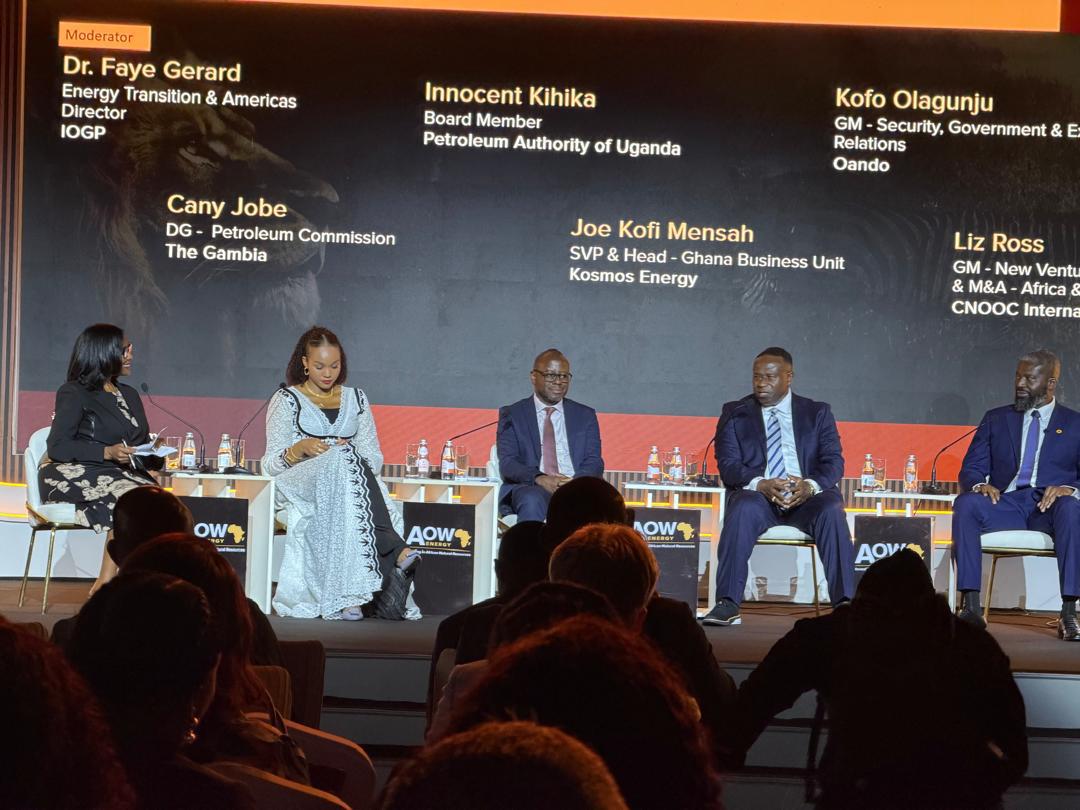
Uganda’s petroleum sector will deliver lasting economic value only when governments and private investors align their expectations, respect contractual obligations and maintain open dialogue throughout the life of oil and gas projects, according to Petroleum Authority of Uganda (PAU) Board Director Innocent Kihika.
Kihika made the remarks at Africa Oil Week (AOW: Energy 2026) in Accra, Ghana, where he participated in a panel discussion titled “Building Dialogue and Leadership: Exploring the Challenges of Government and Private Sector Frameworks for Upstream Development.”
He identified differing expectations between governments and investors as one of the major challenges affecting upstream petroleum development.
According to Kihika, governments expect petroleum investments to generate revenues, employment, local enterprise opportunities, technology transfer and environmental protection, while investors are primarily concerned with geological risks, capital exposure, cost recovery and returns on investment.
He said neither side’s expectations are unreasonable, but they are shaped by different pressures and priorities.
“The two sides are brought together through clarity of law, transparency in decision-making, timely approvals, respect for contracts, credible regulation and honest dialogue before issues become disputes,” Kihika said.
Uganda’s Institutional Model
Kihika pointed to Uganda’s institutional framework as an example of how governments can create clarity by separating policy, commercial and regulatory functions within the petroleum sector.
Under the model, government is responsible for setting policy, while the national oil company undertakes commercial participation and the Petroleum Authority of Uganda performs regulatory and compliance-monitoring functions.
He said clear institutional roles help reduce uncertainty for investors while strengthening accountability within the sector.
For an industry requiring billions of dollars in capital and involving long project timelines, Kihika argued that predictable regulations and effective institutions are critical to sustaining investor confidence.
Leadership Beyond Oil Revenues
Kihika also cautioned against measuring the success of petroleum development solely by the revenues generated from oil production.
He said petroleum resources do not automatically translate into national development, noting that countries with significant natural resources have recorded uneven outcomes where institutions were weak and decisions were driven by short-term interests.
He said Uganda’s success should instead be reflected in the development of skilled Ugandan professionals, competitive local enterprises, infrastructure, stronger public institutions and a protected environment.
“The real measure of success is not simply how much oil is produced, but what the country builds around the resource,” his remarks implied.
Alignment Must Continue Throughout Project Life
Kihika further stressed that government-investor alignment should not end when petroleum licences are awarded or when a project reaches a Final Investment Decision (FID).
Instead, he said, cooperation and dialogue must continue throughout the entire petroleum project lifecycle, from exploration and development to production and eventual decommissioning.
This, he said, is important because commercial, regulatory, environmental and social challenges can emerge at different stages of a project and require timely engagement between government and private-sector players.
His remarks come as Uganda advances development of its petroleum resources, with the country seeking to use the sector to stimulate industrialisation, create jobs, expand local businesses and generate revenues while maintaining environmental safeguards.
Kihika’s message at the Accra forum underscored the importance of stable institutions, credible regulation and sustained government-investor dialogue in converting petroleum resources into long-term economic and social development.