Why Bank of Uganda believes raising bank reserve requirement, interest rate will curb shilling pressure
The measures are intended to withdraw excess liquidity from the banking system, strengthen the transmission of monetary policy and contain inflationary pressures as the shilling comes under pressure against the US dollar.
The Bank of Uganda (BoU) has tightened monetary policy by requiring commercial banks to hold more deposits in reserves and raising its benchmark interest rate to 12 per cent, in a bid to contain shilling depreciation and prevent rising fuel prices from spreading across the economy.
The central bank raised the Cash Reserve Requirement (CRR) from 11 per cent to 13.5 per cent, effective September 24, before increasing the Central Bank Rate (CBR) from 9.75 per cent to 12 per cent at a special Monetary Policy Committee meeting on October 14.
The measures are intended to withdraw excess liquidity from the banking system, strengthen the transmission of monetary policy and contain inflationary pressures as the shilling comes under pressure against the US dollar.
Under the higher reserve requirement, commercial banks must hold a larger share of their deposits as reserves, reducing the funds available for lending. The increase in the benchmark interest rate, meanwhile, tightens monetary conditions and can raise borrowing costs across the economy.
Together, the measures are intended to limit excess liquidity, moderate demand and contain the risk that higher import and fuel costs feed into wider price increases.
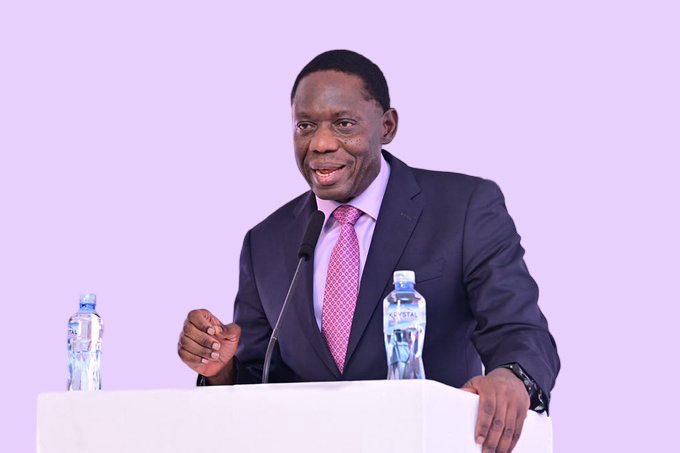
Governor Michael Atingi-Ego said the central bank was responding to mounting exchange rate pressures and the risk that depreciation would push inflation higher. However, BoU does not target a specific exchange rate, with the shilling’s value determined by market forces.
Instead, the bank seeks to ensure that movements in the foreign exchange market remain orderly while limiting the impact of currency depreciation on domestic prices.
In its October 2026 Monetary Policy Statement, BoU said heightened geopolitical tensions in the Middle East, rising international oil prices and tighter global financial conditions had intensified pressure on the shilling.
Higher interest rates in advanced economies have also made foreign financial assets more attractive, limiting capital inflows into Uganda and contributing to currency depreciation.
The weaker shilling, combined with rising global fuel prices, has increased domestic inflation risks. Headline inflation rose to 4.6 per cent in September from 4.1 per cent in August, while core inflation increased to 3.7 per cent from 3.5 per cent.
BoU warned that without tighter monetary policy, persistent fuel-price shocks and exchange rate depreciation could entrench inflationary pressures.
The bank now projects core inflation to average between 5.5 and six per cent over the next 12 months, with headline inflation expected to average between seven and 7.5 per cent.
The tighter policy stance could, however, increase borrowing costs for businesses and households, potentially slowing credit growth, investment and consumption.
BoU has revised down its economic growth forecast for the 2026/27 financial year to between six and 6.5 per cent, from an earlier projection of seven to 7.5 per cent, citing tighter financial conditions, currency depreciation and elevated global energy prices.
The central bank said it would continue monitoring domestic and international developments and take additional measures, if necessary, to preserve price and financial stability.