The system that always fails
My friend Jack came home to build a house. Uganda taught him a lesson that no minister will admit.
By Norman Katende
Jack had it all worked out. A one-storey family home with five bedrooms, built on land he already owned in Kampala. A budget of about $300,000. A plan, a timeline, and crucially, a healthy respect for the warnings most Ugandan in the diaspora has heard a hundred times.
Relatives? A no-go for any project. Friends? Only if you are prepared to lose the friendship. Property companies? Some deliver; many don’t survive the test of time.
So, Jack, who has spent years living and working abroad, chose what he thought was the safest route of all: he would do it properly, and he would do it himself.
Jack is used to a world where things happen on paper and on time. Where he lives, you submit your house plans online and the stages come with published timelines. A few weeks for design and drafting, a few more for engineering reports, a couple of months for planning permits, and a few weeks for the building permit. If a deadline slips, you fill in a form, and someone gets back to you. Nobody expects you to turn up at the council offices. The system assumes everyone is doing their job.
So, he started the modern way. He fed his requirements into an AI design tool, which produced a draft. He sent that draft to a design firm in India, which refined it, made it more attractive and produced the structural drawings. Then he arranged three months of long service leave, so he could fly home and supervise the build himself.
The first step was approval. Determined to leave no stone unturned, Jack consulted the Kampala Capital City Authority (KCCA) for advice, then hired a local architectural firm to review the drawings. They told him nothing needed changing, submitted the plans to KCCA, and promised a decision in less than two weeks.
When he mentioned this to friends back home, they laughed. Two weeks, they told him, means six months, at least.
They were right. Four months later, there was still no approval. Instead, Jack was told to go ahead and start building. The plans were “in the process” and would come through any day now.
By then his savings were draining faster than he had budgeted for, and his leave would not wait forever. He took the advice, flew home and started work.
The day the building materials landed on site was the day Jack finally understood why his plans had never been approved.
Officials from three different departments arrived, each demanding large sums of money before they would let him build, or before they would let him keep his materials. He appealed to KCCA, but every complaint went around in a circle. The only advice he received was to build fast and finish quickly.
Then, almost every week, a new team turned up with the same threats and the same open palm.
When the house was finally finished, about two years ago, Jack still had no approved plan. What he did have was a bill of more than $40,000 paid to various people within the authority, simply to be allowed to complete a house on his own land. This was roughly ten per cent of his entire budget and despite the change of laws, it is still happening today.
The pattern did not stop at the council. Water, electricity, even a simple drainage connection, every service seemed to come with a moment where someone expected him to look the other way and pay.
When Jack applied for electricity, the power company told him there were no poles and no wires available, and he would have to wait at least a month. A young man working on the site handed him a phone number. Two days later, a pole had been delivered and planted, wires were strung, and the lights came on.
It was the same story with water and almost everything else.
This is the quiet genius of a broken system. Inside the office, the official process is designed to frustrate you. Outside the office, someone is waiting to sell you exactly the same service but faster, for a fee. The delay is not a failure of the system. The delay is the system.
Where Jack lives now, what he went through has a name: corruption. It is a crime, and people go to prison for it. Back home, he told me, you are left with only two choices. You can look the other way, pay, and tell yourself it is the price of building something. Or you can stay away and wait.
Most people choose to wait.
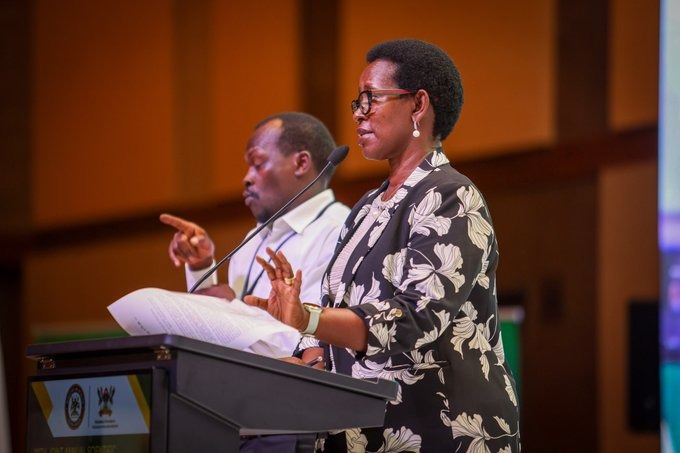
During the Uganda@64 celebrations in Melbourne, I listened as government ministers took turns praising the country: the peace, the investment in infrastructure, the conditions ripe for anyone ready to come home and invest.
Then someone asked one of them a simple question. Why are so many Ugandans abroad reluctant to build or invest back home?
Politics, the minister said.
Nobody would pretend Uganda’s political situation is rosy. No sober person could stand up and boast about it. But blaming politics alone is far from the whole truth. For people like Jack, the problem is far closer to the ground: a system that is dead on arrival. Offices where the person behind the desk is the alpha and the omega. Rules so vague they protect no one except the people who interpret them. And, for anyone who has lived in the Western world, a constant, costly waste of the one thing they value most, Time.
A few people, like Jack, are willing to burn money to buy back that time and get the job done. Many more look at stories like his, decide the hassle is not worth it, and take their savings, their skills and their ambitions somewhere else.
That is the real cost of a system that always fails. It is not just the $40,000 Jack paid. It is every house, every business and every investment that never gets built at all.
Norman Katende is an award-winning journalist and the author of Parenting: A Universal Language.