A Month Of Silence, A Deal Behind Closed Doors: How Nation Media Group Uganda Came Back On Air
Neither Muganda's comments nor Azizi's addressed whether the closure caused lasting damage to NMG-Uganda's commercial position, staff continuity or audience trust, questions likely to shape the outlets' actual recovery more than the announcement itself.
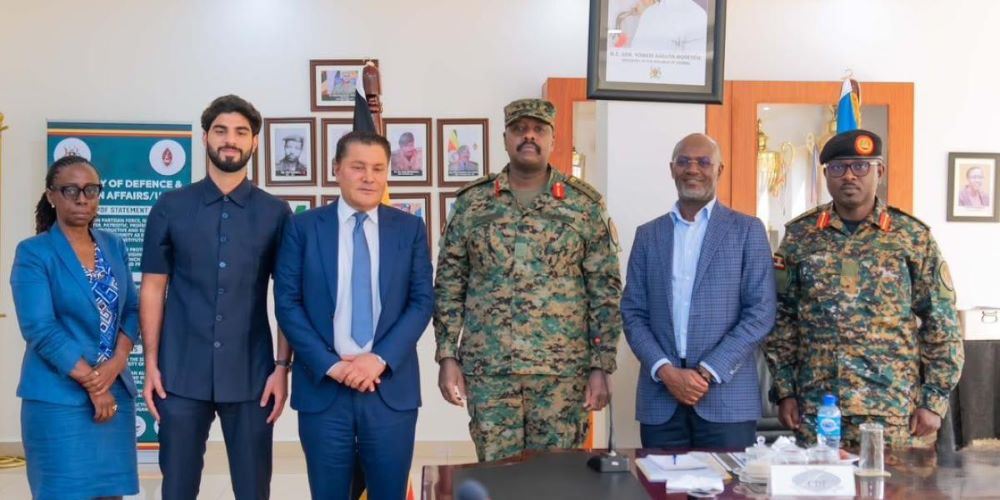
The reopening of Uganda’s largest independent newsroom was announced not from Kampala but from Dar es Salaam — and not by the government but by the conglomerate that owns it. The choreography of the announcement says as much about the outcome as the outcome itself.
On 28 July 2026, Nation Media Group’s Uganda operations were authorised to resume. The authorisation comes a month after Ugandan soldiers sealed off its Kampala newsrooms in the pre-dawn hours of 28 June and forced the country’s most influential independent media house off air and out of print.
The confirmation came from Taifa Group, the Tanzanian investment conglomerate that holds majority control of NMG through its subsidiary Taarifa Limited, in a statement issued from Dar es Salaam.
Framed as a business update rather than a press-freedom development, the release credited two men by name for the outcome: President Yoweri Kaguta Museveni, who it is said had authorised the resumption, and General Muhoozi Kainerugaba, the Chief of Defence Forces, whose “support throughout the engagement” the Taifa Group chairman singled out for gratitude.
A crisis that began with a general’s post
The shutdown that made this resumption necessary was itself unusually undisguised in its origin. Security forces raided NMG-Uganda’s Namuwongo headquarters and its broadcast facility at the Kampala Serena hotel at around 1am on 28 June, cutting power and halting NTV Uganda, Spark TV, the Daily Monitor, KFM and Dembe FM simultaneously.
Gen. Kainerugaba, who is both the head of Uganda’s military and the President’s son, claimed personal ownership of the decision in a since-deleted social media post, declaring he did not believe in a free press, and said the outlets would stay closed until he personally approved their return.
The government’s account shifted the framing somewhat. Two days later, ICT and National Guidance Minister Justine Lumumba told reporters the closures had followed a security-led inquiry instituted by President Museveni himself, involving the UPDF, the police Criminal Investigation Directorate and other security agencies.
Lumumba’s explanation placed the raid within a formal, if opaque, state process rather than one officer’s unilateral action. The Uganda Communications Commission, the statutory broadcast regulator, notably issued no public explanation of the closures at the time, a silence press-freedom monitors read as evidence of how far decision-making had moved outside normal regulatory channels.
For four weeks, NMG’s Ugandan platforms could not print or broadcast, relying instead on digital channels to reach audiences. The Committee to Protect Journalists, the World Association of News Publishers and the World Editors Forum all issued public appeals to Kampala, invoking constitutional and international protections for press freedom and specifically raising concerns for the safety of NMG-Uganda managing director Susan Nsibirwa.
Reading the resumption statement
What is notable about Tuesday’s announcement is less its content than its source and structure. It did not come from the Uganda Media Centre, the UCC, or any Ugandan government office.
It came from a shareholder based in Dar es Salaam, addressed primarily to investors and regional business audiences. That choice of venue is itself informative: it suggests the resolution was negotiated commercially, between Taifa Group’s ownership and Uganda’s security establishment, rather than adjudicated through any public legal or regulatory process.
The statement’s gratitude is also carefully targeted. Taifa Group chairman Rostam Azizi thanked Museveni for authorising the reopening and thanked Kainerugaba by name for his role in “the engagement that led to this positive outcome.”
This is an unusual acknowledgement given that it was Kainerugaba who ordered the shutdown in the first place. Reporting from the closure’s early days had already indicated that Kainerugaba and Ugandan businessman and broadcaster Andrew Mwenda were in direct talks over reopening terms, suggesting the general functioned simultaneously as the person who created the crisis and the one whose sign-off was needed to end it.
Nowhere in the statement is there an account of what conditions, if any, attached to the resumption, what the security-led inquiry concluded, or what commitments, editorial, financial or otherwise, NMG or Taifa Group may have made in the course of the month-long negotiation.
The release instead emphasises forward-looking language: “responsible investment”, “sustainable value creation” and support for “fair, balanced, independent and responsible journalism” that contributes “positively to public discourse.”
What NMG says happens next
Nation Media Group chairman Joe Muganda’s remarks in the statement are more operational: the Group’s immediate priority, he said, is to restore its platforms; reconnect with audiences, employees, commercial partners and communities; and resume credible journalism across print, broadcast and digital channels in Uganda.
Neither Muganda’s comments nor Azizi’s addressed whether the closure caused lasting damage to NMG-Uganda’s commercial position, staff continuity or audience trust, questions likely to shape the outlets’ actual recovery more than the announcement itself.
A recurring pattern, with a new signature
Uganda’s government has a long history of friction with NMG’s local titles, including a ten-day closure of the Daily Monitor in 2013 over reporting linked to the so-called “Muhoozi Project” – coverage of the same man who, thirteen years later, ordered this year’s shutdown personally.
What distinguishes the 2026 episode, according to press-freedom researchers who have tracked it, is the directness of the attribution: rather than a regulatory order or a court injunction, the shutdown and the resumption alike were announced as personal decisions by individual power-holders, with formal institutions such as the UCC largely absent from the public record.
That pattern, a raid ordered outside formal process, a month of silence, and a resumption announced from a foreign shareholder’s boardroom rather than a Ugandan courtroom or regulator’s office, leaves open questions that the Taifa Group statement does not answer: what triggered the original security inquiry, what it found, and what guarantees, if any, now stand between NMG-Uganda’s newsrooms and a repeat of the last month.