Garment manufacturers push for policy reforms to boost Uganda’s textile industry
Among the key issues raised was the need to review Uganda’s Textile Policy to better define and position garment manufacturers within the country’s industrial framework.
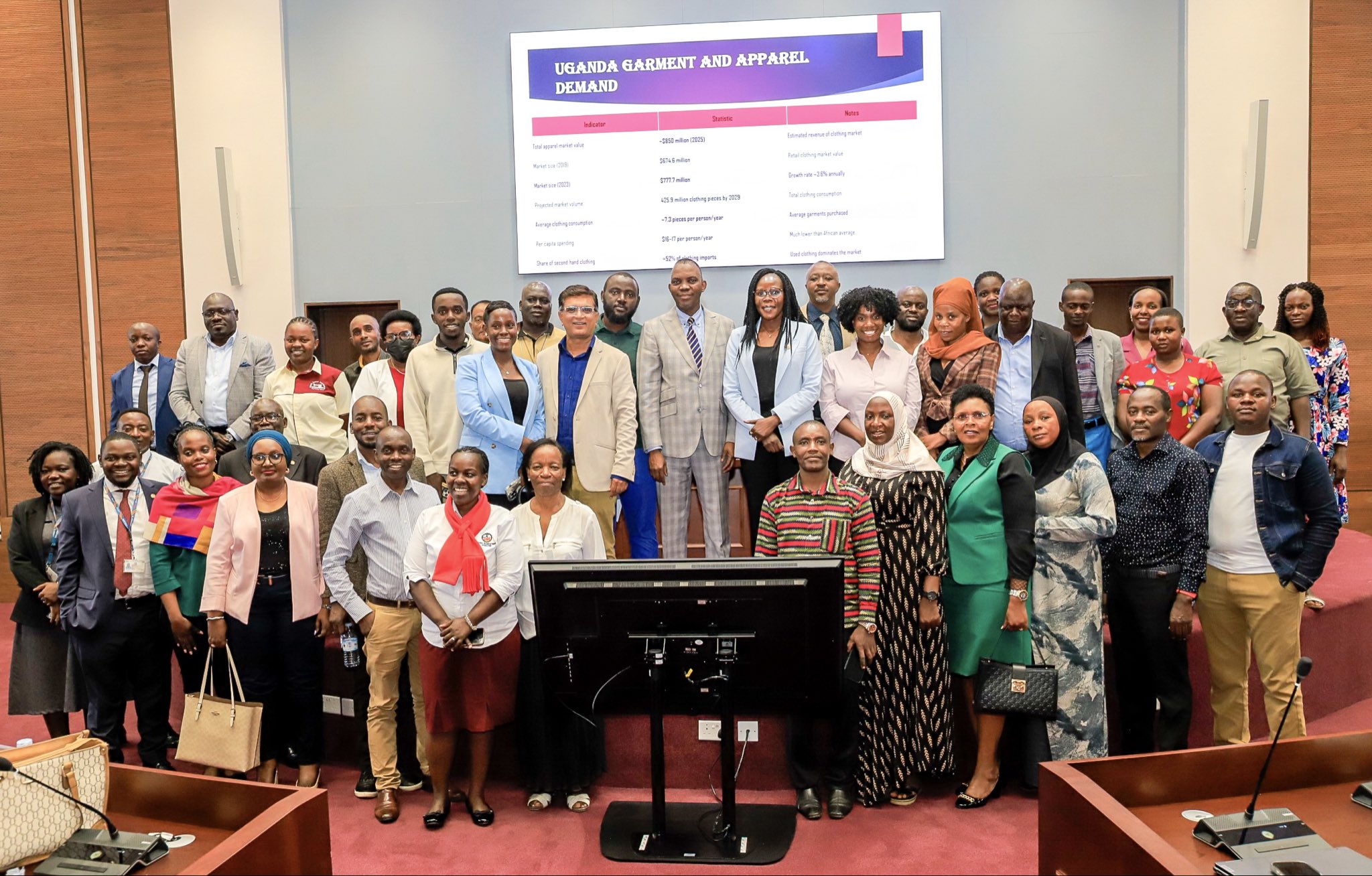
The Executive Director of the Uganda Manufacturers Association, Ezra Muhumuza Rubanda, has led a delegation of textile and garment sector stakeholders in an engagement with officials from the Ministry of Finance, Planning and Economic Development to address policy and investment challenges affecting Uganda’s garment manufacturing industry.
The meeting brought together industry players and government representatives, including the State Minister for Finance, Evelyn Anite, and the Director of Economic Affairs, Moses Kagwa. Discussions focused on strategies to strengthen the competitiveness and growth of Uganda’s textile and garment sector.
Among the key issues raised was the need to review Uganda’s Textile Policy to better define and position garment manufacturers within the country’s industrial framework. Sector leaders argued that clearer policy direction would help align the industry with national industrialization goals and support long-term investment.
Manufacturers also called for tax exemptions and targeted fiscal incentives to reduce production costs. Stakeholders noted that local garment producers face high input costs, which limit their ability to compete with imported clothing, particularly low-cost second-hand garments.
Another major concern highlighted during the engagement was the need for clear and comprehensive sector regulations to guide operations and strengthen coordination among stakeholders. Industry representatives proposed that regulatory oversight and coordination be strengthened under the leadership of the Uganda Manufacturers Association to ensure a more structured and competitive industry.
Participants also discussed the gap between Uganda’s potential market demand and the current production capacity of local garment manufacturers. While Uganda presents a growing market for locally produced garments, stakeholders emphasized the need for investments in skills, technology, and infrastructure to scale up production.
The meeting further explored the potential of local garment manufacturing as a sustainable alternative to the country’s heavy reliance on second-hand clothing imports. Industry players argued that strengthening domestic production would promote value addition, expand employment opportunities, and accelerate Uganda’s broader industrial growth.
The engagement reflects a growing collaboration between government and industry stakeholders to unlock the full potential of Uganda’s textile and garment sector, positioning it as a key contributor to manufacturing, job creation, and economic transformation.