Ggoobi’s debt warning signals Uganda’s shift from borrowing more to borrowing better
Dr Ggoobi acknowledged that this growing burden has become one of the biggest concerns among political leaders, investors and citizens.
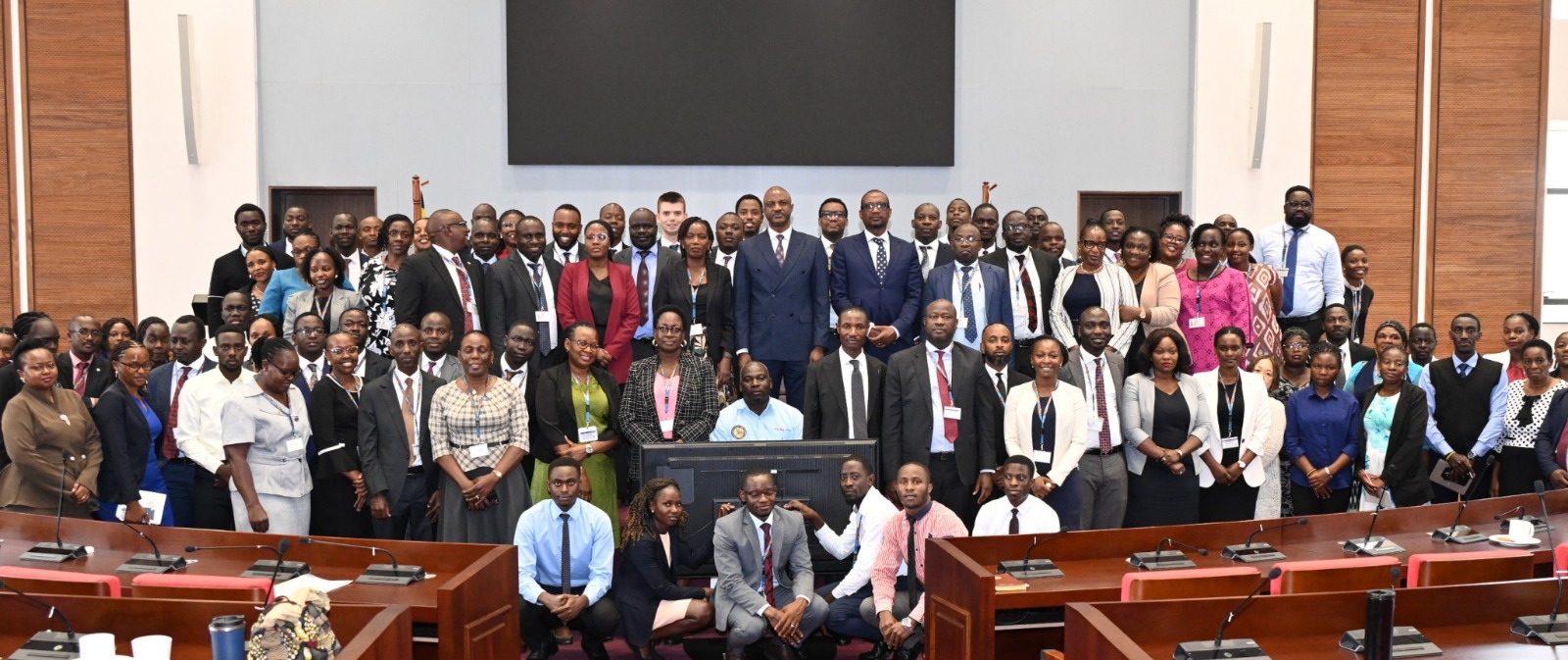
Permanent Secretary and Secretary to the Treasury (PSST) Dr Ramathan Ggoobi’s latest message to the Directorate of Debt and Cash Policy is more than an internal government directive.
It reflects a significant shift in Uganda’s public finance strategy; from focusing primarily on accessing financing to ensuring every borrowed shilling generates sustainable economic returns.
Addressing the Directorate’s meeting at the Ministry of Finance, Planning and Economic Development, Dr Ggoobi emphasised that Uganda’s future economic ambitions must be underpinned by prudent debt management, warning that rising debt servicing costs are steadily eroding the country’s fiscal space.
His remarks come at a time when Uganda is implementing its Tenfold Growth Strategy while simultaneously preparing for the anticipated economic gains from first oil production, expanding infrastructure investments and accelerating industrialisation.
Rising debt servicing pressure
Debt servicing has become one of the fastest-growing expenditure items in Uganda’s national budget. Every increase in interest and principal repayments reduces government’s ability to finance priority sectors such as healthcare, education, agriculture and infrastructure without resorting to additional borrowing.
Dr Ggoobi acknowledged that this growing burden has become one of the biggest concerns among political leaders, investors and citizens.
For businesses, this matters because limited fiscal space can constrain public investment, delay payments to suppliers and reduce the government’s capacity to stimulate economic activity during periods of economic uncertainty.
A higher debt servicing bill also leaves fewer resources available for productive investments that improve competitiveness, including transport infrastructure, energy access and digital transformation.
Protecting Uganda’s international credibility
Uganda has generally maintained a reputation for disciplined debt management compared to many developing economies. This reputation has enabled the country to continue accessing concessional financing from multilateral institutions while attracting confidence from development partners and international investors.
Dr Ggoobi warned that this credibility should not be taken for granted.
International lenders increasingly assess countries based on debt sustainability, governance standards and the economic returns generated from borrowed resources.
Maintaining investor confidence helps Uganda negotiate better financing terms, reducing borrowing costs over time.
Conversely, any perception of unsustainable debt accumulation could increase the country’s risk premium, making future borrowing more expensive.
From financiers to strategic advisers
Perhaps the most significant policy message from Dr Ggoobi was his call for the Directorate of Debt and Cash Policy to evolve from processing financing transactions into becoming Government’s strategic financial adviser.
Rather than simply arranging loans, the Directorate is expected to evaluate whether proposed borrowing aligns with Uganda’s long-term economic priorities, identify emerging fiscal risks and provide independent, evidence-based advice, even when such advice may discourage additional borrowing.
This represents a stronger emphasis on quality over quantity in public financing decisions.
For investors, such an approach improves confidence that public resources will increasingly be allocated to projects capable of generating measurable economic returns.
Borrowing only for productive investments
Dr Ggoobi’s emphasis on borrowing “prudently and only when necessary” reflects a broader international consensus that public debt remains beneficial when directed towards productive investments that stimulate economic growth.
Infrastructure such as roads, electricity transmission, industrial parks, irrigation systems and digital infrastructure can generate long-term economic benefits that exceed their financing costs.
However, borrowing to finance recurrent expenditure or projects with limited economic impact risks increasing debt without strengthening the country’s productive capacity.
The challenge for Uganda will therefore be improving project selection, implementation efficiency and value for money.
Supporting Uganda’s Tenfold Growth Strategy
Acting Director of Debt and Cash Policy Maris Wanyera reaffirmed the Directorate’s commitment to mobilising affordable financing to support Uganda’s Tenfold Growth Strategy.
The strategy seeks to significantly expand the country’s economy through commercial agriculture, industrialisation, mineral development, tourism, digital transformation and export-led growth.
Achieving such ambitious targets will require substantial investment.
However, financing alone will not guarantee success.
Government will increasingly be expected to secure affordable capital while ensuring investments generate sufficient economic returns to strengthen revenue collection, expand exports and create sustainable employment.
Implications for the private sector
Businesses stand to benefit from stronger debt management if it translates into greater macroeconomic stability.
A sustainable debt profile supports lower inflation risks, improves exchange rate stability and enhances investor confidence, all critical ingredients for long-term private sector investment.
Construction firms, manufacturers, financial institutions and infrastructure developers are particularly dependent on predictable government financing and timely execution of development projects.
If debt sustainability is preserved, Uganda is likely to remain an attractive destination for concessional financing, public-private partnerships and foreign direct investment.
The bottom line
Dr Ggoobi’s message signals a maturing approach to public finance management. Rather than measuring success by the volume of financing secured, Government is placing increasing emphasis on the economic value created by every borrowing decision.
For Uganda to achieve its ambitious growth objectives while maintaining macroeconomic stability, disciplined debt management will become just as important as mobilising new financing.
The Directorate of Debt and Cash Policy will therefore play a pivotal role, not only in raising resources, but also in ensuring that today’s borrowing strengthens tomorrow’s economy instead of becoming a burden on future generations.