Kivumbi brought to court after weeks of uncertainty over his whereabouts
As the judicial process unfolds, the case is expected to remain under close scrutiny from political observers, human rights organisations and the wider public.
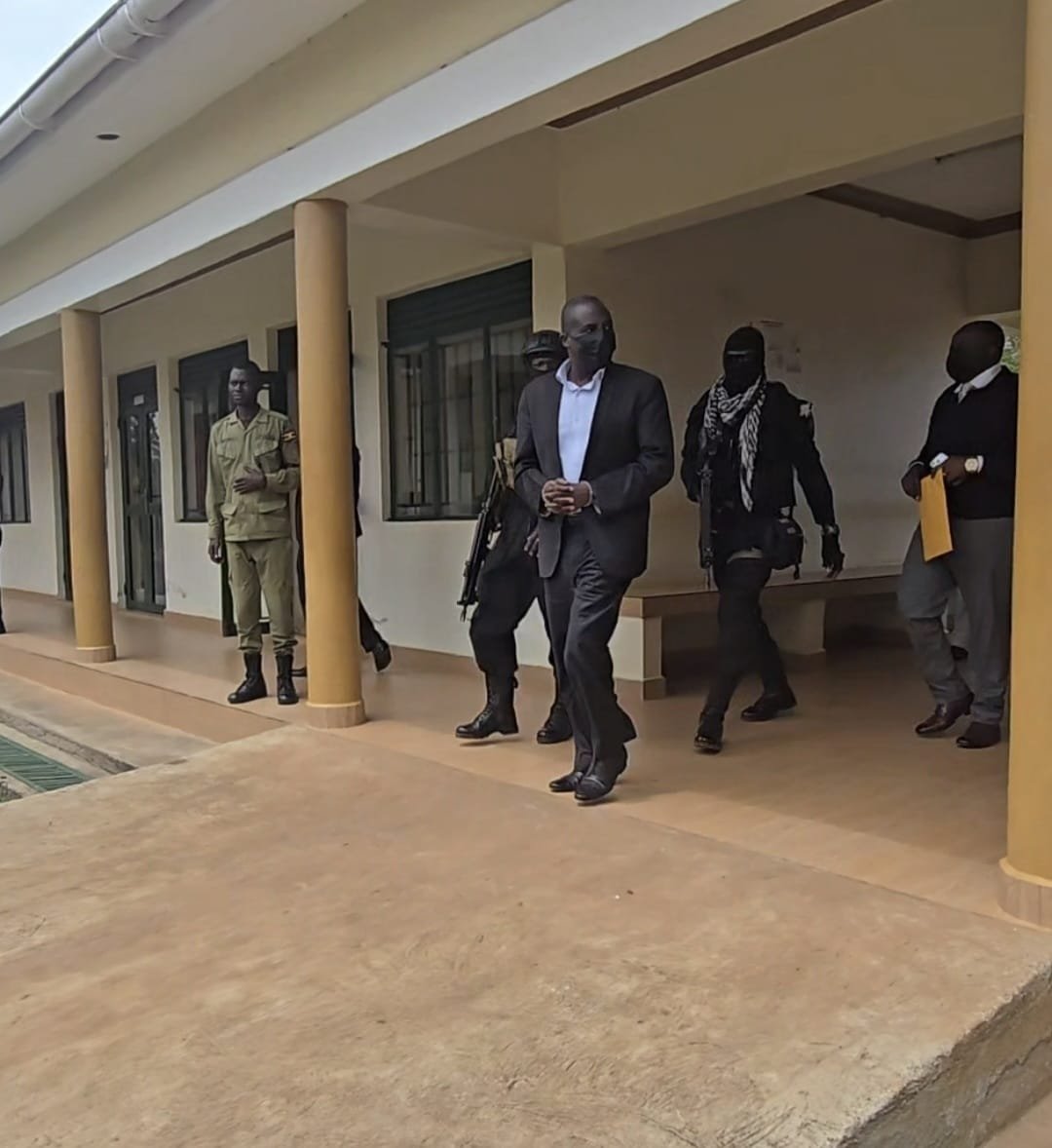
The appearance of National Unity Platform (NUP) Deputy President for Buganda, Muhammad Muwanga Kivumbi, before Butambala Magistrate’s Court on Wednesday brought to an end nearly three weeks of uncertainty over his whereabouts, but opened a fresh chapter in Uganda’s long-running debate over due process, human rights and the conduct of security agencies.
Kivumbi was brought to court under heavy security after opposition leaders said he had earlier been “dumped” at Nateete Police Station before being transferred to Butambala.
His appearance came after 19 days during which, according to the opposition, he had been held incommunicado, with both the Uganda Police Force and the Uganda People’s Defence Forces (UPDF) reportedly denying knowledge of his whereabouts in court filings.
The development unfolded dramatically as Leader of the Opposition Joel Ssenyonyi, NUP Secretary General David Lewis Rubongoya and other party officials gathered at the High Court in Kampala to pursue a writ of habeas corpus seeking to compel the state to produce Kivumbi.
In a post on his X handle, Ssenyonyi said government lawyers had informed court that police leadership had “a lead” on Kivumbi’s whereabouts and requested more time to provide an update.
However, while the legal proceedings were ongoing, opposition leaders said they received information that Kivumbi had been taken to Nateete Police Station before being moved to Butambala for court.
“We have however learnt that Hon. Kivumbi has been dumped at Nateete Police Station, but on coming to Nateete Police, we’ve been told he’s been taken to Butambala,” Ssenyonyi said.
By the time party leaders reached Butambala Chief Magistrate’s Court, Kivumbi had already been produced under tight security.
A familiar pattern
For Uganda’s opposition, Kivumbi’s case reflects what they describe as an increasingly common pattern in politically sensitive arrests; detentions without immediate acknowledgement by security agencies, delayed court appearances and prolonged uncertainty for families and legal representatives.
Rubongoya described the court appearance as the end of 19 days of incommunicado detention.
“We’re at the Chief Magistrate’s Court in Butambala where NUP Deputy President Hon. Muhammad Muwanga Kivumbi is being produced after 19 days of incommunicado detention,” he said.
He questioned how Kivumbi could suddenly appear in custody after police and the military had reportedly informed court they had no knowledge of where he was.
The sequence of events has renewed questions about transparency and accountability in Uganda’s criminal justice system, particularly regarding the constitutional requirement that arrested persons be produced before court within 48 hours unless exceptional circumstances apply.
Habeas corpus under renewed spotlight
The case has also placed renewed attention on the writ of habeas corpus,a legal mechanism designed to protect individuals from unlawful detention by requiring authorities to produce a detained person before court and justify their detention.
Human rights advocates have increasingly turned to habeas corpus applications in cases where detainees’ whereabouts are disputed or unknown.
The proceedings involving Kivumbi illustrate the importance of the remedy in compelling state agencies to account for individuals alleged to be in custody.
Political implications
Kivumbi is one of the National Unity Platform’s most senior leaders and serves as the party’s Deputy President for the Buganda region.
His detention and eventual court appearance are likely to further heighten tensions between the opposition and the government ahead of Uganda’s evolving political calendar.
For NUP, the episode reinforces longstanding concerns over the treatment of opposition politicians and activists. Party leaders have consistently argued that arrests and prolonged detentions undermine political freedoms guaranteed under the Constitution.
Government and security agencies have, in previous cases, maintained that their actions are guided by national security and criminal investigations, while rejecting allegations of unlawful detention.
Awaiting the court process
With Kivumbi now before court, attention shifts from questions over his whereabouts to the legal proceedings against him.
The charges he faces, the evidence to be presented and the court’s handling of the matter will determine the next phase of the case.
Beyond the courtroom, however, the circumstances surrounding his disappearance and subsequent production remain at the centre of public discussion, raising broader questions about due process, accountability and the balance between security operations and constitutional rights in Uganda.
As the judicial process unfolds, the case is expected to remain under close scrutiny from political observers, human rights organisations and the wider public.