My journey with Lupus
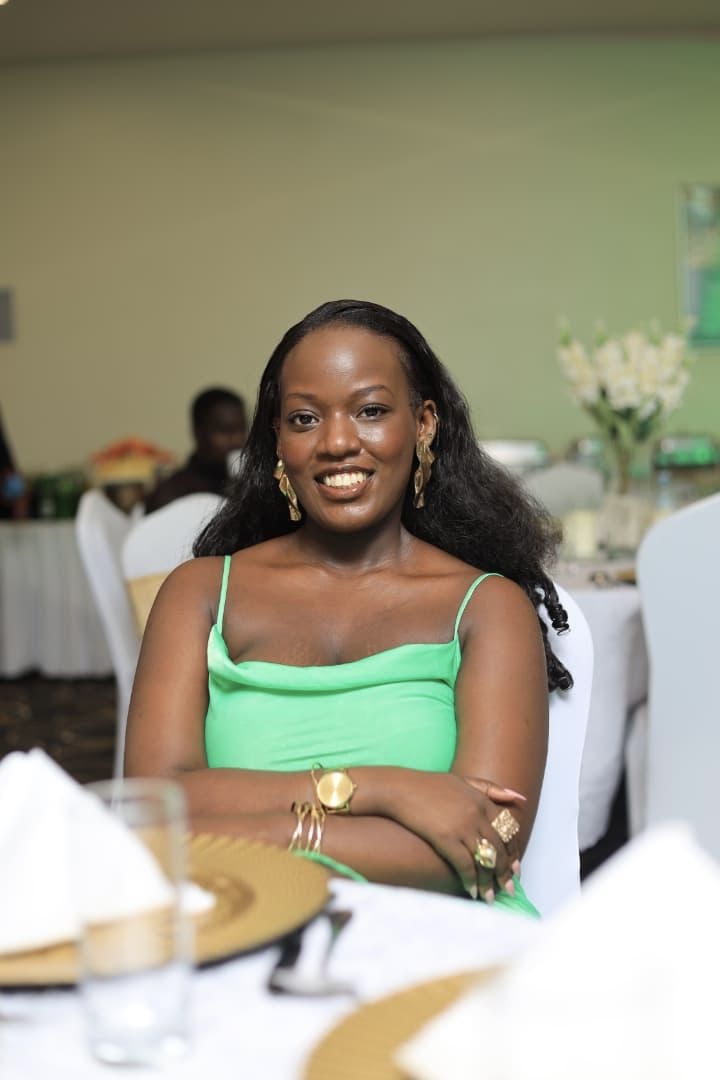
By Miriam Lwanga
There was a time when I looked in the mirror and no longer recognised the person staring back at me.
There was a time when my face was so swollen that my eyes would almost close completely, when I struggled to be in public, and when a simple question like “What happened to your face?” could remind me of just how much my life had changed.
But there was also a time when I finally got an answer. After years of PAINNNNNN, months of hospital visits, and countless questions about what was happening to my body, I finally understood what I was fighting.
On 31 July 2026, I was diagnosed with Systemic Lupus Erythematosus (SLE), with lupus nephritis affecting my kidneys, connective tissue disease, and skin involvement.
I was frightened, but more than anything, I was so relieved. For the longest time, I had been living with symptoms I couldn’t explain. Finally, someone understood what was happening to me.
Finally, I had a name for the battle I had been fighting.
And now, I could begin to ask a different question: What do I do next? How do I get better?
Before the diagnosis, there was uncertainty
My journey with lupus did not begin in a hospital in 2026. In many ways, it began years earlier.
I had been experiencing joint pain since 2022, but by October 2025, the pain had intensified to a point where I knew something was seriously wrong. I decided to seek medical help, hoping to find relief and an explanation.
Instead, I found myself hospital-hopping. I would visit one hospital, seek treatment, and hope that whatever was happening would finally be resolved. But I wasn’t getting the relief I needed.
As time went on, more symptoms developed, and the uncertainty became increasingly difficult to live with.
It is a particular kind of exhaustion to know that something is wrong with your body but not know what it is. You are experiencing the pain, you are watching the changes, and you are trying to explain what you feel, yet you don’t have the words or answers to make sense of it.
When I eventually received my diagnosis, the involvement of my kidneys frightened me. I understood that this was serious. But alongside that fear was relief. I finally knew what I was dealing with, and I could begin working with my doctors to manage it.
Sometimes, an answer doesn’t immediately take away the fear. Sometimes, it simply gives you somewhere to begin.
When your face no longer feels like your own
One of the hardest parts of my journey has been the effect lupus has had on my skin and facial appearance.
For a long time, I struggled deeply with the changes. My face became so swollen that there were moments when I could barely see because my eyes were almost completely closed. I reached a point where I stopped looking in the mirror because I genuinely did not recognise myself.
Your face is often the first thing people notice about you. Before they know your story, before they understand what you’re experiencing, they see your appearance. And when your appearance changes dramatically, people notice.
I had people asking me what was wrong with my face and my skin. Meanwhile, I was spending a lot of money seeking help from skin specialists and hospitals, hoping that something would change. But the changes were slow, and my frustration grew.
I went from being a girl who, in her own eyes, felt beautiful and confident to someone who sometimes felt she couldn’t even comfortably show up in public. It affected my confidence and my mental well-being. There were days when I felt completely overwhelmed by what was happening to me.
I wish more people understood that changes in appearance can be about so much more than vanity. Sometimes, you are grieving a version of yourself you recognise and miss. You are trying to make peace with a body that looks and feels unfamiliar, while also trying to survive what is happening inside it.
Lupus has forced me to confront that grief.
But it has also taught me something about beauty and strength. When I received my diagnosis, I began to understand just how much I had endured.
I had been living with an autoimmune condition for years, and despite everything, I was still here. I was still trying.
I was still finding ways to participate in life, even when my body was operating at a significant disadvantage.I began to see myself as a warrior.
Not because I am strong every day, or because I never feel defeated, but because I have continued to fight even when I haven’t felt strong.
The fact that I still have the will to live, to hope, and to give my body a fighting chance has changed the way I see myself.I am stronger than I once believed.
The invisible battle behind a healthy appearancePeople often describe lupus as an invisible disease, and I understand why.
In some ways, I have been fortunate that my condition has shown itself physically. People who have known me for a long time can see that my appearance has changed.
During flares, I experience facial swelling and other visible symptoms.Yet, on many days, I look healthy. I may look perfectly fine to someone who sees me walking around, going to work, or getting on with my life.What they cannot see is what it takes to do those things.
At one point, I was taking as many as 25 tablets a day. I now take 13. My life involves managing my condition, following a medication schedule, attending to my health, and living with the reality that my body does not function like everyone else’s.
I am fighting a disease, and I am also managing the demands of the treatment that helps me live with it.
Sometimes, when you look well, people assume you are well. They may interpret your exhaustion as laziness, your inability to attend an event as a lack of effort, or your need to rest as an unwillingness to work.
They may think you simply prefer a soft life.But sometimes, you are not choosing to do less. You are doing the best you can with a body that has different needs.
I am grateful that my medication is helping me and that I often look well. But looking well and being well are not always the same thing.
One of the misconceptions that frustrates me most is the idea that lupus isn’t serious, or that people living with it are exaggerating their symptoms.
I wish more people understood that lupus is a real, complex condition that can affect different parts of the body, including vital organs.
You shouldn’t have to look visibly ill for your suffering to be taken seriously.
You shouldn’t have to reach a crisis before someone believes you need help.
Faith, family, friendship, and the people who held me up
If there is one thing I know for certain about this journey, it is that I have not walked it alone.
I am deeply grateful for my community. Sometimes, I struggle to find the words to explain just
how much the people around me have carried me through this experience. I genuinely believe
their support has been one of the reasons I have been able to keep going.
My family has been there through it all. My mother has been like a bedside nurse, caring for me
and standing beside me through my most difficult moments. My dad has supported me
financially through the many expenses of being sick, from hospital bills to monthly medication
and treatment. My sisters have cared for me on the days I couldn’t walk or manage basic tasks
on my own, while my brothers have stood by me and prayed for me. My friends, my friends’
parents, my parents’ friends my supervisor, and colleagues have all shown me kindness and
support in ways I will never take for granted.
I have also found so much strength in my faith. On the days when I don’t feel like myself, when I
am tired of the uncertainty and don’t know what to do next, I pray.
My relationship with God has been a source of comfort and strength. There are moments when I
simply don’t have the words to explain what I am feeling, and prayer becomes the place where I
can bring all of it: the fear, the frustration, the questions, and the hope.
I often wonder how people navigate something like this without faith, because for me, God has
been an anchor.
My relationships have not been destroyed by lupus. If anything, many have grown stronger. The
people I have opened up to, including those close to me romantically, have been supportive.
What I do struggle with is not always being able to show up for the people I love in the ways I
would like. I miss events. I sometimes cannot participate in things I would once have done
without thinking twice. There are times when I have to decline an invitation or stay home because
I am simply not well enough.
That can be difficult, especially when you want to be present.
But I have learned that love is not measured only by how often you show up physically.
Sometimes, the people who truly love you understand that your absence is not a reflection of how much you care.
I have been surrounded by people who have given me room to be unwell without making me feel
less worthy of love. That has meant everything.
Learning to listen to my body
Before lupus, I don’t think I fully understood how important it was to listen to my body.
Now, listening to it is one of the most important things I do.
I have learned to recognise my warning signs. For me, one of them is a sensation of heat in my
head. When I notice it, I try to stop, take a breather, and pay attention rather than push through
as if nothing is happening.
Rest has become a priority.
There was a time when I might have expected myself to keep going regardless of how I felt. Now,
I understand that I cannot demand the same things from myself every day. I have to extend
myself grace.
If I need to leave work, go home, sleep, and return to a task later when I am feeling better, I will
do that where possible. If I need to slow down, I slow down. I try to organise my time so that I can
continue to fulfil my responsibilities while also making room for my health.
I still want to do well in my career. I still want to be a good friend, to participate in life, and to be
present for the people I love. But I have had to accept that I may not have the same energy levels
I had before, and that is okay.
I am learning that doing enough is sometimes more valuable than exhausting myself trying to do
everything.
Managing lupus has also meant taking my medication seriously. I used to hate taking it, but I
have come to appreciate the role it plays in helping me manage my condition. I follow the
schedule prescribed by my doctors and try to take each medication as directed.
It is one of the ways I can take an active role in my care.
Of course, lupus is unpredictable. You can make plans, prepare for your day, and wake up unable
to get out of bed, walk comfortably, or leave the house because you are in pain or experiencing a flare.
You cannot control every part of that experience. But I have learned to focus on what I can
control, while accepting that some things are beyond me.
I have also been open with my supervisor about my condition. I explained what living with lupus
can look like for me and that there may be days when I cannot show up in the way I would like.
She has extended me so much grace, and that has helped me understand that I do not always
have to choose between my health and my career.
I can be a professional and still be a person who needs care. I can have responsibilities and still
need rest. I can be ambitious and still acknowledge my limitations.
Those things can exist together.
The small things that make me feel alive
When I am having a difficult day, my routine is simple: I pray, I talk to my best friend, and I sleep.
In that order.
I surround myself with my family, people who love me, and the kind of energy that makes me feel
safe. I remind myself of how far I have come, especially when I am tempted to focus only on how
far I still have to go.
I also find hope in hearing the stories of people living with lupus who have improved significantly
or achieved remission. Their experiences remind me that my diagnosis does not define every
part of my future.
Positivity has become important to me, although I know that being positive does not mean
pretending the difficult days do not exist. There are bad days. There are moments of frustration,
sadness, and exhaustion. I am allowed to feel those things.
But I try not to let the hardest moments convince me that the rest of my story cannot be better.
I speak kindly to myself. I remind myself that there have been days when I was worse than I am
now, and that progress can look different from one day to the next.
For me, reclaiming confidence is less about a particular outfit or beauty ritual and more about the
way I speak to myself, the people I allow into my space, and the hope I choose to nurture. I have learned to go where I am loved.
I
have learned to celebrate the days when I feel well enough to do the things I enjoy. And I have
learned that I do not have to wait until I look exactly as I did before to deserve happiness,
friendship, or a life outside my illness.
I am still Miriam. I am still a woman with dreams, ambitions, relationships, and a future I look
forward to. Lupus is part of my story, but it is not the entirety of who I am.
A conversation between me and my body
If my body could speak to me right now, I think it would thank me for fighting for it.
It might also tell me that I should have started eating well and taking better care of myself earlier.
But I think it would thank me for not giving up on it.
And I would thank my body, too.
For holding the fort down for me. For enduring what it has endured. For continuing to carry me
through days when I have asked so much of it.
I think I have a very strong body. It has been through so much, and yet it continues to give me a
fighting chance.
That has changed the way I treat it. I am learning to feed it better, rest when I need to, and pay
attention to what it is telling me. I want to give it the same care that it has given me through all of
this.
For a long time, I saw my body as something that was failing me. Now, I am beginning to see it as
something that has been fighting alongside me.
It deserves my patience, too.
To anyone living with lupus
If you have just been diagnosed with lupus, or if you are struggling to find answers to symptoms
you cannot explain, I want you to know that there is hope.
A lupus diagnosis can be frightening. The uncertainty, the medication, the hospital visits, the
changes to your body, and the unpredictability can be overwhelming. There may be days when you wonder whether you will ever feel like yourself again.
I have had those moments, too.But lupus is not automatically a death sentence. Although there is currently no cure, treatment
can help manage the disease, and many people living with lupus can have long periods of
improved disease control, including remission.
Your journey may not look like mine. What works for someone else may not be right for you, and
your treatment should always be guided by qualified medical professionals. Please seek medical
care, take your symptoms seriously, and do not be afraid to keep asking questions when you feel
something is wrong.
Listen to your body. Find people who will support you. Let yourself rest. Hold on to whatever
gives you strength, whether that is faith, family, friendship, or the knowledge that you are not
alone.
And please remember that you are still a whole person outside your diagnosis.
You are allowed to have dreams. You are allowed to make plans. You are allowed to laugh, fall in
love, build a career, dress up, travel, and imagine a future for yourself.
You may have to do some things differently. You may have to make room for limitations you never
expected. But your life is still yours to live.
Why I want to tell my story
One of the things I want most from sharing my experience is to increase awareness about lupus.
From my own experience, and from the experiences of other people I have interacted with, I have
seen how difficult it can be to get answers. There can be so much hospital-hopping, so many
appointments, so many symptoms to explain, and so much time spent wondering what is
happening inside your own body.
That uncertainty is exhausting. And when the disease affects vital organs, delays in recognising
and treating it can have serious consequences.
I wish more people knew about lupus. I wish people understood that it can look different from
one person to another, that someone can appear healthy and still be seriously unwell, and that
unexplained symptoms deserve to be investigated rather than dismissed.
I want people to know that you do not have to wait until someone looks visibly sick before you
take their concerns seriously. You do not have to wait until their condition becomes severe before you believe that they need help.
Early recognition and appropriate treatment can make a meaningful difference.
If sharing my story helps even one person recognise that something is wrong and seek medical
attention, or helps one person feel less alone after receiving a diagnosis, then telling it will have
been worth it.
I am still learning how to live with lupus. I do not have all the answers, and I cannot promise that
every day will be easy. There is still uncertainty, and there are still things I am learning about
myself and my body.
But I am here.
I am learning to listen. I am learning to rest. I am learning to receive love without feeling guilty for
needing it. I am learning to appreciate my body for what it continues to do, rather than judge it
only for what has changed.
And above everything, I am learning that I can be afraid and hopeful at the same time.
My story is not simply about a disease. It is about the years it took to find answers, the people
who carried me when I could not carry myself, the faith that has anchored me, and the body that
continues to fight alongside me.
I am Miriam Lwanga. I live with lupus, but lupus is not all that I am. I am still here, giving my body
a fighting chance. I also strongly believe that soon there will be a cure for lupus.