PRAU judges push for evidence-based public relations
As the association enters its next 50 years, the emphasis on evidence-based evaluation, ethical practice and public trust signals a growing expectation that communication professionals should demonstrate not simply how far their messages travel, but what difference they make.

Public relations professionals must move beyond counting media mentions, event attendance and social media impressions to demonstrate how their campaigns change public perceptions, influence behaviour and deliver measurable results, judges at the 10th PRAU Excellence Awards have said.
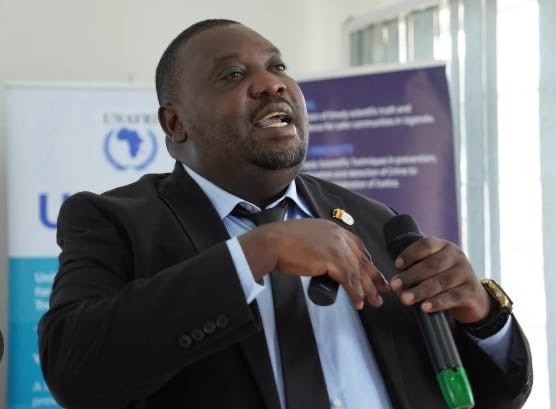
Dr Patricia Litho, Assistant Commissioner for Communication and Information Management at the Ministry of Energy and Rural Development and lead judge, said many communication campaigns risk overstating their success when they rely on visibility metrics without evidence of tangible impact.
Speaking at the awards gala held at the Source of the Nile Hotel in Jinja City on Friday, Litho said the judging panel assessed more than 44 entries across the different categories, finding examples of creativity and growing appreciation of strategic communication but also gaps in research, evaluation and evidence of results.
“We must move from measuring what we did to demonstrating what changed because of what we did,” she said.
Litho said media coverage and social media engagement could indicate the reach of a campaign but could not, on their own, establish whether audiences had changed their attitudes, improved their understanding or adopted new behaviours.
She urged practitioners to establish baseline measurements before launching campaigns, track progress during implementation and use verifiable evidence to demonstrate outcomes.
“The true value of communication lies in its contribution to relationships, understanding, reputation, behaviour and organisational outcomes,” she said.
Litho also cautioned against using Advertising Value Equivalency (AVE) as the sole measure of public relations effectiveness, arguing for a broader assessment of the value communication creates for organisations and their stakeholders.
Her remarks placed the spotlight on accountability in a profession increasingly expected to demonstrate its contribution to institutional performance, public engagement and organisational reputation.
Integrity remains central to public trust
The call for measurable impact was reinforced by Owek. Alhaji Osman Noor Ahmed, Second Deputy Prime Minister of Busoga Kingdom and guest of honour, who challenged practitioners to prioritise credibility and public trust over publicity.
He said communication should not merely promote organisations but help build honest relationships between institutions and the people they serve.
“A well-designed communication campaign can create awareness, but a credible and honest communication strategy can build trust. Publicity may attract attention, but integrity sustains reputation,” Noor Ahmed said.
He urged institutions to uphold truth, accuracy, transparency and accountability, including acknowledging mistakes and responding clearly to public concerns.
“The greatest test of public relations is therefore not how loudly an institution speaks about itself, but how confidently the people themselves can speak about it,” he said.
Noor Ahmed also encouraged organisations operating in Busoga to treat communication as a strategic investment that can improve public understanding of development programmes, encourage community participation, attract investment and strengthen partnerships.
He called on practitioners to embrace social media, artificial intelligence and data analytics while safeguarding privacy, fairness, truth and professional integrity.
Awards celebrate excellence and raise standards
The discussions took place as the Public Relations Association of Uganda (PRAU) marked 50 years since its establishment on May 22, 1976, with a week-long golden jubilee programme culminating in the 10th PRAU Excellence Awards.
Pearl Bank emerged the biggest winner of the evening, collecting four awards, including the PR Crown Jewel Award for the best overall campaign, alongside the Corporate Storytellers, Media Relations Gold Standard and Impact Beyond Profit awards.
Other winners included brainchild Burson, named PR Powerhouse of the Year; Lynn Nansirumbi, who received the PR Rising Star Award; Uganda Breweries Limited, winner of the Policy and Persuasion Award; and TotalEnergies EP Uganda, which took the Culture Champions Award.
Airtel Uganda won the Reputation Champions Award, the Electricity Regulatory Authority received the Event Maestros Award, Uganda Red Cross Society won the Heart and Purpose Award, and Crown Beverages Limited took the Viral Gold Award.
However, the judging panel’s report also raised questions about professional development and the future talent pipeline. No entry was received in the Emerging Talent Award category, prompting a call for greater investment in nurturing young practitioners.
Litho further recommended clearer eligibility criteria and stronger conflict-of-interest safeguards to protect the credibility and independence of future awards, particularly where governing council members, judges or competition administrators may be involved.
PRAU President Irene Nakasiita, meanwhile, paid tribute to the late James R. Mutabaazi, who founded the association in 1976, and highlighted the importance of preserving institutional knowledge by retaining immediate past presidents on the Governing Council.
As the association enters its next 50 years, the emphasis on evidence-based evaluation, ethical practice and public trust signals a growing expectation that communication professionals should demonstrate not simply how far their messages travel, but what difference they make.