Uganda records historic us$14.4 billion export earnings as economy shows resilience
According to the Treasury chief, the strong export performance has helped stabilize the Ugandan shilling and improve the country’s balance of payments.
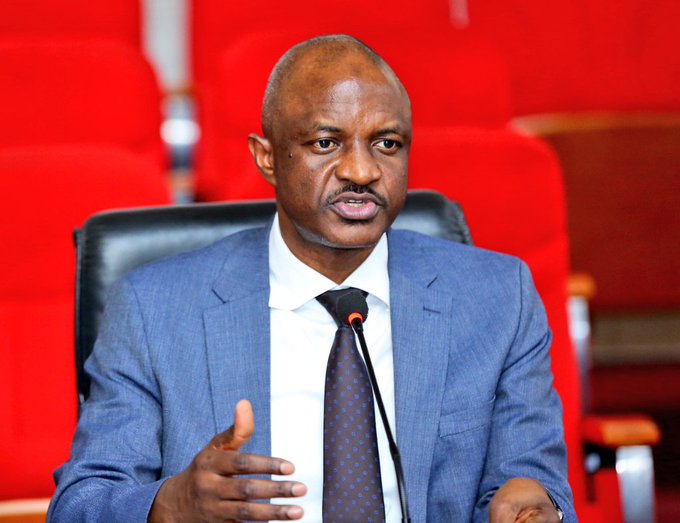
Uganda earned a record US$14.4 billion (about UGX53.6 trillion) in export revenues in 2025, marking the highest export performance in the country’s history, according to the Secretary to the Treasury, Ramathan Ggoobi.
Ggoobi revealed the figures while appearing before Parliament’s Public Accounts Committee to respond to issues raised in the December 2025 report by the Office of the Auditor General regarding the performance of the Ministry of Finance, Planning and Economic Development.
“The shilling is stable and strong against major currencies. It has been appreciating against the dollar mainly because of the strong performance of exports,” Ggoobi told legislators. “At the end of December last year, our export performance reached US$14.4 billion — Uganda has never in its history exported that magnitude of goods and services.”
Export Growth Strengthens Currency
According to the Treasury chief, the strong export performance has helped stabilize the Ugandan shilling and improve the country’s balance of payments.
He noted that Uganda recorded a balance of payments surplus of US$2.37 billion by October last year, indicating that more foreign currency flowed into the economy than went out.
“As a result, the shilling has remained very stable and the dollar is available to everyone,” Ggoobi explained.
The financial account also recorded strong inflows totaling US$5.6 billion, including US$3.56 billion in Foreign Direct Investment and US$1.7 billion from portfolio investors, reflecting sustained investor confidence in Uganda’s economy.
Economy Stable Despite Political Season
Ggoobi also highlighted the economy’s resilience during the election cycle, noting that inflation has remained under control despite historical trends where election periods often trigger price instability.
“Usually around election time we see inflationary pressures, but this time prices of goods and services have remained stable,” he said.
He added that Uganda’s economy has continued to perform well despite external shocks and global geopolitical tensions.
“The economy of Uganda is performing very well despite shocks both within and outside the country. It is one of the few moments in our history that we have had such stability during a political season,” he noted.
Growth Across Key Sectors
Economic growth remains broad-based, with agriculture, manufacturing and services all contributing to expansion.
According to the Treasury, Uganda’s GDP is projected to grow between 6.5% and 7% in the 2025/26 financial year, maintaining the country among the faster-growing economies in the region.
However, Ggoobi acknowledged that domestic revenue mobilization remains a weak point despite improvements.
Revenue collections grew by about 16%, but he noted that structural challenges in tax collection still constrain the government’s fiscal capacity.
“Revenue growth has been strong, but it remains one of the areas where we still have weaknesses that we must address,” he said.
Arrears Clearance and Debt Strategy
On public finances, Ggoobi informed the committee that the government is implementing a strategy to progressively clear verified domestic arrears.
The Treasury cleared UGX265 billion in arrears during the 2024/25 financial year, while UGX1.4 trillion was allocated in the 2025/26 budget to significantly reduce the outstanding stock.
He also noted that the government is restructuring its borrowing strategy to prioritize concessional financing.
“Concessional loans will remain the government’s primary first call when contracting new debt,” he said, adding that Uganda is regaining access to concessional financing from the World Bank.
UDC Capitalization Planned
In an effort to strengthen state-led industrial investments, the Treasury also plans to inject UGX500 billion into the Uganda Development Corporation beginning in the 2026/27 financial year.
The funding will support the completion of ongoing strategic projects and improve the profitability of state-backed investments.
Outlook
Despite ongoing geopolitical uncertainties globally, Ggoobi said the government remains optimistic about the economy’s outlook.
“To cut the long story short, the state of the economy is quite good and we hope it will remain good despite geopolitical challenges. We have enough buffers to keep it stable,” he told the committee.